
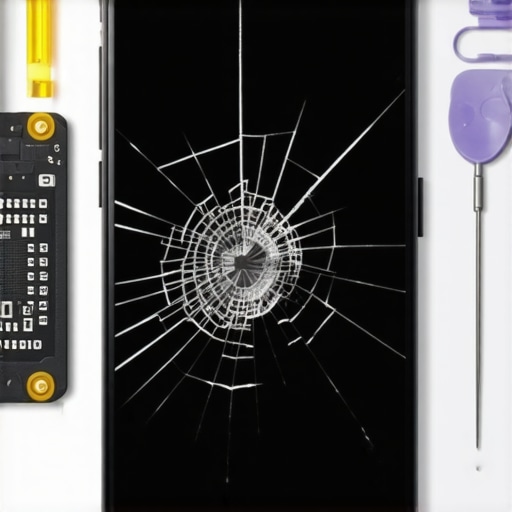
Stop the $1,400 Crack: 2026 Chip Repair Tactics for Smart Glass
The High-Stakes Reality of Modern Glazing
I walked onto a job site in a sweltering Austin suburb last August where a property manager was staring at a tiny, insignificant star-shaped chip in a massive electrochromic window. To the untrained eye, it was a $50 windshield-style fix. To me, a glazier with three decades in the trenches, it was a ticking time bomb. The sun was beating down on that south-facing facade, and I knew that if we didn’t act before the evening cool-down, the thermal stress would turn that chip into a full-lite fracture. Because this was smart glass, a simple crack didn’t just mean a draft; it meant the electrical circuit providing the dynamic tinting would short out. They were looking at a $1,400 replacement for a single pane, plus the cost of a specialized crane to reach the fourth floor. I pulled out my digital hygrometer and showed the owner that moisture was already beginning to permeate the chip, threatening the Indium Tin Oxide (ITO) conductive layer. That is the reality of being a glass installer in 2026: we aren’t just cutting glass; we are technicians managing complex electrochemical systems.
“Installation is just as critical as the window performance itself. A high-performance window installed poorly will fail, and in the case of dynamic glazing, a minor physical breach can lead to a total systemic failure of the building envelope’s thermal management.” – AAMA Installation Masters Guide
The Anatomy of a Smart Breach: Why Surface #2 Matters
In a hot climate like Texas or Florida, the Solar Heat Gain Coefficient (SHGC) is the metric that keeps your HVAC system from melting. Smart glass typically relies on a multi-layer stack of ceramic coatings and a polymer-dispersed liquid crystal (PDLC) layer. In these high-performance units, the Low-E coating is strategically placed on Surface #2 (the inner face of the outer pane). This position is critical because it reflects the sun’s long-wave infrared radiation before it can even enter the insulating glass unit (IGU). When a chip occurs on the exterior, it creates a microscopic valley that bypasses these protective layers. If you leave that chip unsealed, you are essentially creating a thermal bridge. The glass around the chip heats up at a different rate than the rest of the lite, leading to what we call ‘thermal shock.’ This is why a mobile service with same-day capability isn’t a luxury; it is a technical requirement to save the pane before the next thermal cycle. A professional chip repair in 2026 involves more than just squirt-and-wipe resin; it requires a vacuum-pressure injection that removes air and moisture from the breach to restore the hermetic seal.
The Science of Resin and Refractive Index
Most ‘caulk-and-walk’ installers try to use standard windshield resin on high-end architectural glass. That is a recipe for disaster. Architectural smart glass has a specific refractive index designed to work with the PDLC layer. If your resin doesn’t match that index, you get a ‘ghost’ or a visible scar that distorts the view and interferes with the visible transmittance (VT) of the window. When I perform a chip repair, I am looking at the molecular compatibility of the resin with the interlayer. We use ultraviolet-cured polymers that maintain flexibility, allowing the glass to expand and contract as the sun hits it. Remember, an operable sash in a high-rise moves. It vibrates. It shimmies in the wind. If the repair resin is too brittle, it will pop out the first time the window is cycled. We have to ensure that the glazing bead is not putting undue pressure on the repair site, which often involves adjusting the shim placement within the rough opening to relieve structural tension.
“The performance ratings of a window system, including its Solar Heat Gain Coefficient (SHGC), are contingent upon the physical integrity of the glazing unit and its factory-sealed environment. Any breach in the primary seal or the glass substrate must be remediated to ASTM standards to maintain certification.” – NFRC Field Manual
Installation Sins: How the Rough Opening Affects Chip Propagation
Often, a chip that turns into a massive crack isn’t the fault of the rock that hit it; it is the fault of the installer who put the window in five years ago. If the rough opening is out of square and the installer forced the frame in without proper shimming, the glass is under constant ‘bowing’ stress. In my 25 years, I have seen thousands of windows where the installer skipped the sill pan or used cheap flashing tape that didn’t integrate with the house wrap. This allows moisture to pool around the bottom glazing bead. When a chip occurs, the moisture is sucked into the pane via capillary action. A proper installation should follow the ‘Shingle Principle,’ where every layer of the flashing system overlaps the one below it. This ensures that even if a chip allows a small amount of water past the first defense, the weep hole system and the sill pan will direct that water back to the exterior rather than letting it sit against the laminated edge of a $1,400 smart pane.
The $1,400 Question: Repair or Replace?
The math is simple. A professional same-day chip repair usually costs between $150 and $300, depending on the complexity of the smart glass. Replacing a dynamic lite involves an electrician to disconnect the bus bars, a glazier team to pull the sash, and the lead time for a custom-ordered IGU. In 2026, supply chains for electrochromic glass are still measured in weeks, not days. If you ignore a chip, you aren’t just risking a crack; you are risking the loss of your building’s energy efficiency during the hottest months of the year. When the conductive coating oxidizes due to air exposure, the window will either stay permanently dark or stay permanently clear, destroying your ROI on the smart tech. A mobile service technician can stop this oxidation by sealing the breach with an anaerobic resin that bonds at the atomic level with the glass silicate. We don’t just fix the look; we restore the circuit. Don’t let a ‘Tin Man’ salesman tell you that the whole window needs to come out just because of a minor chip. If the structural integrity of the lite is intact and the chip is smaller than a quarter, a technical repair is almost always the superior path.