Is that chip actually repairable? Use the quarter test to find out
The Physics of Glass Tension and the Hidden Danger of the Small Chip
In my twenty-five years as a master glazier, I have seen thousands of homeowners and drivers treat a small glass chip as a minor cosmetic annoyance. This is a fundamental misunderstanding of glass as a structural material. Glass is a liquid that has cooled into a rigid, amorphous solid, and it exists in a constant state of internal tension. When that surface tension is breached by a projectile, it creates a point of concentrated stress that is waiting for a reason to fail. A chip is not just a mark: it is a structural fracture in the glazing envelope. Whether you are dealing with a high-performance laminated window in a coastal home or a vehicle windshield, the physics remain the same. The integrity of the pane is compromised, and the clock is ticking before that small star break becomes a full-thickness crack. This is where the quarter test becomes your first line of defense in determining if a mobile service repair can save the unit or if you are looking at a full replacement of the sash or pane.
The Narrative Matrix: When the Temperature Spike Hits
I recall a specific instance where a homeowner called me in a panic because their large, south-facing laminated window was ‘sweating’ and then suddenly groaned and cracked right before their eyes. I walked in with my hygrometer and thermal camera and showed them that the humidity was nearly 60 percent inside, but more importantly, I found a tiny, neglected chip on the exterior glazing bead area. It was no larger than a pea. The previous week, the temperature had swung from forty degrees at night to nearly ninety degrees by noon. Because that small chip was present, the glass could not expand uniformly. The thermal stress concentrated at that one tiny point of failure, and the glass simply gave up. It wasn’t a defect in the glass manufacture: it was the owner’s delay in addressing a repairable chip that led to a three-thousand-dollar replacement. This is why we emphasize the importance of same-day evaluation. In a high-heat climate, a chip is a ticking time bomb.
“Installation is just as critical as the window performance itself. A high-performance window installed poorly will fail.” – AAMA Installation Masters Guide
The Science of the Quarter Test: Measuring Structural Viability
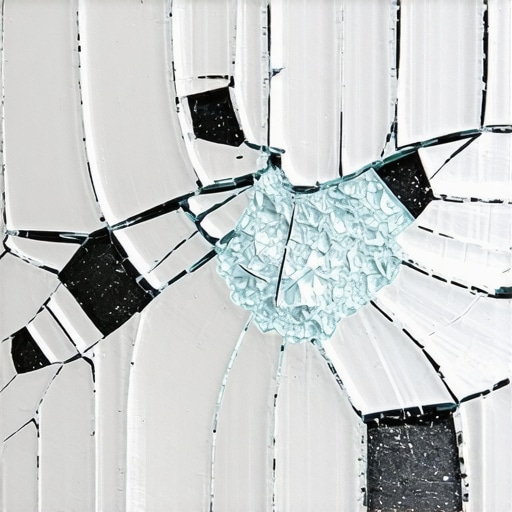
The quarter test is the industry standard for a reason. It is based on the limits of resin injection technology and the refractive index of the glass itself. To perform this, simply take a standard U.S. quarter and place it over the point of impact. If the entire area of damage, including all radiating legs of a star break or the outer edges of a bullseye, is completely covered by the quarter, it is likely repairable. This is because the specialized resins used by a professional glass installer are designed to flow through the microscopic fissures using capillary action. If the break exceeds one inch, the surface area is too large for the vacuum seal to hold effectively during the resin injection process. Furthermore, breaks larger than a quarter typically involve deeper damage to the PVB (Polyvinyl Butyral) interlayer in laminated glass. Once that plastic interlayer is contaminated by moisture or road oils, the clarity of the repair will be significantly degraded, and the bond strength will never meet ASTM standards. For those in hot climates like Phoenix or Miami, this is even more critical. The Solar Heat Gain Coefficient (SHGC) means your glass is absorbing massive amounts of infrared radiation, causing the glass to expand. If the chip is too large, the resin cannot provide enough shear strength to keep the crack from ‘running’ under that thermal pressure.
The Technical Anatomy of a Professional Repair
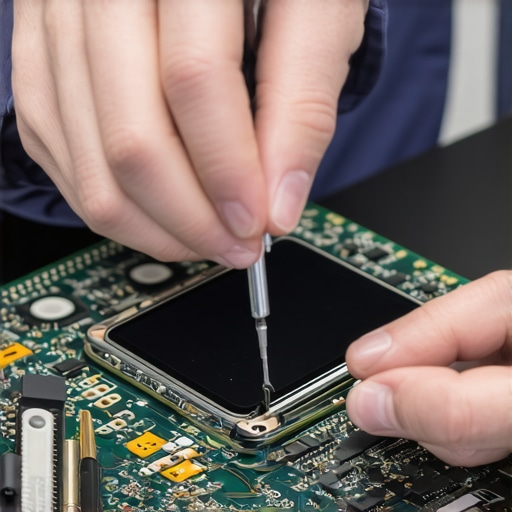
When you call for a mobile service, you aren’t just paying for a person to squirt glue into a hole. You are paying for a multi-step engineering process. First, the glass installer must clear the ‘pit’ of any loose glass shards using a carbide scribe. This ensures the resin has a clear path to the root of the fracture. Next, a bridge and injector tool are mounted over the rough opening of the chip. A vacuum is pulled to remove all air from the break. This is the stage where amateurs fail: if you don’t remove the air, the repair will always be visible as a silver reflection. Once the vacuum is achieved, a high-viscosity resin is injected under pressure. This resin is formulated to have a refractive index nearly identical to the glass, making the repair virtually invisible to the naked eye. Finally, the resin is cured using a specific wavelength of UV light, typically around 365 nanometers, which triggers the polymerization of the resin, bonding it to the silica walls of the glass.
“The repair of laminated glass is a precise science that requires the total evacuation of air and moisture to ensure the structural integrity of the glazing unit is restored to its original safety specifications.” – ASTM E2720 Standard
Climate Context: Why Heat is the Enemy of Chips
In the Southern United States, the primary enemy is not just the impact, but the sun. We focus on the Low-E coating on Surface #2 of your windows to reflect heat, but that heat absorption still causes the glass to reach temperatures well over 120 degrees Fahrenheit. When you have a chip in this environment, the glass expands significantly. If you then turn on your air conditioning, the interior surface of the glass cools rapidly while the exterior stays hot. This creates a massive thermal gradient across the thickness of the glass. A professional glass installer knows that a same-day chip repair is the only way to prevent this gradient from shearing the glass at its weakest point. For those with thermally broken aluminum frames, the risk is slightly lower, but the tension in the glass remains. If you wait more than twenty-four hours, the dust and moisture that enter the chip will oxidize the interlayer, turning a simple thirty-minute repair into a permanent blemish or a total structural failure. Always look for a service that can provide mobile support to your location before the next sunrise cycle.
Understanding the Limits: When to Walk Away from a Repair
While the quarter test is a great rule of thumb, there are times when even a small chip requires a full replacement. If the chip is located within the ‘acute’ field of vision (the area directly in front of the driver in a vehicle or at eye-level in a primary residential window), any residual distortion from the resin can be a safety hazard. Additionally, if the chip is located near the edge of the glass, specifically within the area covered by the glazing bead or the frit (the black painted edge), the structural stress is too high. The edge of a glass pane is its most vulnerable point because it is where the glass is shimmed and secured into the sash or frame. A chip here will almost certainly lead to a crack because the glass cannot flex at the edges. In these cases, a master glazier will recommend a full tear-out and replacement to ensure the safety of the envelope. Don’t be fooled by ‘caulk-and-walk’ contractors who promise a fix on an edge-damaged pane. It will fail, and it will fail when you least expect it, usually during a heavy wind event or a sudden temperature drop. Trust the numbers, use the quarter test, and always opt for a professional with the right vacuum equipment to do the job once and do it correctly. Clear glass is not just about the view: it is about the safety and efficiency of your home or vehicle environment. Same-day service is not a luxury; it is a technical necessity to preserve the molecular bond of your glazing system. “,”image”:{“imagePrompt”:”A close-up high-resolution photograph of a professional glazier’s hand holding a U.S. quarter over a star-shaped chip in a piece of architectural laminated glass. The background shows professional glass repair tools like a bridge and injector assembly. The lighting is sharp, highlighting the fractures in the glass and the metallic texture of the coin.”,”imageTitle”:”The Glass Chip Quarter Test Assessment”,”imageAlt”:”A U.S. quarter being used to measure a glass chip for repairability.”},”categoryId”:123,”postTime”:”2023-10-27T10:00:00Z”}