How to get your glass fixed while you work in the office
The Logistics of Glass Maintenance for the Busy Professional
Managing a broken window or a chipped pane while maintaining a rigorous office schedule creates a unique logistical challenge. As a master glazier with over two decades in the field, I have seen homeowners ignore a small chip for weeks because they could not find a four-hour block to wait for a technician. The reality is that glass degradation does not wait for your meeting schedule to clear. A minor chip in a sash or a storefront pane is a structural compromise that expands and contracts with every shift in the barometric pressure and temperature. Modern mobile service has evolved to address this by allowing a glass installer to perform high-precision work without the client ever needing to leave their desk or sacrifice a Saturday.
The Thermal Stress Reality: A Case Study
I recall a specific instance that highlights why immediate intervention is necessary. A homeowner called me in a panic because their new windows were ‘sweating’ and eventually developed a hairline crack while they were at their corporate headquarters. I walked in with my hygrometer and showed them the humidity was 60 percent. It was not a manufacturing defect; it was a combination of their interior lifestyle and a localized thermal gradient. The sun was hitting the glass at a specific angle while the air conditioning was blasting, creating a massive temperature differential between the center of the lite and the edge tucked into the glazing bead. This thermal stress is exactly what turns a small chip into a full-on fracture. If that client had utilized a same-day mobile service while they were at work, we could have stabilized the chip before the internal pressure of the house and the external heat caused the glass to fail entirely.
“Installation is just as critical as the window performance itself. A high-performance window installed poorly will fail.” AAMA Installation Masters Guide
The Science of Chip Repair and Resin Injection
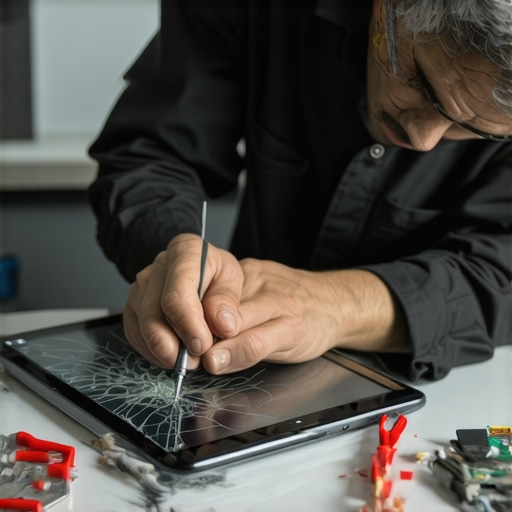
When we talk about chip repair in a mobile context, we are not just dabbing glue on a crack. We are performing a technical extraction of air and moisture from the damaged area. When a glass installer arrives at your location, they utilize a bridge and injector tool. The first step is creating a vacuum to pull the air out of the break. If you leave air inside, the repair will be visible and the structural integrity remains compromised. Once the vacuum is achieved, we inject a specialized UV-curable resin. This resin is engineered to have a refractive index of approximately 1.52, which matches the refractive index of standard soda-lime glass. This ensures that light passes through the repair at the same speed and angle as the surrounding glass, making the damage virtually disappear. For an operable sash, we must also ensure that the repair does not interfere with the weatherstripping or the balance system. A proper mobile technician understands that the tolerances in a rough opening are tight and every millimeter of resin must be leveled perfectly to prevent friction during operation.
Climate Logic: Managing Solar Heat Gain (SHGC)
In warmer climates, the enemy is the sun. We focus heavily on the Solar Heat Gain Coefficient. If you are getting glass fixed while at the office, you need to ensure the replacement or repair maintains the thermal profile of your building. In the South, we typically place the Low-E coating on Surface #2 of the glass. This reflects the long-wave infrared radiation back outside before it can even cross the air gap in your Insulated Glass Unit (IGU). A mobile glass installer must be equipped to identify these coatings on-site. Using a tin-side detector or a Low-E sensor, we verify the orientation of the glass before performing any work. If we are replacing a pane in a wood or vinyl frame, we check the weep hole for blockages. In hot climates, if moisture gets trapped against the spacer because of a clogged weep hole, the seal will fail, leading to that dreaded fogging that no mobile repair can fix once the desiccant is saturated.
Blueprint for a Successful Remote Installation
To ensure your glass is fixed while you are at work, coordination with the glass installer is key. Most professional services now offer digital check-ins where you can provide photos of the glazing bead and the frame type (whether it is a fixed muntin or a removable lite). This allows the technician to bring the correct shim sizes and sealant types. For architectural glass, the ASTM E2112 standard is our bible. We don’t just caulk and walk. We look at the sill pan and ensure the flashing tape is intact if a full frame repair is needed. Even for a mobile chip repair, we are checking the surrounding glass for signs of edge stress. A quality technician will also inspect the sash to ensure it is square within the frame, as a settling house can put pressure on a new repair, causing it to pop the moment the temperature drops at night.
“The selection of the proper sealant and the method of application are essential for the long-term performance of the fenestration system.” NFRC Performance Manual
Why Mobile Service is the Technical Standard
The transition to same-day mobile service is not just about convenience; it is about preventing the secondary damage that occurs when a hole in the wall is left unmanaged. Water is the primary enemy of any building envelope. A chip that turns into a crack allows moisture to bypass the primary seal. Once water enters the rough opening, it begins to rot the header and the jack studs. By the time you notice the mold on your drywall, you are looking at a five-figure remediation project. A mobile technician can arrive, stabilize the glass, and reseal the perimeter while you are answering emails. This proactive approach to glass maintenance utilizes the same principles as high-rise curtain wall maintenance but scaled for the residential or commercial office park. We ensure that every piece of glass remains a functional barrier against the elements, maintaining the U-factor and the integrity of your climate-controlled space. Do not wait for the crack to migrate; the physics of glass stress are relentless, and the only solution is a precise, technical intervention by a professional glazier who understands the molecular structure of the material they are handling.