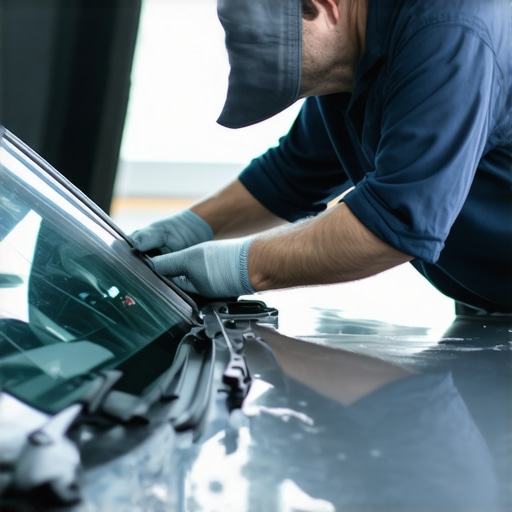
How a mobile glass tech handles rain during a windshield swap
Rain is the primary adversary of the mobile glass technician. When you see a specialized glass installer pull up to your driveway for a same-day chip repair or a full windshield swap, the weather isn’t just a matter of convenience; it is a matter of chemical physics. As a glazier with over two decades in the field, I look at a windshield not as a simple transparency, but as a critical structural component of the vehicle’s safety cage. In a rollover, that glass provides up to 60% of the roof’s structural integrity. If the bond fails because of a few drops of water, the consequences are catastrophic.
The Pinchweld Autopsy: A Lesson in Moisture Management
I recall a specific instance where I was called to inspect a vehicle that had undergone a mobile service during a spring squall in Seattle. The owner complained of a whistling sound. I pulled the side molding and what I found was a glazier’s nightmare. The previous installer had relied on a standard ‘caulk-and-walk’ approach, ignoring the fact that the pinchweld—the metal flange where the glass sits—was damp. I pulled that glass out with minimal effort; the urethane hadn’t bonded to the metal at all. Instead, it had bonded to a microfilm of water. The metal underneath was already showing signs of rust jacking, which is the automotive equivalent of the black rot I’ve seen in the rough opening of a poorly flashed residential window. This wasn’t just a leak; it was a structural failure waiting for a collision.
“Installation is just as critical as the window performance itself. A high-performance window installed poorly will fail.” – AAMA Installation Masters Guide
The Science of the Bond: Why Humidity Matters
To understand why a mobile glass tech handles rain with extreme caution, you have to understand the chemistry of high-viscosity urethane. Most automotive adhesives are moisture-cured. This sounds counterintuitive—if they need moisture to cure, wouldn’t rain be good? No. There is a massive difference between atmospheric humidity and liquid water. Liquid water on the pinchweld or the glass frit (the black painted edge of the windshield) prevents the silane primers from cross-linking with the substrate. When we perform a windshield swap, we are essentially performing a chemical weld. If water occupies the microscopic pores of the metal or glass, the urethane sits on top of the water rather than integrating with the surface. This creates a ‘cold bond’ that will eventually leak or, worse, release during an airbag deployment.
The Mobile Tech’s Rain Protocol
A professional mobile service doesn’t just cancel because of a drizzle; they adapt. The first line of defense is the canopy. A high-quality mobile glass tech uses a specialized vehicle awning or a pop-up tent to create a dry micro-environment. This is our version of a ‘controlled shop environment.’ Once the area is shielded, we use heat guns to ensure the pinchweld is not just ‘dry to the touch’ but thermally prepared for the primer. We aren’t just wiping it with a rag. We are looking for the dew point. If the metal is colder than the surrounding air, condensation will form instantly, even under a tent. This is why we monitor the temperature of the substrate. We use specialized Sika or Dow primers that are designed to scavenge trace amounts of moisture, but they have their limits.
The Technical Specs: U-Factor and Structural Load
While we often talk about U-Factor and Solar Heat Gain in the context of residential glazing, the physics apply to your car as well. The glass installer must consider the thermal expansion of the glass. If I install a windshield that has been sitting in a cold van into a car that has been running its heater, the internal stresses on the glass can cause a stress crack before the urethane even sets. This is where ‘Glazing Zooming’ becomes vital. We look at the ‘Safe Drive-Away Time’ (SDAT). In rainy, high-humidity conditions, the SDAT actually decreases for some urethanes, but the risk of initial bond failure increases. It is a delicate balance of timing and chemistry.
“The method of flashing and sealing the window into the building envelope is the single most important factor in preventing water penetration.” – ASTM E2112 Standard Practice
Chip Repair vs. Replacement in Wet Weather
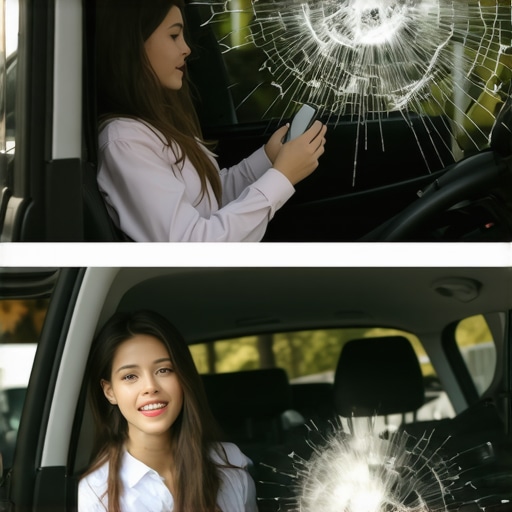
For a same-day chip repair, rain is even more problematic. A stone chip is a vacuum. When it rains, that vacuum sucks in water and road oils. If a technician tries to inject resin into a wet chip, the resin will stay cloudy and won’t bond. I’ve seen ‘parking lot’ installers try to dry a chip with a lighter—that’s a recipe for cracking the laminate. A master tech uses a moisture evaporator tool or a vacuum pump to draw the moisture out of the break before the resin goes in. If they don’t, that chip repair will fail within a month, and you’ll be looking at a full replacement.
The Anatomy of a Proper Install
When we look at the ‘Rough Opening’ of a car—the frame—we treat it with the same reverence as a sash in a high-end wood window. We check the glazing bead and ensure the weep holes (the drains in the cowl) are clear. If those drains are clogged with leaves, water backs up into the pinchweld area, leading to the same rot issues mentioned earlier. We use shims only when necessary to center the glass, but primarily we rely on the consistency of the urethane bead to provide the cushion. This is technical, precise work. It is not a job for someone looking to cut corners.
Final Verdict: Don’t Compromise
If your mobile service provider arrives and starts working in the open rain without a cover, send them away. They are compromising your safety for the sake of their schedule. A true professional understands that the bond between the glass and the vehicle is a sacred trust. Whether it’s a chip repair or a full swap, the management of moisture, temperature, and chemical primers is what separates a master glazier from a ‘caulk-and-walk’ amateur. Demand the canopy, ask about the SDAT, and never settle for a wet pinchweld. Your life literally depends on that bead of glue.