Why waiting a week to fix a rock chip is a $900 mistake
The Anatomy of a Fracture: A Glazier’s Perspective
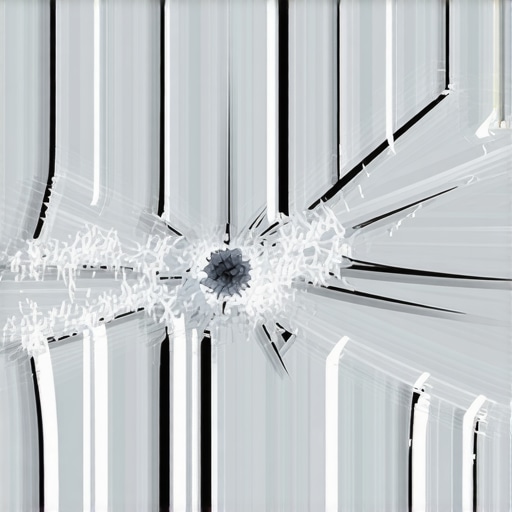
I sat across from a ‘Tin Man’ (high-pressure salesman) who was trying to sell triple-pane krypton windows in a mild climate. I had to explain to the homeowner why the ROI was 150 years. But more importantly, I had to point out a tiny, innocuous bullseye chip in his existing double-pane picture window. He told me it had been there for three days and he would get to it next month. I told him he had about forty-eight hours before that ten-dollar resin fix turned into a nine-hundred-dollar full-unit replacement. He didn’t listen. Four days later, a cold front moved through, the heater kicked on, and that tiny speck zipped across the glass like a lightning bolt. The ‘Tin Man’ got his sale, but not for the reasons he thought. He got it because the homeowner ignored the physics of glass tension.
The Science of Thermal Stress and Crack Propagation
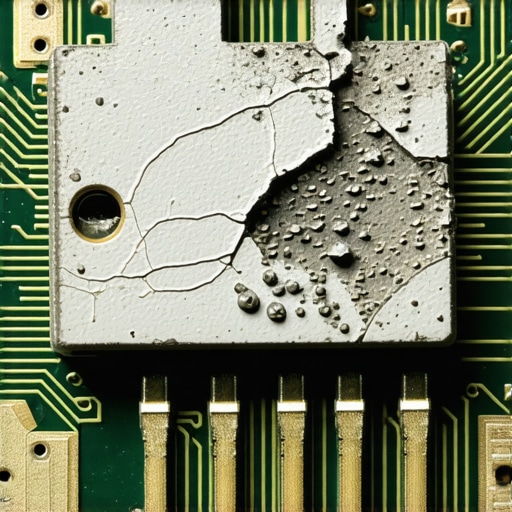
To understand why a rock chip is a ticking time bomb, you have to understand what glass actually is. It is not a solid in the traditional sense; it is an amorphous solid that behaves with incredible internal tension. When a pebble hits your glass, whether it is a storefront, a residential sash, or an automotive windshield, it creates a localized point of failure. This isn’t just a cosmetic blemish. You have compromised the structural integrity of the entire pane. In the glazing industry, we look at the Rough Opening and the Glazing Bead to ensure a window is seated properly, but if the glass itself has a micro-fracture, those installation safeguards mean nothing. As a glass installer with decades in the field, I have seen ‘star breaks’ that look stable under a microscope but are actually microscopic canyons waiting to expand.
“Installation is just as critical as the window performance itself. A high-performance window installed poorly will fail.” AAMA Installation Masters Guide
The Enemy: Heat Loss and the Dew Point
In colder climates like Chicago or Minneapolis, the pressure on a rock chip is immense. We talk about the U-Factor constantly. A lower U-Factor means better insulation, but it also means a greater temperature differential between the interior and exterior surfaces of the glass. When the outside temperature drops to sub-zero and you have your interior climate control set to seventy degrees, the glass is caught in a tug-of-war. The interior lite wants to expand while the exterior lite is contracting. This thermal shearing force focuses entirely on the weakest point: your rock chip. This is why same-day chip repair is not a suggestion; it is a financial necessity. If you wait, the moisture in the air enters the break. When that moisture reaches its Dew Point and freezes, it expands by nine percent. That expansion is more than enough to overcome the surface tension of the glass, resulting in a total failure of the lite.
Why Mobile Service is the Only Logical Solution
Many people delay repair because they don’t want to drive to a shop or wait in a lobby. This is a fundamental misunderstanding of the risk. Driving a vehicle or even leaving a residential window exposed to the elements increases the vibration and pressure changes within the Rough Opening. A mobile service is the only way to mitigate this risk. By having a technician come to you, the glass remains in a stable environment. A professional glass installer will use a bridge and injector tool to create a vacuum over the break. This removes the air and any trapped moisture before injecting a high-viscosity UV-curable resin. This resin has a refractive index nearly identical to the glass itself, effectively ‘welding’ the fracture shut and restoring the structural integrity of the Sash.
The Myth of the Quick Fix and the Reality of Cost
I have seen homeowners try to use superglue or clear nail polish on a rock chip. It is an exercise in futility. Those materials do not have the molecular bonding capabilities of professional glazing resins. They also fail to address the Sill Pan drainage or the Flashing Tape integrity if the crack eventually leads to a seal failure. When a chip turns into a crack, you are no longer looking at a simple repair. You are looking at a full glass replacement. If it is a modern high-performance window, you are paying for the glass, the Argon gas fill, the Low-E coating on Surface #3, and the labor to reset the Glazing Bead. You have turned a small maintenance task into a major construction project.
“Standard Practice for Installation of Exterior Windows, Doors and Skylights requires that any compromise to the glass surface be addressed immediately to maintain the thermal barrier and structural rating of the fenestration assembly.” ASTM E2112
The Physics of Laminated vs. Tempered Glass
In many modern installations, we use laminated glass which consists of two lites of glass bonded by a PVB (Polyvinyl Butyral) interlayer. When a rock chip hits laminated glass, it usually only affects the outer layer. However, if water reaches that PVB layer, it begins a process called delamination. The glass will start to look cloudy or ‘milky’ around the edges of the chip. This is irreversible. Once the bond between the glass and the interlayer is compromised, the safety rating of the window drops to zero. Whether you are dealing with a Muntin-divided lite or a massive curtain wall, the principle remains the same: the Shim and the frame can only support a stable piece of glass. A fractured piece of glass is a dynamic, failing system.
Final Technical Assessment
Do not be fooled by the small size of a rock chip. It is the technical equivalent of a crack in a dam. The forces of thermal expansion, atmospheric pressure, and moisture infiltration are working against you twenty-four hours a day. Engaging a glass installer for same-day chip repair via a mobile service is the only way to protect your investment. You are not just ‘fixing a spot’; you are preventing the total collapse of the window’s thermal envelope. If you wait a week, you aren’t saving time; you are just writing a nine-hundred-dollar check to a glazier like me to replace what could have been easily saved.