Why your car’s side windows are harder to break than your windshield
In the world of high-stakes glazing, whether you are hanging a curtain wall on a forty-story skyscraper or seating a new windshield into a precision-milled frame, the physics of glass remain uncompromising. I have spent over two decades observing how glass behaves under stress, and one of the most common misconceptions I encounter involves the structural differences between automotive glass and architectural glass. To understand why your side windows seem to possess a different kind of resilience than your windshield, we have to look past the surface and examine the molecular tension and the manufacturing intent. This is not just about glass; it is about the management of energy and the calculated failure points of different materials.
The Condensation Crisis and the Reality of Glass Performance
A homeowner once called me in a panic because their newly installed windows were ‘sweating’ and they were convinced the seals had failed within a week. I walked into the residence with my hygrometer in hand and showed them that the internal humidity was hovering at 60 percent while the outside temperature was dropping rapidly. It was not a failure of the windows; it was a byproduct of their lifestyle and the efficiency of the new glazing. The glass was doing exactly what it was designed to do: creating a thermal barrier that was so effective it allowed the interior humidity to reach its dew point on the glass surface. This same principle of precision engineering applies to the glass in your vehicle. When a glass installer arrives for a mobile service, they aren’t just swapping out a clear panel; they are handling a highly engineered safety component designed to behave in a specific way during a collision or an attempted breach.
“Installation is just as critical as the window performance itself. A high-performance window installed poorly will fail.” AAMA Installation Masters Guide
Tempered vs. Laminated: The Molecular Tug-of-War
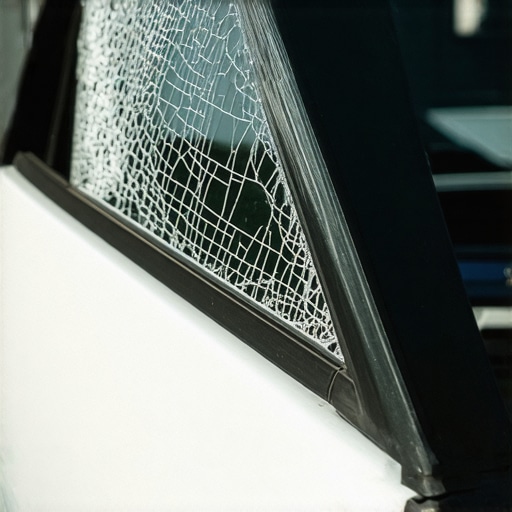
The core reason your side windows are harder to break with a blunt object than your windshield lies in the tempering process. Side windows are typically made of tempered glass. During manufacturing, the glass is heated to over 1,100 degrees Fahrenheit and then rapidly cooled using high-pressure air blasts. This process, known as quenching, cools the outer surfaces much faster than the inner core. As the core eventually cools and shrinks, it pulls on the outer surfaces, creating a permanent state of high compression. This surface compression is usually around 10,000 psi. To break this glass, you must first overcome that massive compression. This is why a side window can often withstand a heavy blow from a dull object that would easily crack a windshield. However, once that compression layer is breached by a sharp point or a high-velocity impact, the entire structural integrity collapses, and the glass explodes into thousands of small, relatively harmless cubes. This is a safety feature designed to prevent large, jagged shards from injuring occupants.
Conversely, your windshield is a sandwich of laminated glass. It consists of two layers of annealed glass bonded together by a clear plastic interlayer, usually polyvinyl butyral (PVB). This design is not intended to be unbreakable; it is intended to stay in one piece. When an object hits your windshield, the glass cracks, but the shards adhere to the PVB interlayer. This prevents the occupant from being ejected and keeps the roof from collapsing during a rollover. This is why same-day chip repair is so vital. A chip in a laminated windshield is a breach in the first sacrificial layer. If left unaddressed, the thermal expansion and contraction will eventually cause that chip to spread across the entire laminate, compromising the structural safety of the vehicle.
The Mechanics of Mobile Service and Chip Repair
When you call for a mobile service to handle a chip repair, the glass installer is performing a delicate surgical procedure. The process involves more than just dabbing some glue into a hole. First, the technician must clear the impact point of any loose glass fragments or moisture. In cold climates, such as Chicago or Minneapolis, moisture trapped in a chip can freeze and expand, forcing the layers of the laminate apart. The installer then uses a specialized vacuum tool to remove the air from the crack. Once a vacuum is established, a high-refractive-index resin is injected into the void. This resin must have the same optical properties as the glass itself to ensure the repair is nearly invisible. After the resin has filled every microscopic crevice, it is cured using a specific wavelength of ultraviolet light. This cross-links the polymers, restoring the structural integrity of the glass and preventing the ‘bloom’ of a crack.
“Glazing systems must be designed to withstand the environmental loads and stresses expected during the service life of the building or vehicle.” ASTM E2112 Standard Practice
Thermal Stress in Cold Climates
In northern regions, the U-Factor and thermal management become the dominant concerns for any glass installer. In these environments, the enemy is heat loss and the resulting thermal stress. Glass is an insulator, and when one side of the glass is 70 degrees while the other is minus 10, the glass wants to bow. In architectural settings, we use warm-edge spacers and argon gas fills to manage this gradient. In automotive glass, the windshield is subjected to the same stresses. When you turn on your defroster on a freezing morning, you are creating a massive thermal gradient across the surface of the glass. If there is a pre-existing chip, the rapid expansion of the inner layer of glass against the still-frozen outer layer will cause the glass to split. This is why same-day service is not a luxury; it is a necessity for maintaining the safety of the glazing system.
The Anatomy of the Frame: Rough Opening to Glazing Bead
Whether it is a window in your home or your car, the glass must be seated correctly within its frame. In residential construction, we look at the Rough Opening and ensure the Sill Pan is properly flashed to manage water. We use a Shim to level the frame, ensuring the Sash can be Operable without binding. In a vehicle, the ‘frame’ is the pinch weld of the car body. The glass installer must use a high-modulus urethane adhesive to bond the glass to the metal. This adhesive is part of the vehicle’s structural cage. If the installer skips the primer or fails to clean the pinch weld, the glass might stay in place during normal driving, but in an accident, the entire windshield could pop out, allowing the roof to crush. Just as we use a Glazing Bead to hold glass in a wooden sash, the urethane holds the automotive glass. Any compromise in this bond is a failure of the entire system.
Understanding the Numbers: U-Factor and SHGC
In the South, where the sun is the primary adversary, we focus on the Solar Heat Gain Coefficient (SHGC). We want to block the radiant heat from entering the cabin or the home. This is achieved through Low-E coatings. On a house window, we might place the coating on Surface #2 to reflect heat before it even enters the glass. In a vehicle, tinting and specialized coatings do the same. If you are in a hot climate, a glass installer will recommend glass with a lower SHGC to reduce the load on your air conditioning and protect the interior materials from UV degradation. The physics of light and heat are the same whether you are looking through a Muntin-divided window in a colonial home or the tempered side window of a sedan.
Ultimately, the reason your side windows are harder to break is a matter of surface tension and heat-treating. They are built to resist impact until they reach their breaking point, at which they fail completely for your safety. Your windshield is built to fail partially while maintaining its form. Both require expert handling and precise installation. Never settle for a ‘caulk-and-walk’ approach. Whether it is managing the Weep Hole in a window frame or ensuring the proper curing time for a windshield adhesive, the details are what prevent a minor issue from becoming a catastrophic failure. Demand the expertise of a master glazier who understands the science of the shim, the sash, and the molecular structure of the glass itself.