What That Grinding Sound in Your Wheels Actually Means for Your Brakes
What That Grinding Sound in Your Wheels Actually Means for Your Brakes
You’re driving down Sunrise Highway, the windows are down to catch the Suffolk County breeze, and you press the brake pedal to slow for a red light. Instead of a smooth, silent stop, you hear it: a harsh, metallic crunch that vibrates through the floorboards. It sounds like two stones being crushed together, or worse, metal rasping against metal. That sound is more than just an annoyance; it is a mechanical cry for help. As a veteran of the automotive industry for over 30 years – having worked every role from a lot boy and technician at Atlantic Automall to dealership management – I, Ron Capozzi, have heard every noise a car can make. At m d automotive, we know that when your wheels start grinding, your vehicle is telling you that a critical safety component is reaching its breaking point. In the world of md automotive repair, catching these sounds early is the difference between a simple maintenance stop and a catastrophic failure on the road.
While md automotive repair encompasses everything from auto shop ac repair to complex auto engine repair shop diagnostics, brake health remains the most vital aspect of driver safety. Grinding is rarely the first symptom of a problem, but it is often the most urgent. It signifies that the protective layers of your braking system have vanished, and you are now causing structural damage to your vehicle every time you attempt to slow down. Understanding what that sound means is the first step in ensuring your suffolk county brake service is handled correctly and safely.
Decoding the Noise: Squealing vs. Scraping vs. Grinding
Not all wheel noises are created equal. Before you bring your vehicle into a brake auto repair shop, it helps to understand the “language” of your car. In my decades of experience, I’ve found that drivers often use these terms interchangeably, but to a technician at md auto, they mean very different things.
Squealing or Squeaking: This is often a high-pitched “chirp” that occurs when you are driving but may disappear when you apply the brakes. Most modern brake pads are equipped with a small metal tab called a wear indicator. When the pad material gets dangerously thin, this tab contacts the rotor, creating a squeal. It’s an intentional warning. If you ignore this, you’ll soon be looking for md automotive repair for much larger issues.
Scraping: A scraping sound often sounds like a rhythmic “shhh-shhh-shhh.” This can sometimes be caused by a small rock or piece of road debris lodged between the brake rotor and the backing plate. In Suffolk County, where road salt and gravel are common, this happens more often than you’d think. While it sounds terrible, it may not always mean your brakes are shot, but it still requires a professional at an auto md facility to clear the debris before it scores the rotor.
Grinding: This is the “red alert” of automotive sounds. A loud, consistent grinding noise – especially one that gets louder as you apply more pressure to the pedal – indicates metal-on-metal contact. According to industry research from AutoZone, once you reach the grinding stage, the friction material on your brake pads is completely gone. You are now pressing the steel backing plate of the pad directly against the cast-iron brake rotor. This doesn’t just stop the car poorly; it generates immense heat that can lead to total brake failure.
The Primary Culprit: Worn Brake Pads and Rotors
To understand why your car is grinding, you have to understand the mechanics of the disc brake system. Your wheel is bolted to a metal disc called a rotor. When you step on the brake pedal, hydraulic fluid pushes a piston inside a caliper, which squeezes two brake pads against the spinning rotor. The friction between the pads and the rotor is what slows the vehicle down.
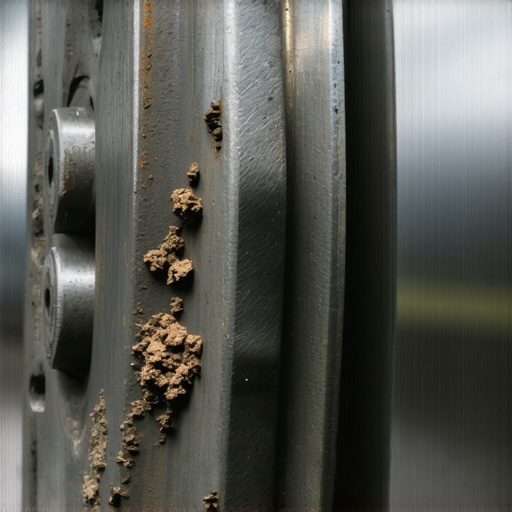
Brake pads are designed to be sacrificial. They are made of semi-metallic, ceramic, or organic compounds that wear down over time. When the pads are healthy, the stop is silent and smooth. However, when the friction material is exhausted, the steel backing plate of the pad is all that’s left. At m & d auto repair, we see this “metal-on-metal” scenario daily. The steel-on-steel friction creates deep grooves, or “scoring,” in the rotor. Once a rotor is scored, it can rarely be “turned” or resurfaced on a lathe; it usually must be replaced entirely.
If you are wondering how you missed the warning signs, you might want to learn how to tell if your brake pads are worn out without taking the wheels off. Monitoring your pad thickness through the spokes of your rims can save you from the expensive md automotive repair bills associated with rotor replacement. When you wait until the grinding starts, you aren’t just paying for pads; you’re paying for a full suffolk county brake service including rotors and potentially new calipers if the heat has seized the pistons.
It’s Not Always the Brakes: The Wheel Bearing Factor
One of the most common diagnostic challenges we face at md auto repair is the “phantom grind.” This is a grinding sound that persists even when your foot is off the brake pedal. If the sound changes pitch or volume when you steer left or right, you likely aren’t looking at a brake issue, but a failing wheel bearing.
A wheel bearing is a set of steel balls held together by a metal ring (a race). They allow the wheel to spin with minimal friction. Over time, the grease inside the bearing housing can leak out or become contaminated with water and salt. When the bearing begins to fail, the metal-on-metal friction inside the hub creates a low-frequency growl or grind. This falls under the category of vehicle suspension repair.
Ignoring a wheel bearing is even more dangerous than ignoring worn brakes. A seized wheel bearing can cause the wheel to lock up entirely or, in extreme cases, allow the wheel assembly to detach from the vehicle. If you hear a grinding noise that seems to follow the speed of the vehicle rather than the application of the brakes, it’s time to visit a tire shop auto repair specialist or a comprehensive shop like M D Automotive for a hub assembly inspection.
Environmental Factors: Rust and Debris
Living in Suffolk County means our vehicles are subjected to unique environmental stressors. Between the salt air from the Atlantic and the heavy road salting during Long Island winters, rust is a constant enemy.
“Morning Sickness”: Have you ever noticed a slight grinding sound the first two or three times you hit the brakes in the morning, only for it to disappear? This is often just a thin layer of surface rust that forms on the rotors overnight due to high humidity. The first few stops “clean” the rotors. However, if that rust is allowed to sit – for instance, if a car is parked for several weeks – it can cause “pitting.” Pitted rotors will grind and vibrate indefinitely, requiring a visit to an auto exhaust repair shop or full-service center for replacement.
Debris is another factor. A small pebble caught in the brake dust shield can sound like a circular saw. At md automotive, we often find that a simple cleaning and lubrication of the brake slides can resolve “mysterious” noises that haven’t yet reached the level of metal-on-metal damage. This is why regular maintenance at a suffolk county brake service provider is so critical – we catch the “pebbles” before they become “problems.”
The Danger of Ignoring the Sound
As an expert who has spent years in the bays and the front offices of dealerships, I cannot stress this enough: a grinding sound is a mechanical failure in progress. When you reach the metal-on-metal stage, your stopping distance increases significantly. The steel backing plate does not have the same coefficient of friction as the brake pad material.
Furthermore, the extreme heat generated by metal-on-metal contact can boil your brake fluid. When brake fluid boils, it introduces air bubbles into the hydraulic lines. Since air is compressible and fluid is not, your brake pedal will feel “spongy,” and in some cases, go all the way to the floor without stopping the car. You might also notice why your brake pedal pulses when you slow down on the highway, which is a sign of warped rotors caused by that excessive heat.
Beyond the physical danger, there is the financial risk. A simple pad replacement is an affordable preventative measure. A full md automotive repair involving rotors, calipers, and potentially a master cylinder because of overheated fluid can cost four to five times as much. For those managing a business, md fleet services can help ensure your commercial vehicles never reach this dangerous and expensive stage.
Why Professional Diagnostics at MD Auto Repair Matter
In the age of YouTube tutorials, many car owners are tempted to attempt a DIY brake job. However, modern vehicles are significantly more complex than the cars I worked on 30 years ago. Today, your braking system is integrated with your vehicle’s computer. Systems like Electronic Brakeforce Distribution (EBD), Anti-lock Braking Systems (ABS), and Traction Control all rely on the brakes functioning perfectly.
When we perform a suffolk county brake service at M D Automotive, we aren’t just “slapping pads on.” We perform a comprehensive check of the entire wheel assembly. This includes:
- Inspecting the caliper pistons and seals for leaks or sticking.
- Checking the brake lines for corrosion or cracking.
- Verifying the condition of the vehicle suspension repair components.
- Ensuring that the auto repair wheel alignment is correct, as uneven alignment can cause uneven brake wear.
Furthermore, modern cars are equipped with Advanced Driver Assistance Systems (ADAS). If your car has automatic emergency braking or lane-keep assist, these systems are tied directly to your brakes and steering. If your alignment is off during a brake repair, you might find the reason your car’s lane-keep assist is acting up is due to a sensor misalignment. Understanding how to tell if your car’s ADAS system is out of alignment is a crucial part of modern md auto repair. A professional auto engine repair shop like ours has the specialized equipment to recalibrate these sensors – something a driveway mechanic simply cannot do.
Conclusion: Don’t Wait for the Silence of a Breakdown
A grinding sound in your wheels is your car’s way of telling you that its safety margin has disappeared. Whether it is a worn-out brake pad, a failing wheel bearing, or a rust-pitted rotor, the issue will not fix itself. In fact, it will only get more expensive and more dangerous with every mile you drive.
At M D Automotive, we pride ourselves on providing the highest level of suffolk county brake service. With my 30 years of experience guiding our team, we ensure that every md automotive repair is done to dealership standards but with the personal touch of a local shop. Whether you need an auto shop ac repair for the summer heat, md fleet services for your business, or urgent brake auto repair shop attention, we are here to help. Don’t wait until you’re stranded on the side of the Long Island Expressway. If you hear the grind, it’s time to find the professional care your vehicle deserves at md auto.