Why your car’s interior smells like vinegar after a glass fix
The pungent, sharp odor of acetic acid hitting your nostrils the moment you open your car door isn’t just a nuisance; it is a chemical signature. As a master glazier with over two decades in the trade, I have seen this ‘vinegar syndrome’ in everything from high-rise curtain walls to poorly executed mobile windshield replacements. If you just had a chip repair or a full glass replacement and your vehicle smells like a salad bar, you are dealing with the off-gassing of an acetoxy-cure silicone sealant. In the world of professional glazing, this is often the calling card of an installer who prioritizes speed and cost over material compatibility and long-term structural integrity.
The Narrative Matrix: A Lesson in Material Failure
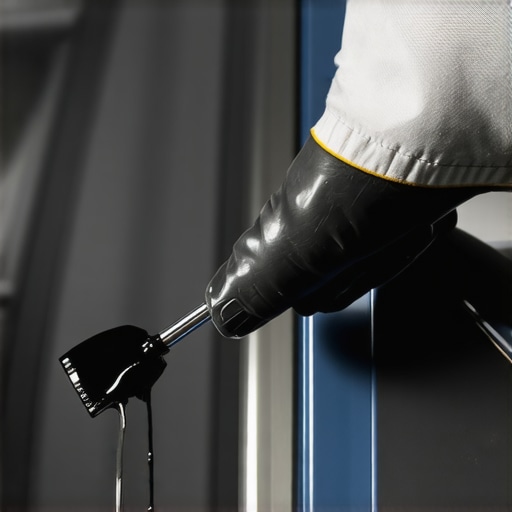
I remember a case in the humid heat of a mid-July afternoon. A client called me after a same-day mobile service had replaced the glass on their sedan. By the time I arrived, the owner was worried about the ‘toxic’ smell. I didn’t even need to stick my head inside. I could smell the acetic acid from three feet away. I pulled back the molding and saw exactly what I feared: a bead of cheap, hardware-store-grade silicone that was already beginning to lose its bond with the pinchweld. The installer had bypassed the high-performance polyurethanes required for automotive glass and used a standard acetoxy silicone because it tacks up fast in the heat. It was a classic ‘caulk-and-walk’ disaster. The vinegar smell was the acetic acid being released as the silicone vulcanized, and in an enclosed automotive environment, that acid was already starting to microscopicly etch the very metal it was supposed to protect.
“Installation is just as critical as the window performance itself. A high-performance window installed poorly will fail.” – AAMA Installation Masters Guide
The Chemistry of the Smell: Acetoxy vs. Neutral Cure
To understand why your car smells like vinegar, we have to look at the polymer chemistry of RTV (Room Temperature Vulcanizing) silicones. There are two primary types used in the broader glazing industry: acetoxy-cure and neutral-cure. Acetoxy silicones use acetic acid as a catalyst for the curing process. As the sealant reacts with moisture in the air to form its rubbery bond, it sheds that acid. This is the source of the vinegar smell. While acetoxy silicones are excellent for glass-to-glass bonds in controlled environments, they are generally prohibited in automotive applications and many architectural ‘Rough Opening’ scenarios because the acid is corrosive to metal and can interfere with the electronics embedded in modern glass. Professionals use neutral-cure silicones or, more accurately for vehicles, high-modulus polyurethanes. These do not release acid. If your glass installer used a product that smells like vinegar, they likely used a material not rated for the specific stresses of a vehicle’s frame.
The Installation Autopsy: Why Same-Day Service Can Be a Trap
When you opt for a mobile service or a same-day chip repair, you are often at the mercy of the technician’s choice of consumables. In the southern heat, where solar heat gain (SHGC) can turn a car interior into a 150-degree oven, the curing process is accelerated. This sounds like a benefit, but rapid curing of the wrong material leads to internal stresses in the ‘Glazing Bead’ area. A proper glass installer knows that the bond line between the glass and the frame is a structural component. The ‘Shingle Principle’ applies here too: water must be directed away from the frame. If an acetoxy silicone is used, the acid can eventually compromise the primer on the metal frame, leading to rust. Once rust starts in the pinchweld, your next glass replacement will be impossible without significant bodywork. This is why we emphasize the ‘Rough Opening’ tolerances even in cars; if the glass isn’t seated perfectly with the correct urethane, the structural integrity of the roof is compromised during a rollover.
The Physics of the South: Heat and VOCs
In warmer climates, the ‘Enemy’ is the sun. A Low-E coating on a home window might be on Surface #2 to reflect heat outside, but in a car, the entire glass assembly is a heat sink. When an installer uses a sub-par resin for a chip repair or an incorrect sealant for a replacement, the intense UV radiation and thermal expansion cause the material to break down. The vinegar smell is the Volatile Organic Compounds (VOCs) reaching their boiling point and filling the cabin. In a high-heat environment like Texas or Florida, this off-gassing happens much faster and more aggressively. A professional ‘Sill Pan’ or automotive pinchweld setup requires materials that can handle the extreme expansion and contraction of the metal frame without shearing the bond. Cheap silicones simply cannot keep up with the coefficient of thermal expansion found in automotive alloys.
“A glazing system’s failure is rarely the glass itself; it is almost always the failure of the seal at the transition point between materials.” – ASTM E2112 Standard Practice
The Technical Reality of Chip Repair
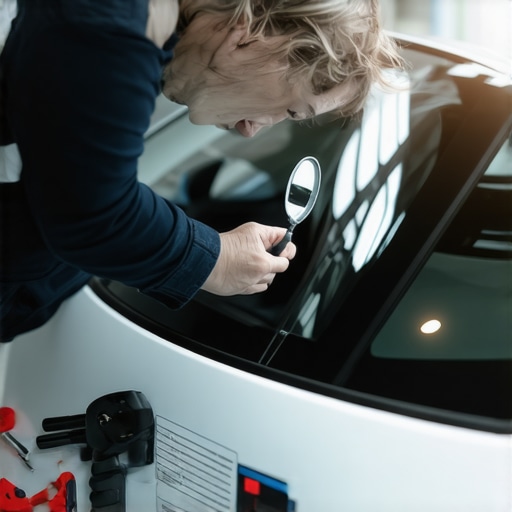
Even a simple chip repair involves precision. We use a bridge and injector to force a clear resin into the break. If that resin has a high acidic content or if the technician uses an unvetted ‘same-day’ kit, the heat of the sun will reactivate those chemical bonds. You might notice the smell months later on a particularly hot day. A master glazier ensures that every ‘Sash’ and ‘Muntin’ equivalent in the automotive world is cleaned with an activator that prepares the surface for a neutral bond. We don’t just ‘Shim’ the glass into place and hope for the best; we calculate the ‘Rough Opening’ clearance to ensure there is enough adhesive mass to absorb the vibration of the road. If your interior smells like vinegar, it means your installer skipped the science and went straight for the cheapest tube in their van.
Conclusion: Demand More Than a Quick Fix
Water management and chemical compatibility are sciences, not suggestions. When you hire a glass installer, you aren’t just paying for a piece of transparent silica; you are paying for the expertise to manage the ‘Weep Hole’ logic of the vehicle’s drainage and the chemical stability of the adhesives. If you encounter the vinegar smell, ventilate the vehicle immediately and return to the shop. Ask them specifically if they used an acetoxy-cure silicone or a structural polyurethane. Don’t buy the hype of a twenty-minute drive-away time if it means compromising your car’s frame to acid corrosion. In glazing, the installer matters more than the sticker on the glass. “