How to tell if your windshield crack is too long for a repair
The Physics of Glass: Why Your Windshield is More Than a Simple Barrier
As a Master Glazier with over 25 years in the field, I have seen every type of glass failure imaginable, from 50 story curtain walls buckling under wind load to the microscopic fractures in a residential Sash. When we talk about a windshield, we are talking about a highly engineered piece of laminated safety glass. This is not the single-pane float glass you find in a cheap picture frame. It is a structural component of your vehicle, designed to manage stress, resist impact, and provide a Rough Opening seal that keeps the elements at bay. Most people treat a rock chip as a cosmetic nuisance. I see it as a structural breach in a pressurized system.
A homeowner called me in a panic because their new windows were ‘sweating.’ I walked in with my hygrometer and showed them the humidity was 60%. It was not the windows; it was their lifestyle. I see the same thing with drivers in cold climates. They ignore a tiny star-break in their glass, then one morning in January, they blast the defroster to clear the frost. The sudden delta in temperature creates a massive thermal shock. The inner layer of glass expands while the outer layer, chilled by the ambient air, remains contracted. That tiny chip, which was under manageable tension, suddenly undergoes a catastrophic shear. That is when you hear that sickening pop and watch a six-inch line race across your field of vision. It was not a ‘bad’ piece of glass; it was a failure to respect the physics of the dew point and thermal expansion.
The ROLAGS Standard: Measuring the Damage
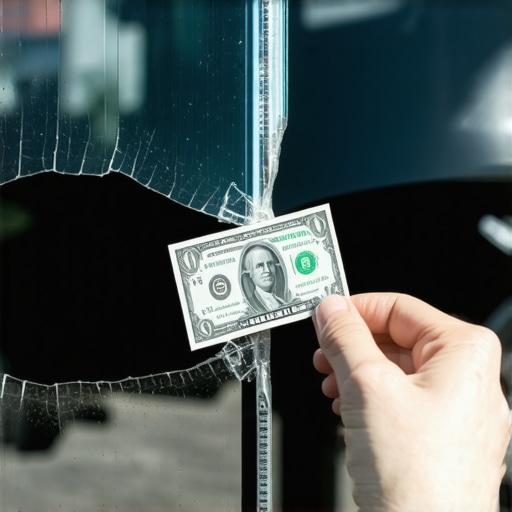
In the glazing industry, we do not guess. We measure. When a glass installer arrives for a mobile service call, they are looking at the damage through the lens of ROLAGS (Repair of Laminated Auto Glass Standard). The primary question is whether the structural integrity of the PVB (polyvinyl butyral) interlayer has been compromised. If the crack is longer than a dollar bill, usually about six inches, you are no longer looking at a chip repair; you are looking at a full replacement. Why? Because the resin used in same-day repairs is designed to fill a void and bond to the glass edges, but it cannot restore the original tensile strength of the factory-laminated sheet over a long distance.
“Installation is just as critical as the window performance itself. A high-performance window installed poorly will fail.” AAMA Installation Masters Guide
This principle applies equally to automotive glass. A repair is essentially a localized installation of specialized polymer resin. If the crack has reached the edge of the glass, the Glazing Bead or the urethane seal, the structural continuity is broken. A crack that touches the edge of the Rough Opening of the frame is a weak point that will eventually lead to a total failure under the vibration of normal driving.
Climate Logic: The Cold Climate Context
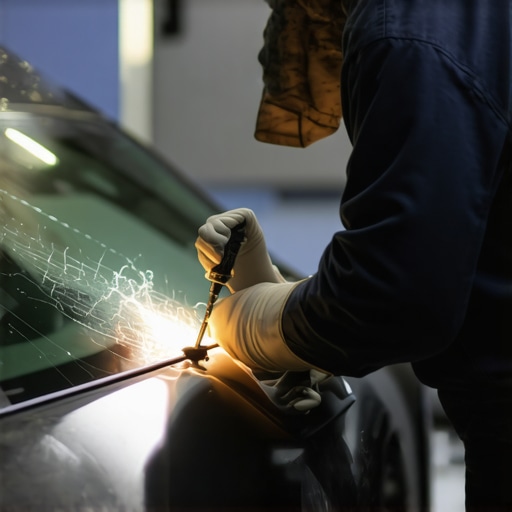
In northern climates like Chicago or Minneapolis, the enemy is Heat Loss and Condensation. On a windshield, this manifests as extreme stress on the glass surface. The U-Factor of a standard windshield is relatively high compared to a triple-pane window, meaning heat moves through it quickly. When you have a chip, the air trapped inside that tiny void contains moisture. As the temperature drops, that moisture reaches its dew point and can even freeze, expanding the crack from the inside out. This is why a same-day mobile service is not just a convenience; it is a technical necessity. You need to evacuate that air and moisture before the first frost cycle hits. A professional glass installer uses a vacuum tool to pull the air out of the break before injecting the UV-curable resin. If you try a DIY kit, you often trap the air inside, creating a permanent blemish and a structural weak point that will fail when the mercury drops.
The Anatomy of the Break: Bullseyes, Stars, and Craters
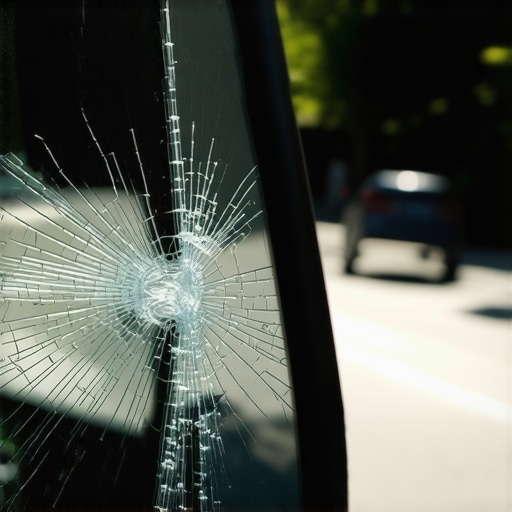
Not all chips are created equal. A ‘bullseye’ is a circular break with a dark ring, indicating a clean separation of the top glass layer from the PVB. These are the easiest to fix because the resin can flow easily into the conical void. A ‘star break’ is more dangerous. It has multiple legs radiating from a central point. Each of those legs is a potential long-term crack. A ‘half-moon’ is similar to a bullseye but is caused by an angled impact. If any of these breaks are in the ‘acute area’—the space directly in front of the driver’s eyes—a repair is often discouraged. The refractive index of the resin, while close to glass, is never a 100 percent match. It can cause a slight distortion, which, at highway speeds or in rainy conditions, can become a safety hazard.
“The primary function of any glazing system is the management of environmental loads and the safety of the occupants.” ASTM E2112 Standard Practice
The Role of the Mobile Service Installer
A true professional does more than just squirt glue into a hole. They assess the Sash or frame for signs of rust or Sill Pan issues that could affect the bond. In the automotive world, this means checking the pinchweld. If your glass installer finds that the crack was caused by ‘stress’ rather than ‘impact,’ it usually points to an issue with how the glass was seated in the frame. Perhaps a Shim was misplaced during a previous replacement, or the Weep Hole areas in the cowl are clogged, leading to moisture buildup and corrosion of the metal frame. A mobile service technician must ensure the environment is controlled. Even though they are working in your driveway, the resin must be shielded from premature UV exposure until the exact moment of curing. If the resin cures too fast, it becomes brittle; too slow, and it fails to bond to the microscopic ridges of the glass.
Technical Summary: Repair vs. Replace
To determine if you are a candidate for a repair, follow these three rules. First, the size must be manageable. If it is smaller than a quarter for a chip or shorter than six inches for a crack, repair is viable. Second, the location is paramount. If the damage is in the driver’s direct line of sight or within two inches of the glass edge, you are looking at a replacement. Third, the age of the damage matters. A fresh chip is clean. An old chip is full of road salt, washer fluid, and grime. Even the best glass installer cannot bond resin to grease. If you want a same-day fix that actually lasts, you must cover the chip with a small piece of clear tape immediately after it happens to keep the ‘rough opening’ of the crack pristine until the specialist arrives.
{“@context”:”https://schema.org”,”@type”:”HowTo”,”name”:”How to Assess a Windshield Crack for Repair”,”step”:[{“@type”:”HowToStep”,”text”:”Measure the length of the crack or the diameter of the chip using a ruler.”},{“@type”:”HowToStep”,”text”:”Check the proximity of the damage to the edge of the windshield frame.”},{“@type”:”HowToStep”,”text”:”Identify if the damage is located in the driver’s direct field of vision.”},{“@type”:”HowToStep”,”text”:”Contact a professional mobile service to evaluate the cleanliness of the break and perform a vacuum-sealed resin injection.”}],”totalTime”:”PT30M”}