The hidden danger of air bubbles in your windshield resin
The Glazier’s Perspective: Why Precision Matters in Glass Repair
When you have spent over two decades in the glazing industry, you stop seeing glass as a static object and start seeing it as a dynamic membrane. Whether it is a high-performance curtain wall on a skyscraper or the laminated safety glass of a modern vehicle windshield, the physics remain remarkably similar. Most people treat a small chip as a cosmetic nuisance. They call a mobile service for a same-day fix, expecting a quick squirt of resin and a UV light to solve the problem. However, as someone who has spent years ensuring the rough opening of a structural window is flashed to perfection, I can tell you that the hidden danger of air bubbles in your windshield resin is a structural ticking time bomb. If those microscopic voids are not evacuated, the repair is not just ugly: it is a failure of engineering.
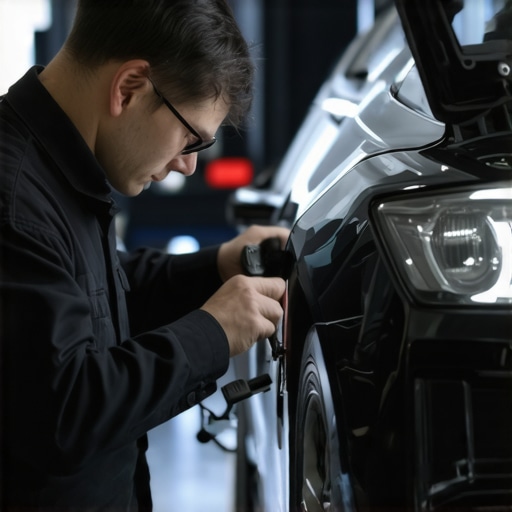
A client called me in a panic last August because their new windshield, which had just undergone a chip repair by a discount glass installer, was ‘sweating’ internally. I walked out to the driveway with my high-magnification loupe and a hygrometer. I showed the homeowner that the humidity was trapped inside a series of air bubbles within the resin itself. It was not a failure of the glass, but a failure of the vacuum cycle during the repair process. The installer had rushed the job to meet a same-day quota, leaving air pockets that were now expanding and contracting with every temperature shift. This is the same reason why we insist on a proper sill pan in residential construction: if you do not manage the environment inside the gap, the system will eventually fail from the inside out.
“Installation is just as critical as the window performance itself. A high-performance window installed poorly will fail.” – AAMA Installation Masters Guide
The Molecular Anatomy of a Chip: Why Bubbles Are Fatal
To understand why an air bubble is dangerous, we have to look at the refractive index and the coefficient of thermal expansion. A windshield is a sandwich: two layers of annealed glass held together by a polyvinyl butyral (PVB) interlayer. When a rock hits the glass, it creates a void. A professional glass installer uses a bridge and injector to create a vacuum, pulling the air out of that void before forcing resin in. If an air bubble remains, you have created a focal point for stress. In a southern climate where the Solar Heat Gain Coefficient (SHGC) is a primary concern, the sun beating down on Surface #1 of the glass can raise the internal temperature of the resin to over 150 degrees Fahrenheit. The air in that bubble expands significantly faster than the surrounding glass and resin. This creates a localized pressure spike that can cause the chip to bloom into a full-length crack in minutes.
We talk about the U-Factor in residential windows to measure heat transfer, but in automotive glass, we are looking at how the resin bonds to the microscopic shards inside the break. If there is air, there is no bond. This is similar to a glazier failing to use enough shims in a large sash, the weight is not distributed correctly, leading to a structural shift. An air bubble in resin is essentially a missing shim. It leaves the glass vulnerable to the vibrations of the road and the torque of the frame. When you hit a pothole, that air bubble acts as a wedge, driving the crack further across the pane because there is no structural resin to absorb the energy.
The Science of the Refractive Index
The goal of a high-quality chip repair is to match the refractive index of the glass. Glass has a refractive index of approximately 1.52. High-quality resins are engineered to match this as closely as possible so that light passes through the repair without bending. Air, however, has a refractive index of 1.00. When light hits an air bubble trapped in resin, it scatters. This is what causes the ‘glimmer’ or ‘phantom’ look in a bad repair. For a driver at night, these bubbles can catch the glare of oncoming headlights, creating a starburst effect that obscures vision. In the world of architectural glazing, we would call this a major optical defect, similar to a bad glazing bead that allows moisture to fog a dual-pane unit. In a vehicle, it is a safety hazard.
“Properly managed installation practices must account for the evacuation of all air and moisture to ensure the long-term integrity of the fenestration assembly.” – ASTM E2112 Standard Practice
The Myth of the Same-Day Mobile Service Rush
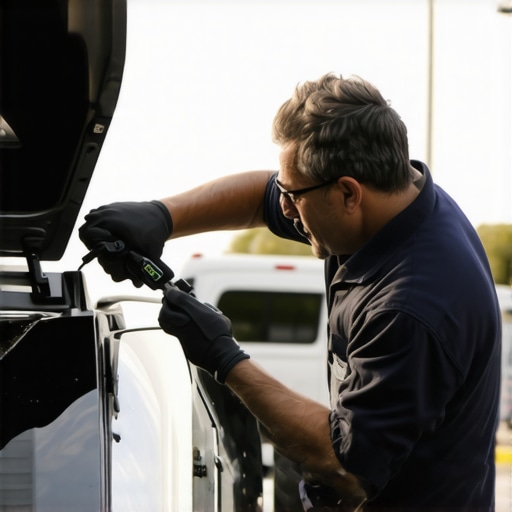
The convenience of mobile service is undeniable, but it often comes at the cost of the vacuum cycle. To truly remove air from a complex star-break or bullseye, a glass installer needs to cycle the injector through several vacuum and pressure phases. You cannot rush the physics of fluid dynamics. Rushing this process is the equivalent of a carpenter using flashing tape on a wet header: it might look fine for an hour, but the bond is non-existent. I have seen countless ‘same-day’ repairs where the resin was cured while air was still trapped in the muntin-like cracks of the impact site. Once that resin is cured by the UV lamp, those bubbles are permanent. There is no second chance to go back and suck the air out.
A master glazier knows that water management is a science. In a windshield, we must also consider the weep hole effect of the resin pit. The ‘pit’ is the impact point where the resin is exposed to the outside world. If this is not sealed with a high-viscosity pit filler, moisture can migrate down into any air bubbles left behind. In cold climates, that moisture freezes, expands, and shatters the repair. It is the same principle that causes ice damming on a poorly insulated roof. You must ensure the entire rough opening of the chip is filled with a solid, air-free mass of resin that is harder than the glass itself.
The Southern Climate Context: SHGC and Solar Stress
In hot, sun-drenched regions, the demand on glass is extreme. We often use Low-E coatings on Surface #2 to reflect heat outward, but windshields are usually tinted or treated throughout the laminate. This high solar absorption means the glass gets incredibly hot. Air bubbles in these environments are even more volatile. The expansion of trapped gases is the leading cause of repair failure in the South. A professional glass installer must use a resin that is specifically formulated for high-temp stability and ensure that the vacuum phase is extended to remove every possible molecule of oxygen. This isn’t just a quick fix: it is a technical restoration of the glass’s structural integrity. Without a perfect fill, you are just waiting for the next hot day to turn a $50 repair into a $500 replacement.
HowTo Schema for Windshield Integrity Check
{“@context”: “https://schema.org”, “@type”: “HowTo”, “name”: “How to Inspect Your Windshield Repair for Air Bubbles”, “step”: [{“@type”: “HowToStep”, “text”: “Park the vehicle in direct sunlight to illuminate the repair site.”}, {“@type”: “HowToStep”, “text”: “Use a magnifying glass to look at the impact point from a 45-degree angle.”}, {“@type”: “HowToStep”, “text”: “Check for tiny silver or black specks, which indicate trapped air or voids.”}, {“@type”: “HowToStep”, “text”: “Observe the repair at night under streetlights to check for light scattering or glare.”}]}