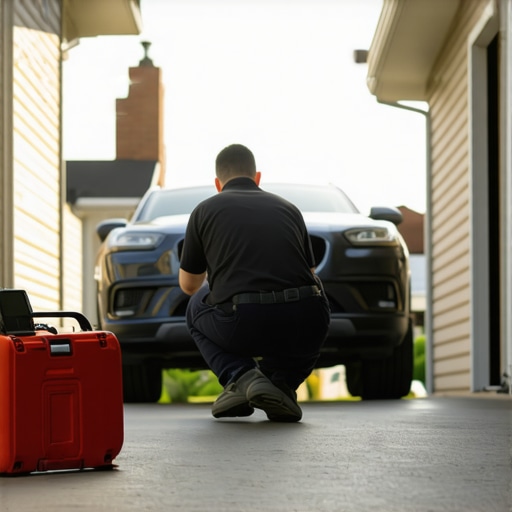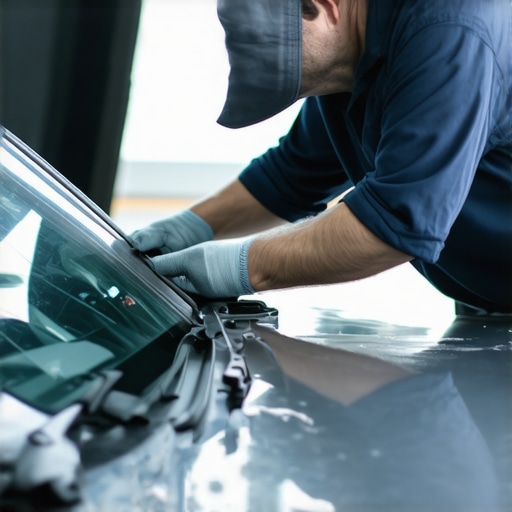
Fixing your cracked screen while you wait at the airport
The High-Stakes Physics of Airport Parking Lot Glass Damage
Walking out of the terminal after a long flight to find a radial crack spidering across your windshield is a unique kind of stress. Most travelers assume they can ignore that small star-break until they get home, but the physics of an airport parking environment suggests otherwise. As a glass installer with over two decades in the trade, I have seen how the thermal dynamics of an open-air parking garage or a sun-drenched long-term lot can turn a minor chip into a full-length fracture in hours. This is where professional mobile service becomes a structural necessity rather than a mere convenience. We are not just filling a hole: we are restoring the structural integrity of the laminated safety glass using precise chemical bonds. When you utilize same-day repair while you wait at the airport, you are preventing the inevitable failure of the glass surface under the extreme pressure of highway speeds and temperature fluctuations.
I remember sitting across from a high-pressure salesman at a regional transit hub who was trying to convince a traveler that their entire windshield needed a full-frame tear-out for a simple bullseye break. He was using the typical scare tactics, claiming the glass would shatter inward at any moment. I had to step in and explain the ROI of a proper resin injection. I showed the homeowner, or in this case the car owner, that the cost of a full replacement, especially with modern ADAS (Advanced Driver Assistance Systems) requiring recalibration, would be ten times the price of a high-quality chip repair. The salesman was pushing for a $1,200 invoice when a $100 professional repair would restore the glass to 95 percent of its original optical clarity and 100 percent of its structural strength. It was a classic case of profit over performance, and it is exactly why I prioritize educating clients on the technical reality of glass restoration.
“Installation is just as critical as the window performance itself. A high-performance window installed poorly will fail.” – AAMA Installation Masters Guide
The Glass Class: Decoding Laminated Safety Systems
To understand why same-day chip repair is vital, you must understand the architecture of the glass. Unlike the tempered glass in your side windows, which is designed to shatter into small granules, your windshield is a sandwich. It consists of two layers of annealed glass bonded by a Polyvinyl Butyral (PVB) interlayer. This is the ultimate defense against penetration. When a stone hits the glass, it creates a Hertzian cone of stress. The damage usually resides in the outer layer, known as Surface #1. In hot climates like Florida or Texas, the solar heat gain (SHGC) becomes the primary enemy. The cabin of a car parked at the airport can reach 150 degrees Fahrenheit. This heat causes the air trapped inside the chip to expand. Because the glass is a poor conductor of heat, the temperature differential between the hot outer surface and the cooler shaded areas creates a massive amount of tension. Without a professional glass installer to evacuate that air and replace it with a specialized methacrylate resin, the crack will propagate along the path of least resistance.
We use the term “Rough Opening” in the window trade to describe the space where a unit sits, but in mobile glass, we look at the tension of the glass within the urethane seal. If the chip is near the edge, it is under even higher stress because of the way the glass is shored up against the frame. A chip repair involves more than just dropping some glue into a hole. It requires a vacuum bridge to pull a negative pressure, removing every microscopic bubble of air and moisture. Water is particularly dangerous; if moisture gets into the PVB interlayer, it can cause delamination, where the glass begins to separate from the plastic, resulting in a milky white haze that cannot be fixed. Our mobile service units use high-intensity UV lamps to cure the resin at a specific 365nm wavelength, ensuring that the refractive index of the repair matches the glass perfectly, usually around 1.51. This makes the repair nearly invisible and restores the smooth finish of the glazing bead.
The Thermal Dynamics of the South: Why SHGC Matters
In the southern regions, the sun is a constant threat to the stability of damaged glass. The Solar Heat Gain Coefficient is not just a rating for residential windows: it is a critical factor in how your vehicle manages energy. When a chip exists on Surface #1, it acts as a focal point for radiant heat. The Low-E coatings often found on modern automotive glass are designed to reflect infrared radiation, but when that coating is compromised by a stone chip, the heat absorption at the site of the break increases exponentially. This localized heating causes a rapid expansion of the glass molecules. As a master glazier, I always tell clients that a chip is a ticking time bomb in the sun. The mobile service we provide at the airport utilizes resins that are specifically formulated for high-temperature environments, ensuring that the coefficient of thermal expansion of the cured resin matches that of the surrounding glass. This prevents the repair from popping out or shrinking when the vehicle moves from a hot parking lot into a cold car wash.
“The structural integrity of the fenestration assembly depends entirely on the continuity of the load path and the moisture barrier.” – ASTM E2112 Standard
When performing a chip repair, we also look at the weep hole and cowl drainage areas to ensure that no debris is causing water to back up against the glass seal. While these terms are usually reserved for residential sash and operable window units, the principles of water management remain the same. If water sits at the base of a windshield because of a clogged drain, it can seep into a chip at the bottom of the glass through capillary action. This is why our same-day mobile service includes a full inspection of the glass perimeter. We check the flashing tape equivalents, the rubber moldings, and the integrity of the urethane bead. A glass installer who ignores the surrounding environment is a “caulk-and-walk” amateur. True professionals understand that the glass is part of a larger system designed to manage air, water, and heat.
Why Wait? The Benefits of Immediate Mobile Intervention
The logic of waiting until you get home to fix a chip is flawed because of the vibration and pressure changes involved in driving. When you leave the airport and hit the highway, the wind pressure on the glass is significant. Any existing weakness, like a star-break or a bullseye, is a point of structural failure. By having a mobile service technician meet you at the terminal or the parking garage, you are reinforcing the glass before it is subjected to those loads. The resin we use is an anaerobic polymer that bonds at the molecular level to the silica in the glass. This is not a temporary fix; it is a permanent fusion. We use specialized shims to ensure the injector is perfectly perpendicular to the glass, allowing for an even flow of resin into every microscopic fissure of the break. This level of precision is what separates a master glazier from a DIY kit user. The kits you buy at the store lack the vacuum pressure necessary to truly clear the break, often leaving air trapped inside which will eventually cause the crack to spread.
Ultimately, the goal is to maintain the factory seal of the windshield. A full replacement involves cutting the glass out with a wire or a power knife, which can often scratch the pinchweld and lead to rust if not treated with the correct primers. By choosing a same-day chip repair, you keep the original factory-installed glass and its superior seal intact. This is the most environmentally friendly and cost-effective way to manage your vehicle’s glass. Do not buy into the hype of high-pressure salesmen who want to replace everything. Look at the numbers, understand the physics of thermal expansion, and choose a mobile glass installer who treats your windshield with the same technical respect a master glazier gives to a high-rise curtain wall. Your safety and your wallet will thank you.