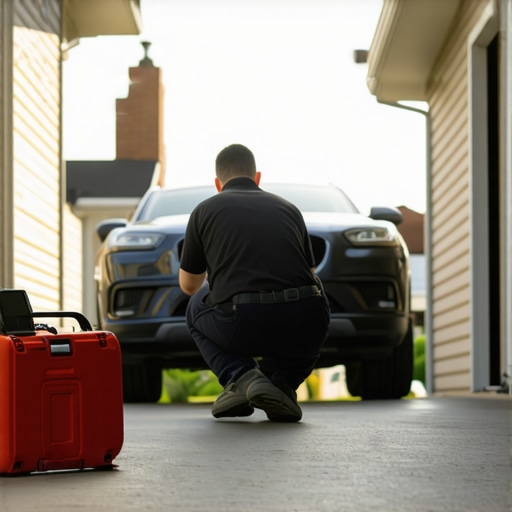
How a mobile technician works in a cramped driveway
The Logistics of the Driveway Workshop
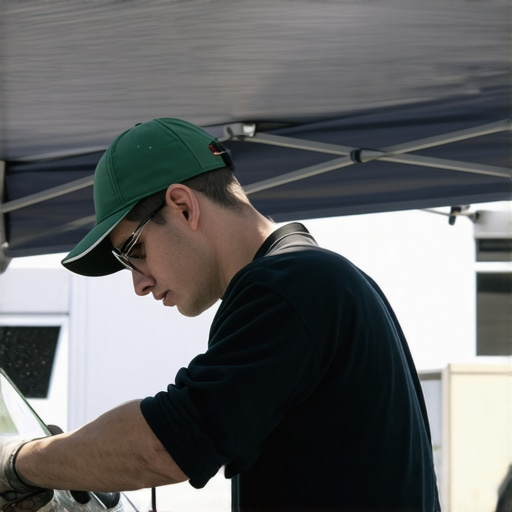
In the world of high-stakes glazing, people often imagine massive cranes lifting curtain wall panels onto skyscrapers. However, the true test of a master glass installer frequently occurs in a space no wider than ten feet: a suburban driveway. When a homeowner calls for a mobile service to address a chip repair or a shattered sash, they are asking for a precision laboratory to be deployed on asphalt. Working in a cramped driveway requires more than just a van full of tools; it requires a deep understanding of environmental variables that can compromise the integrity of the glass. A mobile technician must manage wind-blown particulates, fluctuating ambient temperatures, and the physics of glass tension within a very small footprint.
The Condensation Crisis: A Narrative of Environmental Control
A homeowner called me in a panic because their windows were ‘sweating’ immediately after I had performed a same-day glass replacement in their driveway. I arrived with my hygrometer and found the interior humidity was hovering at 65 percent. It was not a failure of the glass or the seal; it was their lifestyle choices clashing with the high-performance physics of the new unit. I had to explain that their new, high-efficiency glass was actually doing its job too well. By keeping the interior pane warmer, the moisture in their air was finally visible instead of leaking through the old, drafty frames. This is a common misunderstanding in our trade. We aren’t just swapping out clear material; we are recalibrating the home’s thermal envelope. If you don’t account for the dew point, you are just a glass swapper, not a glazier.
“Installation is just as critical as the window performance itself. A high-performance window installed poorly will fail.” AAMA Installation Masters Guide
The Science of Chip Repair and Resin Viscosity
When performing a chip repair via a mobile service, the technician is fighting a constant battle against thermal expansion. If the glass has been sitting in the sun, the molecules are agitated, and the crack is technically ‘tight.’ Attempting to inject resin into a hot windshield or window pane is a fool’s errand. The resin won’t penetrate the microscopic fissures of the break. Conversely, in a cold climate, the glass is brittle. A master glass installer knows to stabilize the temperature of the glass before applying the bridge and injector. We use specialized resins with specific centipoise ratings tailored to the ambient temperature. In a cramped driveway, we often have to use portable shrouds to create a micro-climate around the repair site. This isn’t just about aesthetics; it’s about structural restoration. If the resin doesn’t bond at the molecular level, the chip will eventually propagate into a full-blown crack during the next freeze-thaw cycle.
Thermal Logic in Cold Climates: Why U-Factor Governs the North
In Northern regions where the wind-chill can drop well below zero, the U-Factor is the most critical metric on the NFRC label. The U-Factor measures the rate of non-solar heat loss. For a mobile technician replacing a double-pane unit, we have to ensure the new glass uses warm-edge spacers. Older aluminum spacers act as thermal bridges, conducting the cold from the exterior directly to the interior Glazing Bead, which leads to frost and rot on the wood sash. When we perform a same-day replacement, we are often looking for units that utilize a Low-E coating on Surface #3. This placement is strategic: it reflects the long-wave infrared radiation (your furnace’s heat) back into the room. If we were in the South, we would place that coating on Surface #2 to reject the sun’s heat. This is the level of technical precision required to ensure the homeowner isn’t just buying glass, but is buying a thermal barrier.
“The thermal performance of a fenestration system is dependent on the integration of the glazing, the frame, and the installation method.” NFRC Performance Standards
The Anatomy of a Professional Mobile Setup
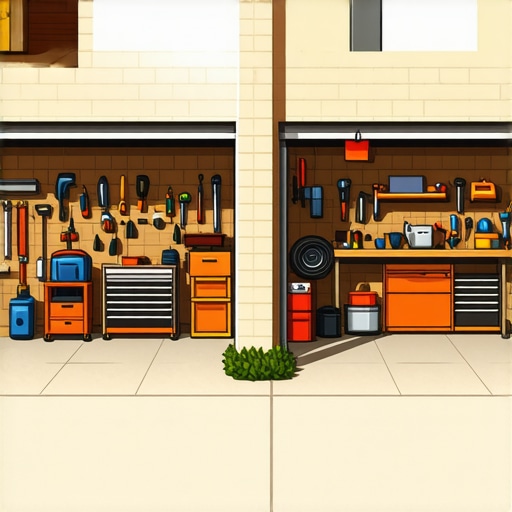
A cramped driveway necessitates a highly organized ‘Rough Opening’ for the technician’s workflow. We don’t have the luxury of a wide-open shop floor. The van is the center of the universe. Every tool, from the suction cups used for handling heavy IGUs (Insulated Glass Units) to the Flashing Tape used for emergency weatherization, must be within arm’s reach. One of the most overlooked aspects of mobile service is the management of the Weep Hole. If a technician installs a replacement glass unit and accidentally blocks the weep holes in the frame with excess sealant or a poorly placed Shim, the window will fail within two seasons. Water will back up into the frame, rot the sub-floor, and potentially compromise the structural header. A master glazier looks at the drainage path before they even touch the glass.
The Math of Modern Glazing
Many homeowners are sold on the idea of immediate ROI through energy savings. I prefer to talk about the ‘Comfort ROI.’ While a new high-performance glass unit will eventually pay for itself, the immediate benefit is the elimination of the convective loop. When you stand next to a cold, single-pane window in the winter, the air against the glass cools, becomes dense, and drops to the floor, creating a ‘draft.’ This isn’t air leaking in; it’s the physics of heat transfer. By installing a unit with a low U-Factor and an Argon gas fill, we break that loop. The Argon, being denser than air, slows down the movement of heat between the panes. It’s an invisible wall that makes the room usable again during a blizzard.
Conclusion: The Installer is the Final Quality Control
Whether it is a same-day chip repair or a full sash replacement, the quality of the work is determined by the technician’s adherence to the Shingle Principle. Water must always be directed down and out. In the tight confines of a residential driveway, it is easy to cut corners on the flashing or the Sill Pan, but those are the components that protect the home’s longevity. A mobile service shouldn’t mean a compromise in standards. It should mean that the highest level of glazing expertise is brought directly to your doorstep, equipped with the knowledge of thermal dynamics, material science, and the discipline to do the job right the first time. Don’t settle for a ‘caulk-and-walk’ fix; demand a technician who understands the dew point as well as they understand a tape measure.