Fixing the blurry mess on your selfie camera glass
The Micro-Glazing Crisis: Why Your Selfie Lens is Failing
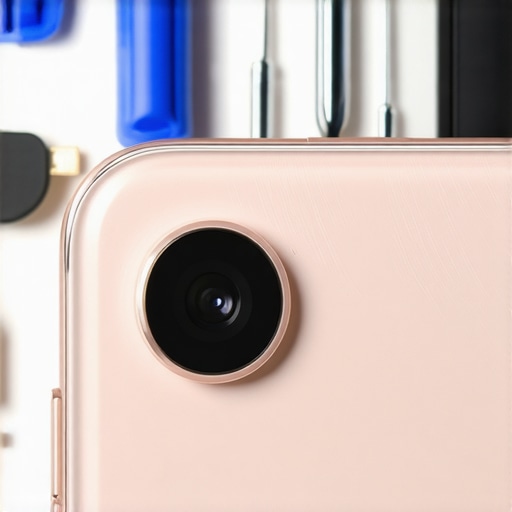
As a master glazier with a quarter-century of experience handling everything from monolithic storefront glass to high-performance triple-pane fenestration, I look at the world through the lens of clarity and structural integrity. When a homeowner hands me a smartphone complaining that their photos look like they were taken through a thick fog, they expect a simple wipe. But I see a glazing failure. A selfie camera is nothing more than a miniature rough opening protected by a thin substrate of aluminosilicate glass or synthetic sapphire. When that glass becomes blurry, we are dealing with a breakdown of surface tension, optical refraction, or seal integrity. It is the same physics that causes a 100-story curtain wall to fail, just scaled down to a millimeter.
The Condensation Crisis: A Narrative of Atmospheric Failure
A client recently brought me a high-end mobile device because their front-facing camera was perpetually hazy. They assumed the sensor was dead. I did what I always do when investigating a glazing leak: I pulled out my hygrometer and a thermal imaging camera. I walked them through a scenario I have seen a thousand times with residential window units. I told them, I once had a homeowner call me in a panic because their new windows were sweating. I walked in with my hygrometer and showed them the humidity was 60 percent. It was not the windows; it was their lifestyle choices creating an internal atmosphere the glass could not manage. With the phone, the situation was identical. The water resistant seal had been compromised by a micro-crack in the chassis, and the internal humidity of their home was condensing on the cold interior surface of the lens glass. This was not a smudge on the outside; it was an interstitial failure of the glazing system. We were looking at a dew point issue inside a pocket-sized computer.
Installation is just as critical as the window performance itself. A high-performance window installed poorly will fail. AAMA Installation Masters Guide
The Physics of the Blur: Refraction and Surface Contamination
To understand why your camera glass is a mess, you have to understand the refractive index. Light travels through the air and hits your camera glass. Ideally, that glass is perfectly flat and coated with an oleophobic layer that repels skin oils. However, over months of use, that coating wears thin. This exposes the raw glass to lipids and fatty acids from your skin. These oils do not just sit there; they fill in micro-abrasions in the glass surface, creating a variable refractive index across the lens. Instead of light hitting the CMOS sensor in a straight, predictable path, it scatters. This is known as Mie scattering, the same phenomenon that makes clouds look white and your selfies look like a 1980s dream sequence. In the glazing world, we call this a surface quality issue. If a glazier installs a piece of glass with a heavy suction cup mark or a manufacturing haze, the light transmission is ruined. Your phone is no different.
Blueprint for an Installation Autopsy: Why the Seal Fails
When I perform an autopsy on a failed window installation, I look for the shingle principle. Water must always flow down and away. In a smartphone, the glass is held in place by a perimeter of pressure-sensitive adhesive. This is essentially your glazing bead and flashing tape. If you subject your phone to high heat, such as leaving it on a dashboard in the Texas sun, that adhesive undergoes a phase change. It softens, loses its grip, and creates a microscopic gap. This gap is the rough opening where moisture enters. Once that seal is gone, the internal environment of the phone is no longer controlled. In the South or other hot climates, the Solar Heat Gain Coefficient (SHGC) of the phone’s glass is actually quite high because the glass is thin and rarely tinted. This heat buildup accelerates the degradation of the internal adhesives. If you are in a coastal environment, salt air can further corrode these miniature gaskets, leading to a total failure of the optical cavity.
Technical Restoration: Mobile Service and Chip Repair
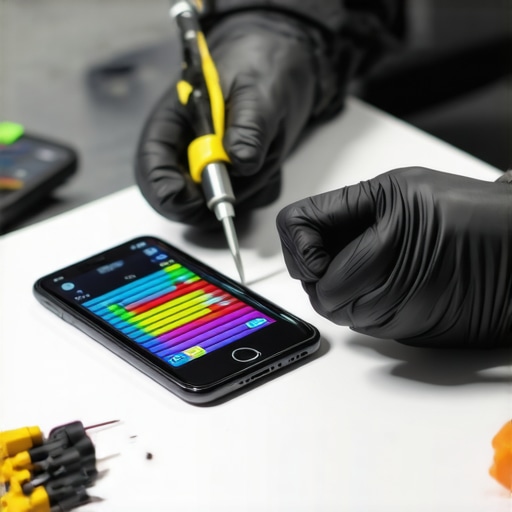
Many people ask if they can use a standard chip repair kit, like the ones used for windshields, on their camera glass. As a professional glass installer, I must warn against this. Windshield repair resins are designed for laminated glass with a PVB interlayer. They have a specific viscosity meant to flow into deep cracks. A selfie camera lens is often only 0.5mm to 1.0mm thick. Applying a high-pressure resin to a chip in this glass will likely shatter the substrate or leak resin into the camera module itself, ruining the operable components of the autofocus system. Instead, a same-day mobile service focused on precision glazing is the only path. This involves a full-frame tear-out of the lens cover. We heat the perimeter to the exact glass transition temperature of the adhesive, remove the compromised glazing, and clean the rough opening with anhydrous isopropyl alcohol to ensure no lipids remain. Only then can a new, factory-spec lens be shimmied into place and sealed with a fresh glazing bead of UV-cured acrylic.
The selection of the appropriate sealant and the method of application are critical to the long term performance of the fenestration assembly. ASTM E2112 Standard Practice
Beyond the Quick Fix: Managing the Micro-Environment
If you want to keep your camera glass clear, you must treat it like the architectural element it is. Stop relying on a quick wipe with a shirt sleeve. That fabric contains abrasive fibers that create the very micro-scratches that trap oil and cause light scattering. Use a microfiber cloth designed for optical glass. More importantly, be aware of the thermal stresses you place on the device. Rapid swings from a cold air-conditioned office to a humid summer afternoon will force the air inside the phone to expand and contract. This pumping action is what eventually pulls moisture through the weakest point in the seals. If you see a chip, seek professional glass repair immediately. A small chip is a structural failure that compromises the entire glazing system of the camera. Proper water management is a science, whether you are protecting a living room or a 12-megapixel sensor. Do not let a caulk-and-walk approach to your mobile tech ruin your ability to capture the world. High-performance glass deserves high-performance maintenance.