How to spot a stress crack versus an impact crack on your windshield
The Master Glazier Perspective on Automotive Glass Failures
As a veteran with over twenty-five years in the glazing industry, I have spent decades analyzing how glass reacts to tension, compression, and thermal shock. I have stood before thousand-pound curtain walls and meticulously restored nineteenth-century wood sashes where the muntin bars were so fragile they practically turned to dust. I have seen every possible failure mode. Recently, a homeowner called me in a panic because their vehicle windshield had developed a massive fracture overnight while parked in their driveway. They were convinced someone had struck it. I walked out with my digital hygrometer and a thermal imaging camera and showed them that the interior humidity was trapped, and the temperature gradient between the frost outside and the maxed-out defroster inside had created a classic thermal failure. It was not a rock; it was physics. This is the difference between an impact event and a stress event, and understanding this distinction is vital before you call a glass installer for same-day chip repair or a full replacement.
“Glass is a brittle material that does not deform plastically. It fails when the tensile stress exceeds the local strength of the glass surface, often at microscopic flaws that act as stress concentrators.” – ASTM C1036-21 Standard Specification for Flat Glass
The Anatomy of the Impact Crack: A Ballistic Event
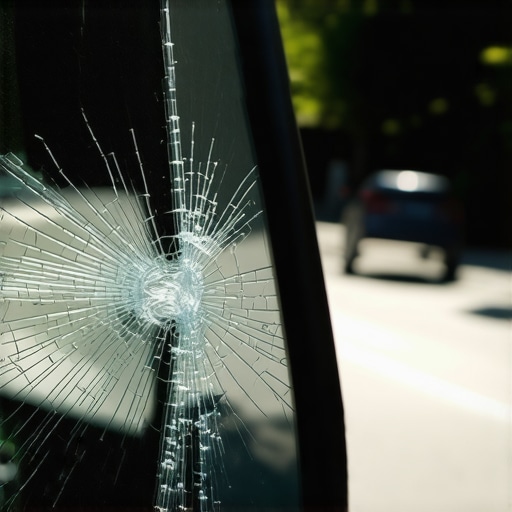
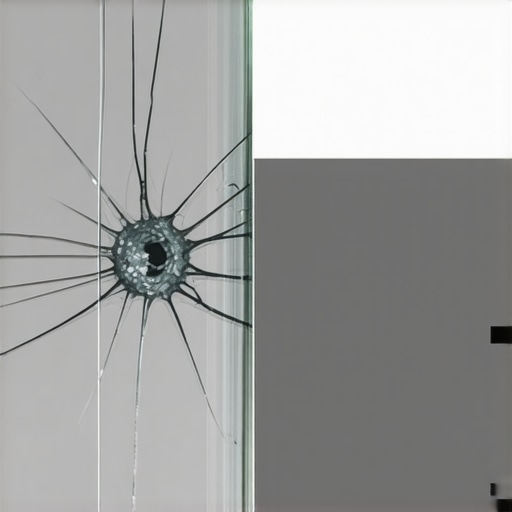
When we talk about an impact crack, we are discussing kinetic energy transfer. Whether it is a pebble kicked up by a semi-truck or a piece of debris, the resulting damage is localized and distinctive. An impact crack will always have a point of origin known as the pit. This is the area where the object actually made contact with the glass. In my years of inspecting operable window units and automotive glass, the impact site is the first thing I look for with a magnifying loupe. You will typically see a small crater where the glass has been crushed or pulverized. From this central point, you might see a starburst pattern, which we call a star break, or a circular halo known as a bullseye. If you find this pit, you are likely a candidate for a mobile chip repair service. This process involves injecting a specialized resin into the damaged area to restore the structural integrity of the outer lite. If you wait too long, dirt and moisture will enter the break, making the repair visible and less effective. In the cold North, where temperatures drop below zero in Chicago or Minneapolis, water that enters an impact pit will freeze and expand, turning a simple chip into a six-foot spider web in a matter of hours.
The Science of the Stress Crack: Thermal and Torsional Forces
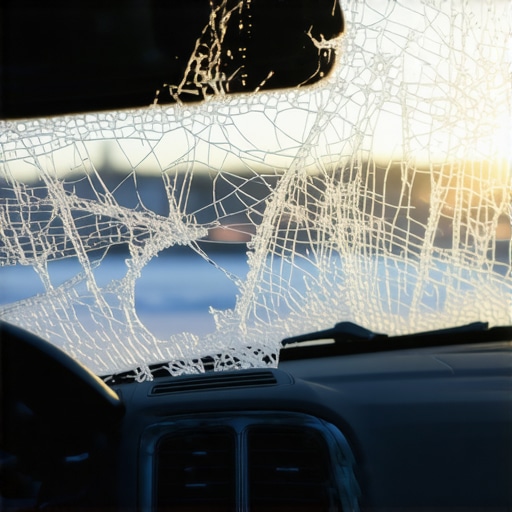
A stress crack is an entirely different beast. There is no pit. There is no impact point. A stress crack typically begins at the edge of the glass, often hidden under the molding or the ceramic frit (the black dotted border). These cracks are usually long, straight, or slightly wavy lines that seem to appear out of nowhere. In the world of residential glazing, we see this when a Rough Opening is out of square and puts constant pressure on the window frame. In a vehicle, the windshield is a structural component bonded to the pinch weld with high-modulus urethane. If the vehicle body flexes excessively, or if there is a high thermal gradient, the glass will reach its breaking point. This is especially common in extreme cold. Imagine it is negative ten degrees in Calgary. You start your car and immediately turn the defroster to high. The glass at the bottom, near the vents, heats rapidly and expands, while the glass at the top remains frozen and contracted. That tension creates a stress fracture. As a specialist, I look for the absence of a pit. If I can run a ballpoint pen along the crack and it never dips into a crater, you are dealing with a stress crack. This is often a manufacturing defect or an installation error where the glass was not properly seated or the pinch weld had a high spot that acted as a pressure point.
“The windshield is a sophisticated structural component of the modern vehicle, contributing up to sixty percent of the structural integrity in a rollover accident. Proper installation and integrity are paramount.” – ANSI/AGSC 002-2021 Automotive Glass Safety Standard
Why the Frame and Installation Matter
In residential work, we use Flashing Tape and a Sill Pan to manage water because we know that the Rough Opening is a hole in the wall that must be protected. In automotive glass, the pinch weld is our frame. If a previous glass installer used a metal screwdriver to pry out an old windshield and scratched the paint down to the bare metal, rust will eventually form under the urethane. This rust causes the metal to expand (a process known as rust-jacking), which puts localized pressure on the edge of the glass. Eventually, this will cause a stress crack that looks like it started for no reason. Unlike a residential Glazing Bead that holds glass in a Sash, automotive glass is glued in place. If that bond is not uniform, the glass cannot distribute the loads of the vehicle’s movement. This is why mobile service must be performed by technicians who understand the chemistry of the primers and adhesives they use. A same-day service is convenient, but it must not bypass the critical cure times required for the glass to become a structural part of the car again. If you have a stress crack, a chip repair is not an option. The entire piece must be replaced because the structural failure is systemic through the entire lite of glass.
The Thermal Logic of Windshield Survival
If you live in a cold climate, you must treat your glass like the brittle, tempered-and-laminated sandwich it is. The Polyvinyl Butyral (PVB) interlayer between the two sheets of glass is designed to keep you safe by holding the shards together during an accident, but it also creates a thermal barrier. To prevent stress cracks, never pour hot water on a frozen windshield. Avoid using the maximum heat setting on your defroster until the cabin has warmed up slightly. If you already have a small impact chip, the cold is your enemy. The contraction of the glass will pull that chip into a full-blown crack. Seeking out a professional for a same-day chip repair is a minor investment that prevents the much larger cost of a full replacement. Whether you are dealing with a Sash in a historic home or the windshield of a modern SUV, the principles of glass remain the same: manage the stress, respect the thermal limits, and never trust a technician who does not understand the science of the bond.