How to prevent stone chips on the highway
As a Master Glazier with over a quarter-century of experience handling everything from delicate historic wood sash restoration to high-pressure curtain wall installations, I look at glass differently than most. When you are barreling down a highway at seventy miles per hour, your windshield is not just a viewport; it is a structural component of your vehicle, much like a load-bearing wall in a skyscraper. The impact of a stray stone is a high-velocity localized stress event that tests the limits of laminated glass. In my years on the job, I have seen how a single oversight in glass maintenance leads to catastrophic failure. Most people treat a windshield like a ‘caulk-and-walk’ installer treats a window frame, assuming a little sealant fixes everything. It does not. Understanding the molecular resilience of your glass is the first step toward preventing the dreaded crack.
The Sales Pitch Takedown: Why Cheap Glass Costs More
I recently sat across from a client who was being pressured by a cut-rate mobile installer to buy a ‘high-performance’ aftermarket windshield that supposedly did not need recalibration for his vehicle’s Advanced Driver Assistance Systems (ADAS). It was the classic ‘Tin Man’ routine, the same kind of high-pressure sales tactic used to push overpriced triple-pane units in climates where they offer zero ROI. I had to explain to this homeowner that the glass installer was ignoring the refractive index requirements of his safety cameras. I told him straight: you are looking at an ROI of a hundred and fifty years if you think saving fifty bucks on cheap glass is a win. Real glass expertise is about the physics of the material, not the slickness of the pitch. If the glass does not meet the exact thickness and curvature tolerances of the original equipment, the structural integrity of the ‘Rough Opening’ of your vehicle is compromised. Just as a window sash must be perfectly square within its frame, a windshield must be perfectly bonded to prevent the torsion that turns a tiny stone chip into a spiderweb of failure.
“Installation is just as critical as the window performance itself. A high-performance window installed poorly will fail.” AAMA Installation Masters Guide
The Physics of the North: Why Cold Kills Glass
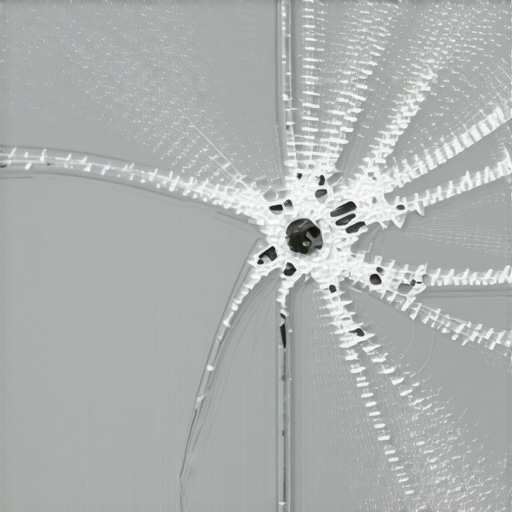
In northern climates like Chicago or Minneapolis, the enemy is not just the stone; it is the thermal gradient. In these regions, U-Factor is the king of metrics. When you have a temperature of zero degrees Fahrenheit outside and you crank your interior heater to seventy-five, you are creating a massive thermal stress across the glass lite. This is where ‘Glazing Zooming’ becomes essential. A stone chip creates a localized point of weakness in the outer layer of the laminated safety glass. Because glass is a poor conductor of heat, the inner layer expands while the outer layer stays contracted. This differential pressure is exactly why a small chip becomes a foot-long crack the moment you turn on the defroster. We use warm-edge spacers in residential windows to prevent this kind of condensation and thermal bridge, but in a vehicle, your only defense is immediate intervention. A mobile service for chip repair is not just a convenience; it is a structural necessity to restore the tension of the glass before the dew point issues within the laminate cause a delamination of the Polyvinyl Butyral (PVB) interlayer.
Tactical Prevention on the Highway
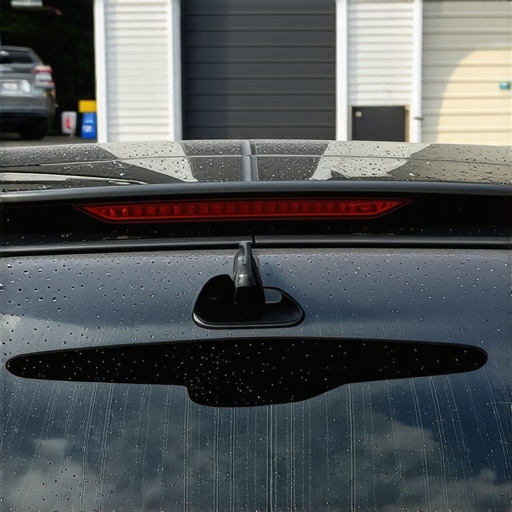
Preventing stone chips is about managing the ‘Rough Opening’ of the space between you and the vehicle in front. The most common cause of glass damage is the lack of proper mudflaps on commercial vehicles, which allows tires to pick up aggregate and launch it at a parabolic arc directly into your glazing bead area. To protect your glass, you must maintain a following distance that accounts for the ‘shingle principle’ of debris; stay far enough back that the stones lose their kinetic energy before they hit your surface. Furthermore, consider the application of a high-quality hydrophobic coating. Much like the Low-E coating on Surface #3 of a high-efficiency window reflects long-wave infrared radiation, a proper hydrophobic treatment reduces the friction coefficient of the glass. When a stone hits a ‘slick’ surface at an angle, it is more likely to deflect than to bite into the silica and cause a fracture.
“Standard Practice for Installation of Exterior Windows, Doors and Skylights requires meticulous attention to the interface between the unit and the rough opening to ensure long-term performance.” ASTM E2112
The Mechanics of Professional Chip Repair
When the inevitable happens and a stone finds your glass, you need a glass installer who understands more than just glue. A professional same-day chip repair involves vacuuming the air out of the break and injecting a specialized resin that matches the refractive index of the glass. This is not a simple DIY task. If you leave air in that void, it will trap moisture. In the winter, that moisture freezes, expands, and blows the glass apart from the inside out, much like water trapped behind a poorly flashed sill pan will rot a header. An operable window can be replaced relatively easily, but your windshield is bonded with high-modulus urethane. You do not want to be cutting into that factory seal unless it is absolutely necessary. A mobile service can perform this surgical repair on-site, provided the environment is controlled for UV exposure. This is the difference between a master’s approach and a ‘caulk-and-walk’ amateur. We look for the weep hole equivalent in every installation to ensure that even if moisture gets in, it has a path out without causing structural decay. In the world of high-velocity glass, precision is the only thing that keeps the shards at bay.