Why mobile glass techs use specialized vacuum pumps
The Physics of the Pop: Why Most Chip Repairs Fail Before They Begin
You are driving down the I-94 in the middle of a brutal Chicago winter. The heater is blasting at 75 degrees to combat the negative ten-degree wind chill outside. Then you hear it: that sharp, metallic ‘pop’ of a piece of road salt or a stray pebble hitting your windshield. To most, it is an annoyance. To a master glazier, it is a localized structural failure of a laminated safety glass system. When you call for a mobile service, you might expect a guy with a tube of glue. If that is what shows up, send them away. A true professional glass installer understands that the secret to a permanent, invisible repair is not the resin itself, but the removal of the atmosphere via specialized vacuum pumps.
A homeowner called me in a panic because their new windows were ‘sweating’ after a minor glass repair was attempted by a cut-rate contractor. I walked in with my hygrometer and showed them the humidity was 60 percent. It wasn’t just their lifestyle; the installer had failed to understand the dew point and the way moisture interacts with the interlayer of the glass. In chip repair, if you don’t pull a vacuum, you are sealing moisture and air inside a microscopic tomb. That moisture will expand when it freezes, and that air will cloud the resin. This is where the physics of the vacuum pump becomes the only thing standing between a clear view and a full replacement.
“Installation is just as critical as the window performance itself. A high-performance window installed poorly will fail.” – AAMA Installation Masters Guide
The Vacuum Pump: Beyond Simple Suction
Why do we use specialized pumps instead of simple manual syringes? It comes down to the absolute pressure required to evacuate a tight star-break or bullseye. In the industry, we talk about ‘Glazing Zooming’ into the microscopic level. The gap in a glass chip is often narrower than a human hair. Surface tension alone is enough to keep resin from flowing into the furthest reaches of the break. By utilizing a high-CFM (cubic feet per minute) vacuum pump, the glass installer creates a pressure differential. We are essentially boiling off the moisture at room temperature. By lowering the pressure inside the break, the boiling point of any trapped water drops significantly. This ensures the cavity is bone-dry before the first drop of resin touches the surface.
In northern climates like Chicago or Minneapolis, the enemy is heat loss and the subsequent contraction of materials. Glass has a specific coefficient of thermal expansion. When the temperature swings 40 degrees in a single day, the glass moves. If there is a pocket of air trapped in your ‘same-day’ repair, that air expands and contracts at a different rate than the glass and the resin. This mechanical stress is what causes a small chip to spider-web across the entire sash. Without a vacuum pump to remove that air, the repair is merely cosmetic and structurally useless.
Refractive Index and the Optical Illusion
A professional glass installer is not just a mechanic; we are amateur physicists. The refractive index of windshield glass is approximately 1.52. The resin we use is formulated to match this exactly. However, air has a refractive index of 1.0. If even a microscopic bubble of air remains because a vacuum wasn’t pulled, light will bend as it passes through the repair, creating a visible scar. When we use a specialized pump, we reach a state of near-total evacuation. Only then do we cycle the pump to ‘pressure’ mode, forcing the resin into the void that the vacuum created. This ‘bridge’ between the vacuum and pressure cycles is what defines a master-level mobile service.
“The integrity of the building envelope depends on the precise application of materials and the removal of environmental contaminants during the installation process.” – ASTM E2112 Standard Practice
The Anatomy of a Proper Mobile Service
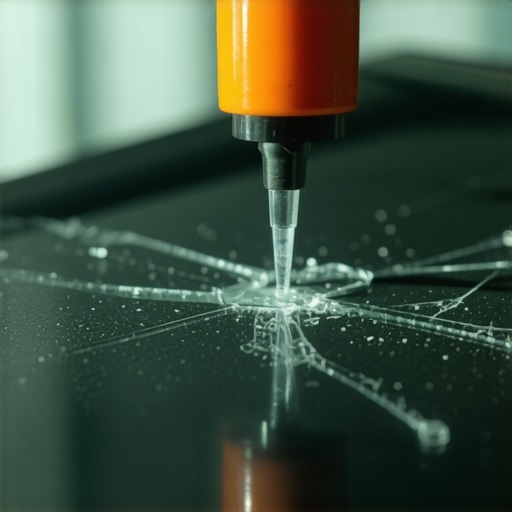
When I arrive for a chip repair, I am looking at the rough opening of the damage. I check for contaminants like car wax or rain repellent which can interfere with the bond. I then apply the bridge and the injector. The pump begins its work. You can actually see the air bubbles being pulled out of the laminate, looking like tiny silver specks rising to the surface. We use a specialized UV-curable resin that is significantly more viscous than the stuff you find in a DIY kit. Because it is thicker, it requires the massive pressure differential of a pump to migrate into the ‘legs’ of a star-break. This isn’t a ‘caulk-and-walk’ operation; it is a calculated engineering fix.
Many people ask why we cannot just use a heat gun to dry the chip. Heat causes the plastic interlayer (PVB) to expand, which can actually trap moisture inside the break or, worse, cause the crack to run instantly. The vacuum pump is a cold-process solution. It respects the delicate nature of the glazing bead and the surrounding seals. Whether we are dealing with a standard operable window or a complex piece of automotive glass, the principle remains: you must remove what shouldn’t be there (air and water) before you add what should be there (resin).
The Longevity of Professional Intervention
The math of window repair is simple but often ignored. A quality chip repair using a vacuum pump costs a fraction of a full glass replacement. However, if the repair is done poorly without the proper tools, the ROI (return on investment) is zero because you will end up replacing the glass anyway. In cold climates, the U-factor of the glass is compromised the moment the seal is broken. While a chip repair doesn’t restore the original U-factor of a dual-pane unit, in automotive or single-pane applications, it restores the structural tension of the glass. Using a shim or a manual tool to ‘flex’ the glass and let resin in is a recipe for disaster. The vacuum pump is the only tool that performs the job without adding mechanical stress to the already weakened area.
Next time you see a mobile glass technician, look for the pump. If they are just using a plastic syringe and a prayer, you are looking at a temporary fix. A master glazier knows that managing a hole in the wall—or a hole in your glass—is about controlling the environment at a molecular level. We use the vacuum to create the space, and the resin to hold the fort. That is the difference between a repair that lasts a lifetime and one that fails at the first frost. Water management is a science, and in the world of glass, the vacuum pump is our most vital instrument.