Why your ADAS sensors need a reset after a glass swap
The Master Glazier Perspective: Why ADAS Calibration is Not Negotiable After a Glass Swap
I recently sat across from a fleet manager who was getting pitched by a high-pressure glass salesman. This salesman, a classic example of what we call a Tin Man in the trade, was trying to convince the manager that they could save forty percent on their windshield replacements by using generic aftermarket glass and skipping the calibration process. I had to step in. I explained to that manager that saving a few hundred dollars on a piece of glass while ignoring the refractive index of the material is like building a skyscraper on a foundation of sand. In my twenty-five years of experience as a glass installer, I have seen the transition from simple tempered panes to complex, multi-layered smart glass, and the physics do not lie. A windshield today is not just a barrier against wind; it is the primary lens for the Advanced Driver Assistance Systems (ADAS) that keep your vehicle centered and your brakes prepared.
The Physics of Refraction and the Glass Lens
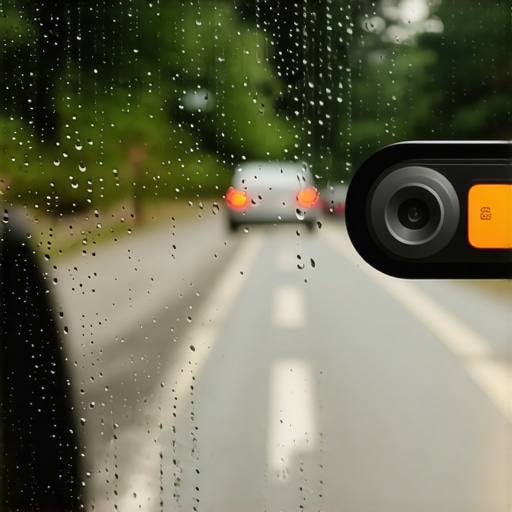
When a glass installer performs a chip repair or a full mobile service replacement, they are altering the optical path of the vehicle. Think of your windshield as a massive, curved lens. ADAS cameras are mounted behind the glass, usually near the rearview mirror, and they are programmed to look through a specific thickness of glass with a specific refractive index. If the glass has even a microscopic deviation in its curvature or if the glazing bead of urethane is just a millimeter too thick, the camera sees the world at a slightly shifted angle. In the world of residential glazing, a rough opening that is slightly out of square can be fixed with a well-placed shim, but in automotive glass, there is no physical shim to correct a camera’s view. The calibration process is the digital equivalent of squaring up a sash within a frame.
“Installation is just as critical as the window performance itself. A high-performance window installed poorly will fail.” – AAMA Installation Masters Guide
In a hot climate like Texas or Florida, the Solar Heat Gain Coefficient (SHGC) of your windshield becomes a factor for your sensors. Many modern windshields utilize a Low-E coating on Surface #2 to reflect infrared radiation back to the exterior. If an installer uses a cheaper piece of glass without the proper IR-reflective properties, the area behind the glass where the camera sits can reach temperatures exceeding 140 degrees Fahrenheit. This heat-soak can cause the sensitive electronics in the ADAS module to drift or fail. As an expert who has managed thermal stress in high-rise curtain walls, I know that heat management is not just about comfort; it is about protecting the structural and electronic integrity of the aperture. A same-day service that ignores these thermal realities is simply a liability waiting to happen.
Why Mobile Service Requires Laboratory Precision
The rise of the mobile service for glass replacement has made life easier for homeowners, but it has made the job of the glass installer significantly more complex. When we are out in the field, we are fighting the elements. We do not have the controlled environment of a shop where the floor is perfectly level. If you are getting a same-day replacement in your driveway, and that driveway has a three-degree slope, the static calibration of your lane-departure warning system will be fundamentally flawed. ASTM E2112 teaches us that the standard practice for installation must account for the exterior environment, and this is doubly true for automotive glass. The camera must be aligned with the vehicle’s thrust line, not just the horizon. Without a reset or recalibration, the car might think it is drifting toward a muntin-style divider when it is actually perfectly centered in the lane.
Deciphering the NFRC and Technical Specs for Automotive Glass
Most people look at the NFRC label on a house window to check the U-factor, but windshields have their own set of rigorous standards. When we talk about ADAS, we are looking at the Visible Transmittance (VT) and the clarity of the frit area. The frit is that black dotted pattern around the edges of the glass. It is not just decorative; it provides a surface for the urethane to bond to and protects it from UV degradation, much like how flashing tape protects the rough opening of a window in a home. If the frit is not precisely aligned, it can partially obstruct the camera’s field of view. An operable window in a home needs to slide smoothly within its tracks; a windshield needs to provide a clear, undistorted path for the laser and radar sensors to operate. If you skip the reset after a glass swap, you are essentially asking a blind man to lead you through traffic.
“Standard Practice for Installation of Exterior Windows, Doors and Skylights requires a level of precision that must be mirrored in the automotive sector to ensure safety systems function as intended.” – ASTM E2112 Reference Guide
The Reality of Same-Day Calibration
We often hear the term same-day service used as a marketing tool, but in the context of ADAS, it requires a specialized set of tools. A professional glass installer must use a dynamic or static calibration target system immediately after the urethane has reached its initial set. We are not just talking about a chip repair here; we are talking about the complete removal of the old glass and the installation of a new unit. Unlike a wood window where the sash can be adjusted over time, the windshield is a structural component of the car. It provides up to forty percent of the roof’s structural integrity in a rollover. If the sensors are not reset to account for the new glass, the Forward Collision Warning may trigger too late or, worse, not at all. Water management is a science in buildings, and light management is a science in vehicles. We use weep holes to let water out of a sill pan, and we use calibration to let the correct data into the car’s computer.
The Long-Term Cost of Cutting Corners
The myth of energy savings in the residential sector is often used to sell windows that will never pay for themselves. In the automotive glass sector, the myth is that all glass is the same. I have spent decades analyzing the grain of wood and the expansion rates of vinyl, and I can tell you that the molecular structure of glass matters. An ADAS sensor is looking for specific patterns. If the glass has a wave in it from a poor manufacturing process, the camera will constantly struggle to focus. This leads to premature sensor failure and a vehicle that is less safe than it was with a cracked windshield. When you hire a glass installer, you are paying for their ability to manage the interface between the glass and the frame, whether that is a residential rough opening or a vehicle’s pinch weld. Do not let a salesman talk you out of the safety reset. It is the only way to ensure that the high-tech sensors you paid for are actually doing their job.