Why we use specialized adhesives for modern phones
Beyond the Surface: Why One-Size-Fits-All Fails in Glass Repair
In my twenty-five years as a master glazier, I have seen every type of failure imaginable, from massive curtain walls in downtown skyscrapers to the delicate lamination of a smartphone screen. The average person sees glass as a static, solid object. I see it as a dynamic, high-performance material that is constantly in motion. When we talk about mobile service and glass installer expertise, the conversation must start with the molecular bond. Whether it is a chip repair on a windshield or the structural assembly of a modern mobile device, the adhesive is the unsung hero that prevents total system failure. A homeowner called me in a panic because their new windows were ‘sweating.’ I walked in with my hygrometer and showed them the humidity was 60%. It wasn’t the windows; it was their lifestyle and the lack of proper ventilation that caused the condensation. I told them the same thing I tell people about their electronics: if the seal is compromised by poor materials, the environment will win every time. You cannot fight physics with cheap caulk or generic glue. In the world of high-precision glazing, we deal with the ‘Dew Point’ and ‘Solar Heat Gain’ on a daily basis. For a mobile device, the heat generated by the processor creates a internal thermal load that mimics a sun-drenched south-facing window. If you don’t use a specialized adhesive with the correct thermal expansion coefficient, that glass is going to delaminate or crack at the first sign of thermal shock.
“Installation is just as critical as the window performance itself. A high-performance window installed poorly will fail.” – AAMA Installation Masters Guide
The Physics of Thermal Expansion and the Rough Opening
Every material has a Coefficient of Thermal Expansion (CTE). Glass expands and contracts at a different rate than the aluminum frame of a window or the composite housing of a phone. This is why we use shims in a rough opening during a window installation; we are creating space for the structure to breathe. In mobile glass repair, we don’t have the luxury of a wide rough opening. We are working with tolerances measured in microns. Specialized adhesives are designed to be ‘elastomeric,’ meaning they can stretch and compress without losing their bond to the glazing bead or the substrate. If you are in a cold climate like Chicago, your device goes from a 70-degree pocket to a sub-zero sidewalk in seconds. This creates massive tension. A standard adhesive becomes brittle and snaps. A professional-grade, UV-cured resin used in same-day chip repair stays flexible. We look at the U-Factor of the glass to understand heat loss, but we look at the ‘Peel Strength’ and ‘Shear Strength’ of the adhesive to ensure the glass stays where it belongs. When a glass installer performs a chip repair, they are injecting a polymer that must match the refractive index of the glass perfectly. If the index is off, you get a visible scar. If the adhesive is wrong, the repair will yellow and fail under the radiant heat of the sun. We are essentially performing micro-glazing every time we service a modern handheld device or a vehicle windshield.
U-Factor, SHGC, and the Mobile Environment
In the glazing industry, we live by the NFRC ratings. We obsess over the Solar Heat Gain Coefficient (SHGC) because it determines how much infrared radiation enters a space. Modern phones use coatings that are remarkably similar to the Low-E coatings we find on Surface #2 of a double-pane insulated glass unit. These coatings are designed to reflect long-wave infrared radiation while admitting visible light. However, these coatings are sensitive. Using the wrong solvent-based adhesive during a repair can strip the metallic oxides right off the glass. This is why specialized, acid-free adhesives are mandatory. They protect the integrity of the ‘Sash’ and ‘Muntin’ structures of the device. Furthermore, we have to consider the ‘Weep Hole’ principle. In a window, the weep hole allows moisture to escape the frame. In a mobile device, the seal must be absolute to prevent the ‘Condensation Crisis’ I mentioned earlier. If moisture gets trapped behind the glass because of a ‘caulk-and-walk’ repair job, it will fog the sensors and eventually corrode the internal components. We use sill pans in building construction to direct water away from the structure; in mobile glass, the adhesive itself must act as a continuous, microscopic sill pan.
“The selection of a sealant or adhesive must account for the joint movement, the substrate compatibility, and the environmental exposure conditions to ensure long-term durability.” – ASTM E2112 Standard Practice
The Anatomy of a Professional Chip Repair
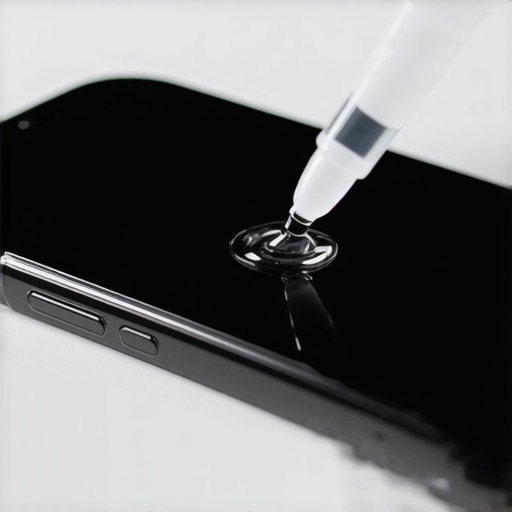
When you call for a mobile service for a chip repair, you aren’t just paying for a technician to squirt some glue into a crack. You are paying for a controlled chemical reaction. The process begins by cleaning the ‘Rough Opening’ of the chip to remove any microscopic shards of glass or road oils. Then, a bridge is set up to create a vacuum. This is critical. If air is left in the chip, the repair will fail. We then inject a specialized resin that has a low viscosity, allowing it to penetrate the deepest crevices of the break. This is akin to ‘wet glazing’ a high-wind load window. Once the resin is in place, we use a specific wavelength of UV light to initiate polymerization. This turns the liquid into a solid that is chemically bonded to the glass walls. It becomes an ‘operable’ part of the glass structure again. In a cold climate, we have to be careful with the ‘Dew Point’ during this process. If it’s too humid, moisture will be trapped in the resin, leading to a cloudy finish. This is why professional installers carry hygrometers and heat lamps. We are managing the micro-climate of that repair site to ensure the bond is permanent. Whether it’s a window sash or a phone screen, the goal is the same: restore the structural integrity and the thermal performance of the glazing unit without compromising the aesthetics.
Why Material Science Outperforms Marketing Hype
I often see ‘same-day’ repair kits sold at big-box stores that claim to be just as good as a professional glazier’s tools. It is a lie. These kits usually contain a basic cyanoacrylate which is essentially super glue. It has no UV stability and a very low resistance to moisture. Within months, the repair will turn yellow and the chip will begin to ‘spider’ again. A master glazier understands that glass is a liquid that just happens to be very viscous. It is always shifting. Specialized adhesives used by professionals are formulated with silanes, which create a covalent bond with the silica in the glass. This is a chemical marriage, not just a surface stick. When we talk about the longevity of a repair, we have to talk about the ‘Glazing Bead’ and how it interacts with the frame. In a phone, the adhesive is the glazing bead. It must provide the same level of protection as a heavy-duty vinyl gasket in a hurricane-rated window. If you are in a coastal area, the salt air will eat through a cheap adhesive in a matter of weeks. Professionals use stainless steel-compatible resins that resist corrosion and prevent the ‘Rot Repair’ scenarios we see in poorly flashed windows. Ultimately, the price you pay for a specialist is an investment in the physics of your device. We ensure that the ‘Flashing Tape’ of the digital world—the specialized adhesive—is applied with the precision that twenty-five years of experience demands. Don’t settle for a temporary fix when a permanent, scientifically-backed solution is available through a dedicated glass installer.