Why your phone won’t charge after a beach trip
The Microscopic Enemy: From Charging Ports to Fenestration
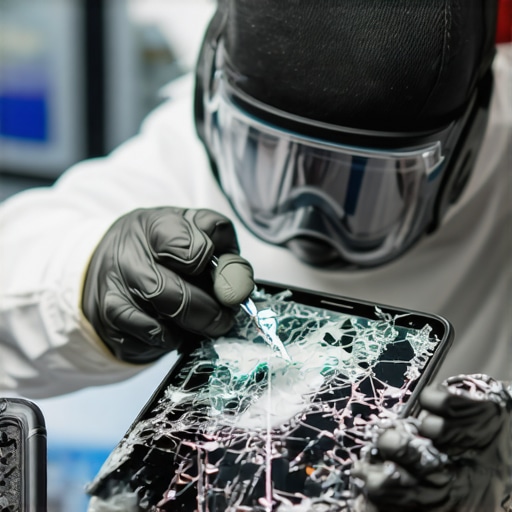
The same grains of crystalline silica sand that jam your smartphone’s charging port after a day at the coast are the primary raw material of the very glass you look through. However, when those grains are combined with airborne sodium chloride from the ocean spray, they create a mechanical and chemical nightmare for your home’s exterior envelope. Most homeowners think a beach trip only affects their electronics or their car’s finish, but as a master glazier with over 25 years in the field, I have seen how the coastal environment acts as a slow-motion wrecking ball for windows and glass. If your phone won’t charge because of salt crust and grit, imagine what is happening to the Weep Hole systems and the Glazing Bead of your windows.
The Installation Autopsy: A Lesson in Coastal Failure
I recently pulled a vinyl window out of a beachfront property in a high-wind zone, and the situation was a textbook example of why local expertise matters. The header and the Rough Opening were completely black with rot, despite the window itself being a high-end unit. Why? The previous installer relied solely on the nailing fin and a bead of cheap sealant instead of a comprehensive Flashing Tape system and a rigid Sill Pan. In a coastal climate, the air is thick with moisture and salt. When the wind hits a building, it creates a pressure differential that literally sucks water into any gap in the building envelope. Without a proper sill pan to direct that water back to the exterior, the moisture sat against the wood framing for five years until the structural integrity was compromised. This is the ‘caulk-and-walk’ mentality that I despise. A window is not a static object; it is a complex water management system.
“The primary purpose of a flashing system is to direct water onto the exterior surface of the cladding, preventing entry into the wall cavity.” – ASTM E2112 Standard Practice
The Science of Salt and Glass: Why Chip Repair Cannot Wait
Coastal residents often notice small pits or chips in their glass, whether it is their automotive windshield or their home’s hurricane-rated windows. If you find yourself needing a glass installer for a chip repair, the clock is ticking. This is not just an aesthetic issue. In the high-heat, high-humidity environment of the coast, the temperature gradient between your air-conditioned interior and the scorching sun creates massive thermal stress. A small chip acts as a stress concentrator. We offer mobile service because same-day intervention is the only way to prevent a chip from ‘spidering’ into a full-blown crack. When we perform a professional chip repair, we inject a specialized resin with a refractive index that matches the glass (approximately 1.52). In a coastal zone, this resin also acts as a barrier, preventing salt crystals from lodging in the crack and expanding, which would otherwise accelerate the failure of the Sash.
Water Management and the Shingle Principle
In the world of glazing, we live by the Shingle Principle: every layer of the window assembly must overlap the one below it so that gravity is your friend, not your enemy. In coastal regions, this is complicated by wind-driven rain. If your window’s Operable parts are sticking or if you see water pooling on the interior sill, your Weep Hole system is likely clogged with a mixture of salt and sand, much like that malfunctioning phone port. These holes are designed to allow water that enters the glazing track to exit the frame. When they clog, the water backs up, overflows the internal dam, and begins to rot your drywall. A professional glass installer knows that maintaining these paths is just as important as the initial Shim and level process. We see many homeowners try to seal these holes with caulk to stop drafts, which is a catastrophic mistake that traps water inside the wall.
“Installation is just as critical as the window performance itself. A high-performance window installed poorly will fail.” – AAMA Installation Masters Guide
Impact Ratings and Laminated Glass Physics
For those living in storm-prone areas, the glass itself must be an engineered marvel. We don’t just use tempered glass; we use laminated glass with a PVB (polyvinyl butyral) or SGP (SentryGlas Plus) interlayer. This is the ‘sacrificial layer’ logic. The outer lite of glass may break upon impact from debris, but the interlayer maintains the pressure seal of the house. This prevents the internal pressurization of the home, which is what actually causes roofs to blow off during hurricanes. When we provide mobile service for glass assessment, we are looking for delamination at the edges, often caused by salt air attacking the interlayer. If the Glazing Bead is not seated perfectly, moisture will wick into the laminate, causing a cloudy appearance and reducing the window’s impact rating. Same-day inspection after a major storm is vital to ensure the structural sealant is still adhered to the frame.
The Thermal Reality of the South
In our hot, coastal climate, the Solar Heat Gain Coefficient (SHGC) is the metric that matters most. While Northern installers obsess over U-Factor to keep heat in, we are fighting to keep the radiant energy of the sun out. This is achieved through spectrally selective Low-E coatings, typically applied to Surface #2 (the inner face of the outer pane). This reflects the long-wave infrared radiation before it even enters the Rough Opening. If you feel a ‘hot spot’ near your window, the coating has either failed or was never there to begin with. Replacing these units requires a glass installer who understands that not all glass is equal. Using the wrong glass type can increase your cooling costs by 30 percent and lead to the premature fading of your furniture due to UV transmission.
Conclusion: More Than Just a View
Whether it is clearing sand out of a charging port or ensuring your Sill Pan is correctly integrated with the house wrap, the lesson is the same: the environment is constantly trying to reclaim your technology. Professional glass maintenance and installation are about managing the physics of water, salt, and heat. Do not trust your home’s envelope to someone who doesn’t understand the chemistry of the coast. Demand precision, demand same-day response for damage, and never underestimate the power of a single grain of sand.