How to keep glass shards out of your fingers
The Invisible Blade: Why Glass Integrity is a Science
In my twenty five years of hanging off the sides of buildings and meticulously fitting high performance sash units into old masonry, I have learned that glass is not a solid: it is a liquid that has slowed down to a crawl, and it is always looking for a reason to return to its broken state. When you are dealing with a chipped window or a shattered pane, you are not just looking at a mess: you are looking at a field of microscopic daggers. Most homeowners think a quick sweep with a broom is enough to keep their family safe, but they are wrong. Glass shards, especially from annealed panes, can be smaller than a human hair and just as sharp. My job as a professional glass installer is to manage these risks through technical precision and the correct application of mobile service technology.
The Narrative of Failure: When Condensation Leads to Crisis
A homeowner called me in a panic because their new windows were ‘sweating.’ I walked in with my hygrometer and showed them the humidity was 60%. It wasn’t the windows: it was their lifestyle. This is a story I tell often because people do not realize that moisture is the primary catalyst for glass failure. When indoor humidity is that high in a northern climate, the moisture collects at the base of the glass, right where the Glazing Bead meets the frame. Over time, that water seeps into the rebate, attacking the primary seal of the Insulated Glass Unit (IGU). Once that seal is compromised, the Argon gas fill escapes, and you lose your U-Factor. But worse, the moisture causes the spacer to corrode and the glass to experience thermal shock. One cold morning, that ‘sweating’ window turns into a ‘shattering’ window because the edge of the glass was weakened by constant moisture. This is how you end up with shards in your carpet and potentially your fingers.
“Installation is just as critical as the window performance itself. A high-performance window installed poorly will fail.” – AAMA Installation Masters Guide
The Physics of the Chip: Why Same-Day Repair is Vital
When a rock hits your window, it creates a point of high stress known as a Griffith Flaw. If you look at a chip under a glazier’s loupe, you will see a series of radiating micro-cracks. In cold climates like ours, these cracks are ticking time bombs. As the temperature drops, the exterior lite of glass contracts while the interior lite stays warm. This creates a massive amount of tension on that tiny chip. A same-day mobile service is not about convenience: it is about stabilization. A professional glass installer uses a bridge and injector tool to create a vacuum over the chip. We evacuate the air and moisture from the fracture and inject a specialized UV-curable resin with a refractive index that matches the glass (roughly 1.52). This resin doesn’t just hide the chip: it bonds the glass back together at a molecular level, preventing the crack from ‘running’ and turning into a safety hazard.
The Anatomy of Proper Installation to Prevent Breakage
Many ‘caulk-and-walk’ installers ignore the Rough Opening tolerances. If a window is forced into an opening that is out of square without the proper Shim placement, the frame will twist. This puts ‘racking’ stress on the glass. A window should float in the opening, supported by shims at the setting blocks. We use a Sill Pan to ensure that any water that does get past the secondary seals is directed out through the Weep Hole and not into your wall. Without a proper sill pan and flashing tape, the wood under the window rots, the frame sags, and the glass eventually cracks under the uneven pressure. [IMAGE_PLACEHOLDER] This is why I always insist on a full-frame autopsy when a client complains of drafts. It is never just a draft: it is a structural failure waiting to happen.
“The fenestration’s resistance to air and water infiltration is heavily dependent on the integrity of the interface between the window frame and the rough opening.” – ASTM E2112
Climate Logic: The Northern Battle Against the U-Factor
In our climate, the enemy is heat loss. We focus on the U-Factor, which measures the rate of heat transfer. A lower number is better. For a truly efficient and safe home, we utilize triple-pane units with a Low-E coating on Surface #3. This placement reflects long-wave infrared radiation (heat) back into the room during the winter. By keeping the interior glass lite warmer, we reduce the ‘Dew Point’ at the glass surface, which eliminates the condensation crisis I mentioned earlier. If the glass stays dry, the Glazing Bead stays intact, and the glass is far less likely to fail and create those dangerous shards.
How to Handle Shards: The Glazier’s Protocol
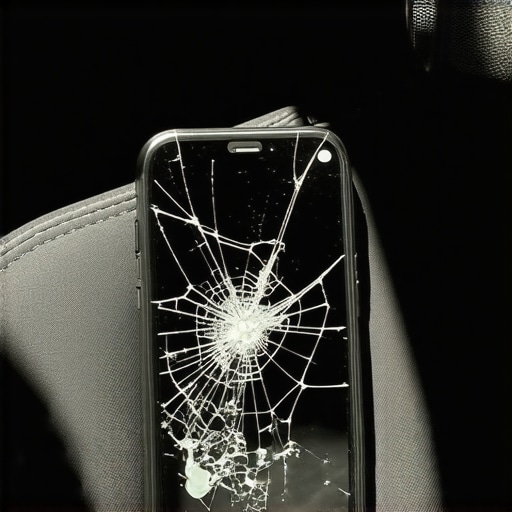
If you do have a breakage, do not use your bare hands. Use a high-HEPA vacuum, not a broom. Brooms often just kick the smallest, most dangerous shards into the air where they can be inhaled or land on surfaces you touch later. If the glass is still in the Sash but cracked, use ‘cross-hatch’ taping with high-tack duct tape to stabilize the pane before the glass installer arrives. This prevents the glass from falling out in large, heavy chunks. Remember, professional chip repair and mobile service are your first line of defense. Keeping the glass in one piece is the only guaranteed way to keep shards out of your fingers.