Why your car’s safety sensors are failing
The Technical Reality of Modern Glass
A car windshield is no longer just a structural barrier against the wind; it is a high-precision optical lens. As a master glazier with a quarter-century in the trade, I look at the glass in your vehicle the same way I look at a high-performance curtain wall in a skyscraper. It is a critical component of the building envelope, or in this case, the vehicle safety envelope. When your lane-keep assist, adaptive cruise control, or collision braking systems start throwing error codes, the culprit is rarely the computer. Most often, the failure lies in the glass or how it was installed. We are moving away from the era of the simple glass installer toward a period of the precision technician. If the glass has the slightest deviation in clarity or if the camera bracket is off by a single millimeter, the entire safety system becomes a liability rather than an asset.
The Condensation Crisis: A Diagnostic Story
I remember a specific case where a homeowner called me in a panic because their new vehicle’s safety sensors were ‘sweating’ and failing every morning at 7:00 AM. I walked out to their driveway with my hygrometer and showed them that the interior humidity of their car was spiking to 60 percent due to a tiny leak in the sunroof seal. It wasn’t a sensor defect; it was a micro-climate issue inside the cabin. The moisture was condensing on the interior of the glass right in front of the Advanced Driver Assistance Systems (ADAS) camera lens. Because the glass wasn’t reaching the dew point quickly enough to clear, the camera was effectively blind. This is the same logic we use in residential glazing when we talk about warm-edge spacers and U-factors. If the thermal performance of the glass assembly is compromised, the technology behind it fails. In this instance, the previous glass installer had failed to ensure a perfect airtight seal around the top edge of the glass, allowing moisture-laden air to pool in the camera bracket housing.
“Installation is just as critical as the window performance itself. A high-performance window installed poorly will fail.” – AAMA Installation Masters Guide
The Physics of Optical Clarity and Refraction
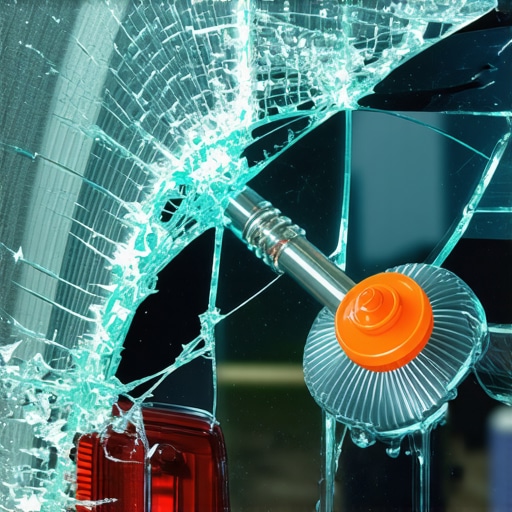
Why does a same-day chip repair matter for your sensors? It comes down to the refractive index. When light passes through glass, it bends. If you have a stone chip or a crack, even a tiny one, it creates a point of diffraction. For a human eye, a small chip is a nuisance. For a LIDAR or CMOS camera sensor, that chip is a massive starburst of light that obscures the digital field of vision. When performing a chip repair, a technician must use a resin that perfectly matches the refractive index of the laminated glass. If the resin is too dense or too thin, the camera sees a distortion. This is why a mobile service must prioritize the chemical composition of their materials over speed. We are talking about managing light waves. In northern climates where we deal with extreme heat loss and cold-weather contraction, the expansion coefficient of that repair resin is vital. If the resin expands at a different rate than the glass during a Minneapolis winter, the repair will fail, and the sensor will lose its calibration.
The Installation Autopsy: Where the Failure Begins
When we perform an autopsy on a failed sensor system, we often look at the pinchweld and the urethane bead. In the world of architectural glazing, we talk about the Rough Opening and the importance of a Sill Pan for water management. In a car, the pinchweld is your rough opening. If a glass installer scratches the paint on that pinchweld and doesn’t apply a proper zinc-rich primer, corrosion begins. This rust eventually heaves the glass upward. You won’t see it for a year, but that microscopic movement is enough to tilt the ADAS camera by a fraction of a degree. At sixty miles per hour, a one-degree tilt in the camera translates to the vehicle thinking it is in a different lane than it actually is. This is why proper flashing tape and sealing principles from ASTM standards are so relevant to automotive glass.
“The integrity of the building envelope depends on the seamless integration of the fenestration product into the wall system, ensuring water shedding and air barrier continuity.” – ASTM E2112 Standard Practice
U-Factor and Thermal Management in Safety Glass
In cold climates, the enemy is condensation and frost. High-performance glass uses Low-E coatings to reflect heat. In an automotive context, many manufacturers are now using specialized coatings on ‘Surface 3’ (the interior-facing side of the outer pane of glass) to help the glass heat up faster and clear frost. If an aftermarket glass installer uses a cheaper glass that lacks these thermal properties, your defroster will take longer to clear the camera’s view. This results in ‘System Unavailable’ messages during the first twenty minutes of your commute. As glaziers, we know that U-Factor is king in the north. A lower U-factor means better insulation. When your glass maintains a consistent temperature, your sensors are less likely to suffer from the thermal shock that causes internal fogging.
The Necessity of Recalibration
Many people opt for a mobile service because of the convenience of same-day service. However, you must ensure that the technician is performing a static or dynamic calibration after the glass is set. A static calibration involves setting up a series of targets at specific distances from the vehicle in a controlled environment, much like shimming a window frame to ensure it is perfectly plumb and level. A dynamic calibration requires driving the vehicle at specific speeds so the cameras can ‘learn’ the horizon. If your installer simply swaps the glass and hands you the keys, they have only completed half the job. Without calibration, your safety sensors are essentially wearing someone else’s prescription glasses. They can see, but they cannot focus correctly on the hazards ahead.
Final Thoughts from the Glazing Bench
Do not be fooled by high-pressure sales tactics that focus solely on the price of the glass. The value is found in the precision of the bond and the accuracy of the optical field. A glass installer who understands the ‘Shingle Principle’—the idea that water and air must always be directed outward and downward—will ensure that your sensor housings remain dry and functional. Whether you are dealing with a wood sash in a historic home or a laminated windshield in a modern electric vehicle, the physics of glazing remain the same. Precision, thermal management, and structural integrity are the three pillars that keep your technology working. Don’t settle for a ‘caulk-and-walk’ job when your safety is on the line.