Why a cold windshield cracks faster when the defroster hits
The Violent Physics of Temperature Gradience
I have spent over twenty-five years in the trenches of the glazing industry, from hanging curtain walls on skyscrapers to the delicate art of historic sash restoration. One thing I can tell you with absolute certainty: glass is not a static material. It is a dynamic, high-tension substance that reacts to its environment with surprising volatility. When you see a windshield zip across the dashboard the moment you flip on your defroster, you are not just witnessing bad luck. You are witnessing the laws of thermodynamics asserting their dominance over a compromised structure.
“Installation is just as critical as the window performance itself. A high-performance window installed poorly will fail.” – AAMA Installation Masters Guide
A homeowner once called me in a panic because their large picture windows were ‘screating.’ I walked into the room with my hygrometer and a thermal imaging camera. The humidity was hovering at 65 percent and the outdoor temperature was plummeting. The internal glass temperature was rising due to their oversized floor vents, while the exterior pane was a frigid ten degrees. It was not the windows failing; it was a total disregard for the dew point and thermal stress. The same physics applies to your vehicle. A windshield is essentially a laminated glass sandwich: two layers of glass held together by a Polyvinyl Butyral (PVB) interlayer. In a cold climate like Chicago or Minneapolis, that outer layer of glass is contracted, its molecules huddled together in a dense, cold state. When you blast the defroster, you are introducing a sudden, localized heat source to the inner layer of glass. This creates a massive temperature differential. The inner lite tries to expand while the outer lite remains contracted. This differential creates a shear force within the PVB interlayer. If the glass is pristine, it might hold. But if there is a chip, that chip acts as a stress concentrator.
The Anatomy of a Chip and Why Same-Day Repair Matters
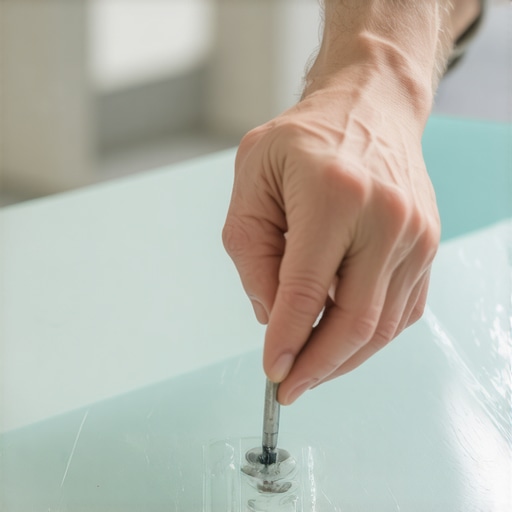
To a glass installer, a chip is not just a cosmetic blemish; it is a fracture point. When a small stone hits your glass, it creates a ‘star’ or a ‘bullseye’ break. This break has microscopic legs that radiate from the center of impact. These legs are held in a fragile equilibrium by the surrounding compression of the tempered glass. However, when the defroster hits, the expansion of the inner lite pushes against these fracture points. Because the glass cannot expand evenly, the stress finds the path of least resistance: the chip. This is where the zippering effect happens. A mobile service professional specializing in chip repair understands that timing is everything. Once moisture from road salt or melting snow enters that chip, it can freeze and expand, further weakening the bond before the heat even hits it. A same-day repair involves injecting a high-viscosity resin into those microscopic legs to restore structural integrity before the thermal shock of a winter morning turns a ten-dollar fix into a thousand-dollar replacement.
Structural Integration: From Rough Opening to Pinch Weld
In residential glazing, we talk about the Rough Opening and the Shim process to ensure a window is plumb and level. We worry about the Sill Pan and Flashing Tape to manage water. In the automotive world, the ‘rough opening’ is the pinch weld of the vehicle. If a glass installer does not properly prep this area, the glass cannot sit correctly. A windshield is a structural component of the vehicle, providing up to 60 percent of the roof’s strength during a rollover. Just as we use a Glazing Bead to secure glass in a Sash or manage moisture through a Weep Hole in a window frame, the urethane seal on a car manages the stress between the glass and the steel frame. If the glass is chipped, its ability to withstand the flexing of the vehicle’s frame and the expansion from the heater is severely diminished.
“Thermal stress is the result of temperature differences within a lite of glass. It can be caused by solar radiation, space heaters, or sudden environmental changes, and often leads to breakage if the glass is not properly heat-treated or if it contains edge defects.” – NFRC Technical Manual
The U-Factor in northern climates is king. We want to keep the heat in. In residential windows, we might use a Low-E coating on Surface 3 to reflect heat back into the room. Windshields, however, are designed for impact resistance and clarity. They lack the thick air gaps and argon gas fills found in high-performance residential units. This makes them even more susceptible to the temperature swings of a defroster. The mobile service technician who arrives at your door is essentially a chemist and a structural engineer. They must ensure the resin they use has the same refractive index as the glass and the same coefficient of thermal expansion. If the resin expands at a different rate than the glass, the repair will fail the next time the temperature drops.
The Role of the Modern Glass Installer
The industry is full of installers who want to ‘caulk-and-walk.’ They slap a window into a Rough Opening without a Sill Pan or they replace a windshield in a parking lot without cleaning the mounting surface. This lack of precision is why we see so many failures. A master glazier knows that every detail, from the Muntin alignment to the depth of the Glazing Bead, matters. When you are looking for a glass installer, you need someone who understands that a chip repair is a structural restoration. They are preventing the molecular chain reaction that leads to a full-blown crack. If you ignore a chip in the winter, you are essentially waiting for the physics of thermal expansion to break your bank account. The heat from your defroster is the trigger, but the chip is the loaded gun. By utilizing a mobile service for same-day intervention, you are neutralizing the threat before the first frost hits your driveway. Do not buy into the myth that a chip can wait until spring. The constant cycle of freezing and thawing, combined with the heat of your cabin, ensures that a chip today is a crack tomorrow.