Why heavy-duty diesel vibrations make standard windshield chip repairs fail
Why Heavy-Duty Diesel Vibrations Make Standard Windshield Chip Repairs Fail
If you have spent any time behind the wheel of a Class 8 rig or a heavy-duty pickup, you know that a diesel engine isn’t just a power plant; it is a living, breathing, and – most importantly – shaking entity. I’m Aaron Miles, Co-Owner and Diesel Mechanic at American Truck and Trailer Repair. Over the years, I’ve specialized in heavy-duty leasing and fleet maintenance, and if there is one thing I have learned, it’s that physics doesn’t take a day off. Most drivers think a windshield chip is just a nuisance that any “fast fix” shop can handle for fifty bucks. However, for the diesel community, the standard approach to glass repair is fundamentally flawed.
The reality is that a $20 DIY kit or a generic resin injection from a high-volume Car repair shops near me often fails within a week when applied to a diesel vehicle. Why? Because these solutions are designed for the smooth, low-vibration environment of a gasoline-powered sedan. When you introduce the high-torque, high-compression harmonics of a heavy-duty diesel engine, the rules of adhesion and structural integrity change. In this guide, we are going to dive deep into the mechanical and chemical reasons why your diesel’s “heartbeat” is the number one enemy of your windshield repair.
The Physics of Diesel Harmonics vs. Automotive Glass
To understand why repairs fail, we have to look at the engine. Unlike gasoline engines that use spark ignition, diesel engines rely on compression ignition. This process requires much higher compression ratios – often ranging from 16:1 to 22:1. The result is a massive “bang” in the cylinder that translates into significant low-frequency vibrations. As a diesel mechanic near me can tell you, these vibrations aren’t just something you feel in the seat; they permeate the entire chassis, including the glass.
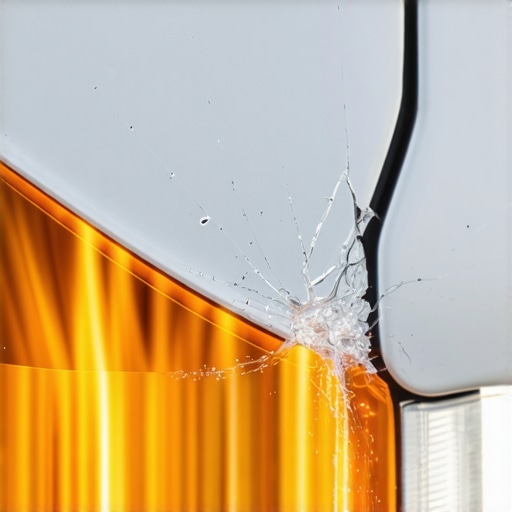
Automotive glass is a stressed member of the vehicle’s structural cage. In a heavy-duty truck, the windshield is constantly subjected to “heavy-duty vibrations” and engine harmonics that act like a microscopic jackhammer on any imperfection. When a rock hits your glass, it creates a localized area of shattered molecular bonds. A standard repair attempts to fill this void with resin. However, the constant rhythmic shaking of the diesel engine creates a phenomenon known as mechanical fatigue. If the repair material doesn’t perfectly match the resonant frequency and flexibility of the surrounding glass, the vibration will eventually “shake” the bond loose. This is the specific reason your diesel vibration keeps cracking your windshield glass even after you thought it was fixed.
Furthermore, hitting speed bumps, potholes, or even the expansion joints on a highway compounds this stress. In a light passenger car, the suspension absorbs much of this. In a heavy-duty truck designed to carry 80,000 pounds, the suspension is stiff, meaning more of that kinetic energy is transferred directly into the cab and the windshield. This constant oscillation is the primary reason why “standard” repairs don’t stand a chance.
Why Standard Resins Can’t Handle the Shake
When you visit a generic Mechanic Shop Near Me, they typically use a standard epoxy resin, often based on Diglycidyl Ether of Bisphenol A (DGEBA). While this is great for a Honda Civic, it is often far too brittle for a heavy-duty application. Windshield repair is a delicate balance of chemistry. You need a material that is hard enough to be polished and resist wipers, but elastic enough to move with the glass.
Professional-grade diesel repairs require high-viscosity, high-elasticity resins, such as those manufactured by industry leaders like Ultra Bond or Delta Kits. These resins are engineered with “shore hardness” levels that allow for microscopic flexing. If a resin is too rigid, the diesel harmonics will cause “delamination” – where the resin literally peels away from the inner walls of the crack. Once delamination occurs, air and moisture enter the chip, and the repair is toast.
We also have to consider the molecular weight of the resin. In a diesel environment, we often look for resins that utilize epoxy novolak or amine-type hardeners. These provide a denser cross-linking structure that can withstand the constant “shear stress” provided by the engine’s idle. When you are sitting at a red light and the whole dash is humming, that is when a cheap resin is most likely to fail. Without the proper elasticity, the bond breaks, and you’re left looking for a diesel repair shop to handle a full replacement.
The “Spiderweb” Effect: From Chip to Crack in 48 Hours
In the world of heavy-duty trucking, time is measured in miles and minutes. A tiny stone chip on a Monday can become a foot-long crack by Wednesday. This “spiderweb” effect is accelerated in diesel vehicles because of the combination of vibration and thermal stress. Because diesel engines produce significant heat, and the cabs are often large, drivers tend to crank the defroster or the A/C to the max. This creates a massive temperature differential between the inside and outside of the glass.
When you combine this thermal expansion with the constant shaking of the engine, the stress at the “tip” of the crack becomes exponential. Most people don’t realize the difference between a crack and a pit in your auto glass; a pit is a surface-level loss of glass, but a crack is a structural failure of the outer layer of the laminate. If that crack isn’t filled with a resin that can stop the “run,” the vibration will act as a wedge, driving the crack further across the viewport.
To mitigate this, you must know how to stop a tiny windshield chip from spreading in the heat. This involves immediate pressure stabilization and, ideally, keeping the vehicle out of direct sunlight until a specialist can apply a high-penetration resin that can reach the very end of the microscopic fissures before the diesel harmonics can expand them.
Fleet Maintenance Perspective: The Hidden Cost of “Cheap” Repairs
As someone who manages heavy-duty leasing, I look at windshields through the lens of ROI. For a fleet manager, a windshield is a maintenance item that can quickly spiral out of control. If you send your trucks to the cheapest Car repair shops near me, you might save $30 on the initial repair, but you are gambling with a $1,000+ replacement cost down the road.
A failed repair on a commercial rig doesn’t just mean a new piece of glass. It means downtime. It means the truck is off the road, not making money. It means potentially needing to recalibrate Advanced Driver Assistance Systems (ADAS) like lane-departure warnings and emergency braking sensors, which are often mounted to the windshield. This is why I always tell my clients to find a specialized truck repair near me that understands the nuances of commercial glass.
Furthermore, insurance companies are becoming stricter. If they see a history of failed “budget” repairs leading to multiple full replacements, your premiums can reflect that. Investing in a high-quality, vibration-resistant repair the first time is simply good business. It’s about maintaining the structural integrity of the cab and ensuring the safety of the driver. Remember, why your car’s safety features depend on your glass quality isn’t just a marketing slogan; the windshield provides up to 30% of the vehicle’s structural strength in a rollover accident.
Regional Challenges: Why “The Valley” and High Heat Kill Repairs
Operating in regions like the Valley or the high deserts of New Mexico presents a unique set of challenges. The ambient temperature can swing 40 degrees between noon and midnight. For a diesel truck parked outside, the glass can reach temperatures of 140 degrees Fahrenheit. At these temperatures, the glass expands significantly. When the sun goes down, it contracts.
If you are looking for auto repair the valley, you need a technician who understands “flash curing.” In high heat, standard resins can cure too quickly, before they have had a chance to fully penetrate the microscopic legs of a star-break. If the resin cures on the surface but leaves air pockets inside, the diesel vibration will find those weak spots and shatter the bond from the inside out.
When searching for auto repair near me in these harsh climates, ask about the cooling procedures they use. A professional won’t just inject resin into a hot windshield; they will carefully bring the glass temperature down to an optimal range (usually 60-80 degrees) to ensure the resin flows like water into every crevice, creating a monolithic bond that can withstand the desert heat and the diesel shake.
What to Look for in a Diesel-Ready Glass Repair
So, how do you know if a shop is equipped to handle your diesel rig? First, look at their equipment. You want to see specialized UV curing lights, not just the sun. The reason why mobile glass resin needs specialized UV light to properly bond is that the wavelength must be precise to trigger the photo-initiators in high-strength resins. Without the right light, the resin may look hard but will remain “gummy” at the molecular level – an invitation for diesel harmonics to tear it apart.
Second, ask about the resin viscosity. For diesel trucks, we often use a higher centipoise (cP) resin for the initial fill to ensure structural strength, followed by a thinner resin for the “legs” of the chip. This tiered approach is something you won’t find at a generic diesel repair shop that treats glass as an afterthought. You want a specialist who understands that the “whistle” you hear after a bad repair isn’t just annoying – it’s the sound of air passing through a failed bond. If you’ve ever wondered the reason your windshield whistles at high speeds after a fix, it’s usually due to improper pit filling that hasn’t accounted for the aerodynamic pressures a large truck faces.
Finally, look for a warranty that specifically covers “repair failure.” Most shops will only offer to credit the cost of the repair toward a new windshield. A shop that truly understands diesel harmonics will stand by the structural permanence of their work because they know they used the right materials for the job.
Conclusion & Final Expert Advice from Aaron Miles
At the end of the day, a diesel truck is a different animal than a standard passenger car. The physics of heavy-duty harmonics, the chemistry of high-elasticity resins, and the environmental stressors of the Valley all combine to make windshield repair a specialized task. Don’t let a small chip turn into a thousand-dollar headache.
Diesel vibration is a constant force, an invisible hammer that never stops hitting your glass. If you treat a chip with a “standard” fix, you are essentially putting a band-aid on a structural wound. Seek out a specialist who understands the heavy-duty world. Whether you are a solo owner-operator or managing a fleet of fifty, the goal is the same: keep the rubber on the road and the glass in one piece. Before that tiny star-break turns into a total loss, visit a pro who knows how to fight the shake.