Why a screen protector won’t fix a crack that already exists
The Band-Aid Delusion in Fenestration
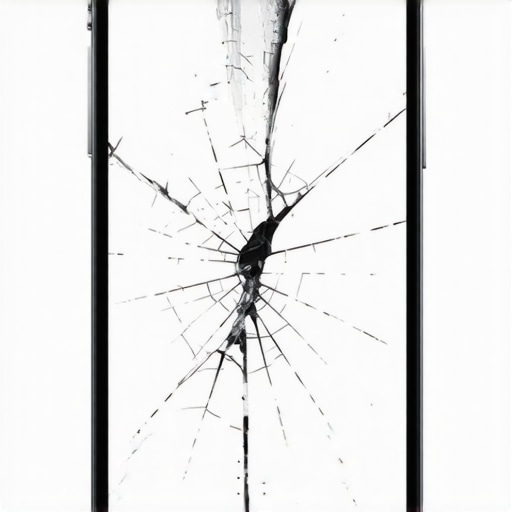
In my twenty-five years as a master glazier, I have seen every imaginable DIY ‘fix’ for a compromised window. From duct tape on a cracked sash to homeowners applying aftermarket ‘security films’ over a shattered pane, the instinct is always the same: stabilize the surface and hope the problem goes away. But here is the cold, hard reality of glass science: a screen protector or a decorative film is a cosmetic treatment, not a structural reinforcement. When you have a breach in the molecular lattice of a piece of annealed or tempered glass, you are dealing with a ticking time bomb of thermal stress and pressure differentials.
The Anatomy of a Failure: A Case Study in Rot
I pulled a vinyl window out of a house in a cold-climate region last November and the header was completely black with rot. Why? The previous installer relied on the nailing fin instead of proper flashing tape, but the homeowner had also made a critical error. They had noticed a hairline crack in the upper sash months prior and decided to ‘reinforce’ it with a thick adhesive screen protector. They thought they had sealed the leak. What they actually did was create a hydrostatic trap. Water infiltrated the fracture via capillary action, bypassed the glazing bead, and because the film prevented the moisture from evaporating back out, it diverted the liquid directly into the rough opening. By the time I arrived, the structural wood buck was soft enough to poke a finger through. This is why a mobile service professional focuses on chip repair rather than just ‘covering’ the damage.
“Installation is just as critical as the window performance itself. A high-performance window installed poorly will fail.” – AAMA Installation Masters Guide
The Physics of the Crack Tip
To understand why a film cannot fix a crack, we have to Glaze Zoom into the physics of the material. Glass is an amorphous solid. It does not have a crystalline structure that can ‘heal.’ When a crack occurs, the tip of that fracture becomes a point of nearly infinite stress concentration. Every time the sun hits that window, the glass undergoes thermal expansion. In a northern climate, where the exterior might be ten degrees while the interior is seventy, the temperature gradient across the glass creates massive internal tension. A screen protector has a different coefficient of thermal expansion than the glass itself. As the glass tries to move, the adhesive on the film pulls against the edges of the crack, actually accelerating the propagation of the fracture. You aren’t holding it together; you are providing a lever for the physics of failure to work even faster.
The Role of Low-E Coatings and Surface Integrity
Modern windows are not just clear sand. They are complex thermal barriers. Most high-performance units feature a Low-E (Low-Emissivity) coating on Surface #2 or #3. This coating is designed to reflect long-wave infrared radiation. When a crack exists, the vacuum or gas fill (Argon or Krypton) between the panes escapes. This is known as a seal failure. Once that gas is gone and replaced by ambient air, the U-Factor of your window—the measure of heat transfer—skyrockets. A film or screen protector does nothing to restore the thermal envelope. It does nothing to prevent the oxidation of the Low-E silver layer, which will eventually turn the window a murky, rusted brown. This is why a same-day glass installer will almost always recommend a full IGU (Insulated Glass Unit) replacement rather than a topical patch.
The Mobile Service Reality: Chip Repair vs. Replacement
Now, there is a distinction between a crack and a chip. A chip repair, often performed by a mobile service, involves injecting a clear, UV-curable resin into the void. This resin is formulated to have a similar refractive index to the glass and, more importantly, to bond the internal surfaces of the break. This is a structural fix because it fills the ‘Rough Opening’ of the microscopic fracture. A screen protector merely sits on top of the glazing bead, leaving the internal void of the crack empty and vulnerable to moisture and dirt. If you have an operable sash, the mechanical vibration of opening and closing the window will eventually cause the crack to jump past the boundaries of any adhesive film.
“The physical properties of the glass, including its resistance to thermal stress and impact, are compromised the moment the surface tension is breached by a fracture.” – NFRC Technical Bulletin
Moisture Migration and the Sill Pan
In my autopsy of failed installations, the most common culprit is a lack of water management. A cracked window is a hole in your building’s armor. Even with a film, water will find a way through. Proper installation requires a sill pan that is sloped to the exterior, ensuring that any water that bypasses the glazing bead is directed out through a weep hole. When a homeowner ‘fixes’ a crack with a screen protector, they often inadvertently block the drainage paths. They apply the film over the muntin or the edge of the sash, sealing the very gaps intended to allow the window to breathe. This leads to condensation buildup between the film and the glass, which can lead to mold growth that is invisible until it has reached the drywall. [IMAGE_PLACEHOLDER]
Why Professionals Use a Full-Frame Strategy
When you call an expert glass installer, we look at the entire system. We check the shim spacing, the integrity of the flashing tape, and the squareness of the rough opening. A crack is often just a symptom of a larger problem—perhaps the house has settled, putting undue pressure on the sash, or the original installer didn’t leave enough expansion room. Simply slapping a protector over the glass ignores the underlying pathology. We ensure that the new glass is seated properly with the correct glazing bead tension and that the weatherstripping is making a positive seal. We don’t just stop the draft; we restore the structural integrity of the wall.
The Myth of the Quick DIY Fix
The marketing for ‘glass repair tapes’ and ‘protective window films’ is aggressive. They promise a same-day fix for pennies. But as a master glazier, I can tell you that the ROI on those products is negative. You spend twenty dollars on a film today only to spend three thousand dollars on a new header and framing next year because of the rot that occurred behind the scenes. In the world of fenestration, you either manage the water and the heat, or they will manage you. Don’t rely on a sticker to do the job of a professional installation. If the glass is breached, the system is compromised. Period.