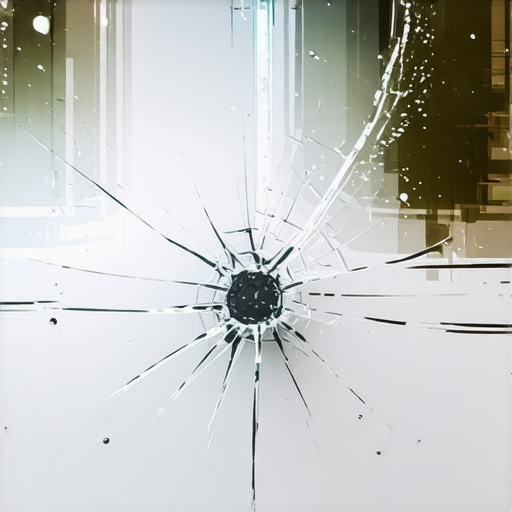
Why some windshield chips look silver or black from the inside
Understanding the Physics of Automotive Glazing Failure
As a master glazier with over two decades of experience, I have spent a significant portion of my life looking through glass, not just at it. Whether I am shimming a massive 400-pound thermal break window into a skyscraper’s rough opening or assessing a tiny impact on a laminated windshield, the physics of light and structural integrity remain constant. When a stone strikes your windshield, it creates more than just a mark; it creates a complex optical anomaly. If you have ever looked at a chip from the driver’s seat and wondered why it looks like a silver mirror or a dark, obsidian void, you are seeing the direct results of refractive index shifts and total internal reflection.
A homeowner once called me in a panic because their new high-performance windows were ‘sweating’ and showing dark spots. I walked in with my hygrometer and showed them the humidity was 60%. It was not a window failure; it was an environmental mismanagement issue. The same logic applies to your windshield. That ‘silver’ or ‘black’ look is not just a cosmetic quirk; it is a diagnostic indicator of how much air, moisture, or debris has infiltrated the laminate. To understand this, we have to look at the ‘Glass Class’ of automotive construction.
“Installation and repair procedures must account for the specific material properties of laminated safety glass to ensure the structural integrity of the vehicle’s greenhouse.” – ASTM E2730 Standard Practice for Repair of Laminated Automotive Glass
The Anatomy of the Laminated Sandwich
Unlike a standard residential sash that might use monolithic or simple dual-pane glass, a windshield is a sophisticated laminate. It consists of two layers of glass bonded together by a Polyvinyl Butyral (PVB) interlayer. Think of this PVB as the flashing tape of the automotive world; it holds everything together even when the structure is compromised. When a rock hits the outer layer, it creates a void. This void is where the visual drama begins.
Why the Chip Looks Silver: The Air Gap Phenomenon
If you see a silver, metallic-looking circle or ‘bullseye,’ you are witnessing Total Internal Reflection (TIR). In the glazing trade, we deal with refractive indices constantly. Glass has a refractive index of approximately 1.5, while air has an index of 1.0. When light travels through the glass and hits the air trapped inside the chip, it does not pass through. Instead, if the angle is right, the light reflects back toward your eyes, creating a silver, mirror-like appearance. This is actually a ‘clean’ break. The silver color confirms that the void is currently filled with air and has not yet been contaminated by road oils or washer fluid. This is the optimal time for a mobile service to perform a chip repair. Our goal as a glass installer is to use a vacuum pump to evacuate that air and inject a clear resin with a refractive index that matches the glass (1.5), effectively making the ‘silver’ disappear.
Why the Chip Looks Black: The Shadow of Contamination
A black chip is a different beast entirely. When a chip appears dark or black from the inside, it usually indicates one of two things: shadowing or contamination. In a ‘cloverleaf’ or ‘star’ break, the glass has been crushed into microscopic shards that scatter light so effectively that no light can reach your eye from that specific point, creating a black shadow. However, more often than not, a black appearance means that the weep hole of the impact—the entry point—has allowed water, dirt, and oil to seep in. Water changes the optics, and dirt absorbs light. Once a chip turns black, the ‘clarity’ of the repair is compromised. This is why same-day service is not just a marketing slogan; it is a technical necessity to prevent the ‘silver’ (air) from becoming ‘black’ (dirt).
“The optical clarity of a repaired laminate is inversely proportional to the amount of debris and oxidation present within the break prior to resin injection.” – National Windshield Repair Association (NWRA) Standard
The Climate Factor: Why Temperature Matters
In cold northern climates, these chips are ticking time bombs. When the temperature drops, the glass contracts. Because the rough opening of the vehicle’s frame is rigid, any stress is concentrated right at that chip. If there is moisture inside (the ‘black’ chip), that water will freeze and expand. Even if there is just air (the ‘silver’ chip), the pressure differential can cause the break to ‘pop’ and spread across the entire operable field of vision. This is why we treat a windshield chip with the same urgency as a failing sill pan in a home; if you do not manage the moisture and air pressure immediately, the entire system will fail.
The Role of the Expert Glass Installer
When you call for a mobile service, a professional glass installer does not just ‘fill a hole.’ We are performing micro-surgery on a structural component of your car. We use specialized bridges to apply pressure and vacuum cycles, ensuring the resin flows into every micro-crack of the muntin-like fractures. We are essentially restoring the glazing bead of the impact site. A ‘caulk-and-walk’ amateur will leave air bubbles (silver spots) or trapped dirt (black spots), which not only looks terrible but fails to restore the structural strength needed to support the roof during a rollover. Don’t buy the hype of a DIY kit; buy the expertise of someone who understands how light behaves when it hits a fractured surface.
{“@context”:”https://schema.org”,”@type”:”HowTo”,”name”:”How to Identify and Address Windshield Chips”,”step”:[{“@type”:”HowToStep”,”text”:”Inspect the chip from the inside of the vehicle to determine if it appears silver (air-filled) or black (contaminated).”},{“@type”:”HowToStep”,”text”:”Cover the chip with a small piece of clear tape to prevent moisture and dirt from entering the void.”},{“@type”:”HowToStep”,”text”:”Contact a mobile glass installer for same-day repair to ensure the best optical clarity.”},{“@type”:”HowToStep”,”text”:”Avoid using high-pressure car washes or defrosting the windshield on high heat until the repair is complete.”}]}