Why your local mechanic shop won’t touch a cracked windshield
Why Your Local Mechanic Shop Won’t Touch a Cracked Windshield
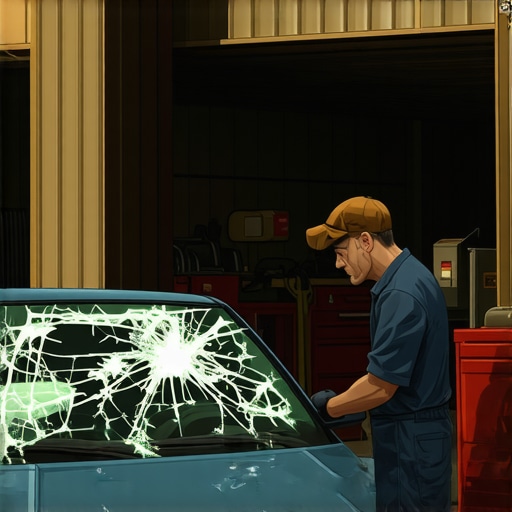
Picture this: You are at your favorite local auto repair near me for a routine oil change and tire rotation. As you’re handing over the keys, you point to a small, star-shaped crack in the lower corner of your windshield. “Hey, while you’ve got it in the bay, can you guys just fill that chip for me?” you ask. To your surprise, the service advisor shakes their head. “Sorry,” they say, “we don’t do glass here. You’ll have to call a specialist.”
It seems counterintuitive. After all, these are the people you trust to rebuild your transmission, troubleshoot complex electrical ghosts, and ensure your brakes can stop a two-ton vehicle on a dime. Why would a shop capable of such intricate mechanical feats refuse to dabble in a bit of glass resin? My name is Fernando Oyola, owner of D&G Auto Repair LLC, and I’ve spent years navigating the evolving landscape of automotive maintenance. The truth is, the modern auto repair near me has become a hub of extreme specialization. While we pride ourselves on being your vehicle’s primary care physician, glass repair has moved into the realm of “surgical specialty.”
The refusal isn’t because your mechanic is lazy or uninterested in your business. It is a calculated decision based on technology, safety, and the high-stakes environment of modern vehicle engineering. In this deep dive, we will explore exactly why the “jack-of-all-trades” era of the neighborhood garage has given way to a strict divide between the grease-stained floor and the glass-technician’s van.
The Specialization Gap: Mechanics vs. Glass Technicians
To understand why a Mechanic Shop Near Me draws a line at the windshield, you first have to understand the sheer breadth of modern automotive training. The National Institute for Automotive Service Excellence (ASE) offers 52 different certification tests. These cover everything from engine repair and automatic transmissions to electronic diesel engine diagnosis and parts specialist roles. However, glass installation and repair is often treated as a completely separate discipline, requiring its own set of certifications, such as those from the Auto Glass Safety Council (AGSC).
A general mechanic spends their career mastering the “moving parts.” They are experts in thermodynamics, hydraulics, and mechanical leverage. Glass, on the other hand, is a static but structural component. It behaves differently under stress and requires a different set of tactile skills. You might wonder why your Bossier City oil change tech won’t touch a rock chip, and the answer usually boils down to training. If a technician who spends 90% of their day handling heavy iron components tries to apply the delicate pressure required for a resin injection, they risk turning a $50 chip repair into a $500 windshield replacement in seconds.
Furthermore, the workflow of a traditional repair shop is designed around lifts and bays. Glass repair is often a mobile or “clean room” service. The cross-contamination of engine oil, brake dust, and metal shavings found in a standard shop environment is the natural enemy of a clean, high-quality glass bond. For this reason, even the most skilled mechanics prefer to leave the “clear stuff” to the experts who do nothing but glass, eight hours a day, five days a week.
The Tooling Barrier: Why It’s Not Just a “Simple Glue Job”
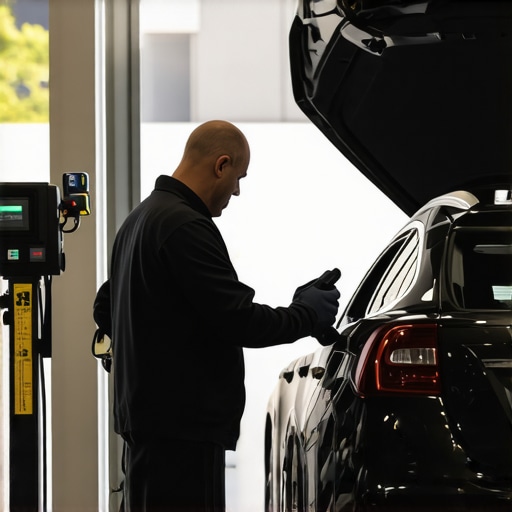
One of the biggest misconceptions among vehicle owners is that fixing a windshield involves a bit of “super glue” and a steady hand. In reality, the equipment required to perform a professional-grade glass replacement or repair is highly specialized and expensive. A standard Mechanic Shop Near Me is filled with impact wrenches, diagnostic scanners, and torque wrenches. They rarely have the space or the budget to invest in the specific arsenal needed for glass.
Professional glass technicians utilize industrial-grade urethane guns that maintain specific temperatures to ensure the adhesive flows correctly. They use specialized removal tools, such as the LATEST Windshield Removal Tool – which often involves high-tensile strength wires or oscillating knives designed to cut through old seals without marring the vehicle’s “pinch weld” (the metal frame the glass sits on). If that pinch weld is scratched and not properly treated with a specialized primer, the metal will rust underneath the new glass, leading to leaks and structural failure down the road. This is why professional glass techs use a primer before the glue; it’s a critical step that a general mechanic might overlook.
Then there is the curing process. Professional-grade resins used for chip repairs aren’t just air-dried. They require specific UV curing lamps that output a precise wavelength of light to harden the resin to the same refractive index as the glass. If you’ve ever wondered about the specific way professional resin cures under a UV lamp, it’s a chemical reaction that bonds the resin to the molecular structure of the glass. Without this equipment, a repair is just a temporary plug that will likely fail the next time the temperature shifts.
The ADAS Factor: Why Modern Tech Changed Everything
Twenty years ago, a windshield was just a piece of laminated glass designed to keep the wind out of your face. Today, it is a sophisticated housing for your car’s “eyes.” Most modern vehicles are equipped with Advanced Driver Assistance Systems (ADAS). These include cameras and sensors mounted directly behind the rearview mirror, looking through the glass. These systems control lane-departure warnings, automatic emergency braking, adaptive cruise control, and pedestrian detection.
When you look for Car repair shops near me, you need to realize that replacing a windshield on a modern car isn’t just a physical installation; it’s a digital calibration. If the new glass is off by even a fraction of a millimeter, or if the glass itself has a slight optical distortion, those cameras will “see” the road incorrectly. This can lead to the car suddenly braking for no reason or failing to stay in its lane. This is the cost of skipping a professional windshield recalibration – it’s not just about the money; it’s about the safety systems of the car functioning as intended.
Most general mechanics do not have the specialized (and very expensive) calibration targets and software required to reset these cameras. It’s a similar logic to why your safety sensors need a recalibration after a basic wheel alignment. Everything is connected. If a shop replaces your glass but can’t calibrate the ADAS, they are handing you back a vehicle that is technically “broken” from a safety standpoint. This complexity is often why your windshield sensors are acting crazy after a storm or a botched repair job. To avoid this liability, mechanics refer you to glass shops that have invested the $20,000 to $50,000 required for ADAS calibration equipment.
Liability and the “Structural Integrity” Problem
In the automotive world, liability is everything. As a shop owner, I have to ensure that every repair we perform meets or exceeds OEM (Original Equipment Manufacturer) standards. Windshields are a massive liability because they are a primary safety component. Many drivers don’t realize that the windshield provides up to 45% of the structural integrity of the cabin in a front-end collision and up to 60% in a rollover accident. It acts as a backstop for the passenger-side airbag; if the glass pops out during deployment because the glue didn’t bond correctly, the airbag will deploy out the window instead of protecting the passenger.
Even a specialized diesel repair shop or a heavy-duty diesel mechanic near me will typically outsource glass work. Why? Because the insurance premiums for a shop that performs “structural glass replacement” are different from those that do mechanical work. If a mechanic fixes a brake line and it fails, their insurance covers it. If they “dabble” in glass and the roof collapses in a rollover because the windshield wasn’t installed to AGSC standards, their insurance provider might deny the claim because they weren’t “rated” for glass work. There is a massive risk of ignoring that tiny star in your windshield, but there is an even bigger risk in having it fixed by someone without the proper credentials.
Furthermore, there is the issue of Safe Drive-Away Time (SDAT). Professional urethane adhesives require a specific amount of time to cure before the vehicle can be safely driven. This time varies based on temperature and humidity. Professional glass shops use high-end urethanes with documented SDATs. A general mechanic might not have the training to accurately calculate this, potentially letting a customer drive off in a “death trap” where the glass isn’t yet secured to the frame.
Mobile Logistics and Shop Environment
The business model of a auto repair the valley is built on throughput – getting cars in and out of bays. Glass repair, however, is uniquely suited for mobile service. Most glass companies operate a fleet of vans that come to your home or office. This is a logistical nightmare for a traditional mechanic. We don’t have the “glass racks” needed to transport large, fragile panes of curved glass, nor do we want to take up a high-revenue lift bay for four hours while a windshield adhesive cures.
Additionally, the environment must be controlled. You might wonder why your glass tech won’t fix your windshield in the rain or why we won’t fix your windshield in a parking garage. Contaminants like moisture, extreme cold, or excessive dust can ruin the bond of the urethane. A busy truck repair near me is often a place of high activity, with bay doors opening and closing, diesel exhaust in the air, and various fluids being handled. It is simply not the “clean” environment required for high-quality glass bonding. By referring you to a specialist, your mechanic is ensuring the work is done in the right conditions.
As Fernando Oyola, I always tell my customers: “In a modern vehicle, the windshield is a piece of technology, not just a piece of glass. Between the rain sensors and the lane-departure cameras, the margin for error is zero.” This philosophy extends to the environment where the work is performed. We want your engine to be worked on in a shop with the right heavy tools, and we want your glass to be worked on in a controlled setting by someone with a “clean room” mindset.
DIY Pitfalls: What Not to Do Before Seeing a Pro
Because mechanics often turn down glass work, some drivers get frustrated and turn to the internet for “hacks.” We’ve seen it all at D&G Auto Repair. People try to use clear nail polish to “seal” a crack or, even worse, use various types of tape. Let me be clear: the truth about using clear nail polish on a windshield crack is that it actually makes a professional repair impossible. The polish seeps into the crack and prevents the professional resin from bonding. Once you put nail polish in there, you’ve effectively committed yourself to a full windshield replacement once the crack inevitably spreads.
The same goes for tape. While you might see advice to stop using tape on your cracked phone screen, applying it to a car windshield is even more dangerous. It can obscure your vision and does nothing to stop the “spidering” effect caused by temperature changes. You might also find that a cold windshield cracks faster when the defroster hits it, or notice the danger of localized heat on a small windshield crack during a hot summer day. These are physical realities of glass stress that “home remedies” cannot fix. If you have a chip, the best thing you can do is keep it clean and get it to a glass specialist immediately before it becomes a full-blown crack.
Other common mistakes include using hairspray or superglue. If you’ve ever wondered why your technician hates when you use hair spray on a windshield chip, it’s because the chemicals in the spray react with the professional-grade resins, causing them to turn yellow or cloudy, which ruins the optical clarity of the repair. If you want to know how to stop a rock chip from spidering in the summer heat, the answer isn’t a DIY kit from a big-box store; it’s getting it under a professional UV lamp as soon as possible.
Understanding the Economics of Glass Repair
There is also an economic reason why your local auto repair near me avoids glass: the insurance industry. The world of auto glass is heavily dominated by insurance “networks.” Many insurance companies have “no-deductible” glass coverage, meaning the repair is free to the consumer. However, the insurance companies have pre-negotiated rates with specific glass chains and networks. A general mechanic shop isn’t set up to bill these specific glass claims, which involves specialized software and direct-billing interfaces with companies like Safelite or Lynx Services.
If your mechanic were to do the job, they would likely have to charge you full price out of pocket, whereas a glass specialist can often get the job covered entirely by your insurance. This is why your car insurance company waives the deductible for chips – it’s cheaper for them to pay $60 for a resin fill than $800 for a full replacement and ADAS calibration later. By sending you to a glass shop, your mechanic is actually helping you save money by directing you to a provider that can work within your insurance policy’s benefits.
Furthermore, the warranty on glass work is unique. Most reputable glass shops offer a “lifetime warranty” against leaks and stress cracks. A general Mechanic Shop Near Me usually warranties their parts and labor for 12 to 24 months. Providing a lifetime warranty on a specialized product like glass installation requires a volume of work and a specific relationship with glass manufacturers that most general shops simply don’t have.
Conclusion: Finding the Right Expert
At the end of the day, your mechanic’s refusal to touch your windshield is a sign of their professionalism, not a lack of it. It shows they respect the complexity of your vehicle and the safety of your family. Whether you are looking for Car repair shops near me for an engine issue or a glass specialist for a rock chip, the key is to find experts who know their limits.
If you have a chip, don’t wait. Check if that rock chip is small enough to fix without a replacement. Look for signs of trouble, such as how to spot a bad windshield seal before it leaks or why your car windshield whistles at sixty miles per hour. These are all indicators that you need a glass professional. While we at D&G Auto Repair LLC will always be here to keep your engine humming and your brakes biting, we’ll continue to refer you to the best glass techs in the business for your windshield needs. It’s the only way to ensure your car remains the high-tech, safe machine it was designed to be.
Before you leave, remember to check your insurance policy. You might be surprised to find that a professional repair won’t cost you a dime, and it will save you the headache of a full replacement down the road. Stay safe out there, and keep your eyes on the road through a clear, professionally maintained windshield!