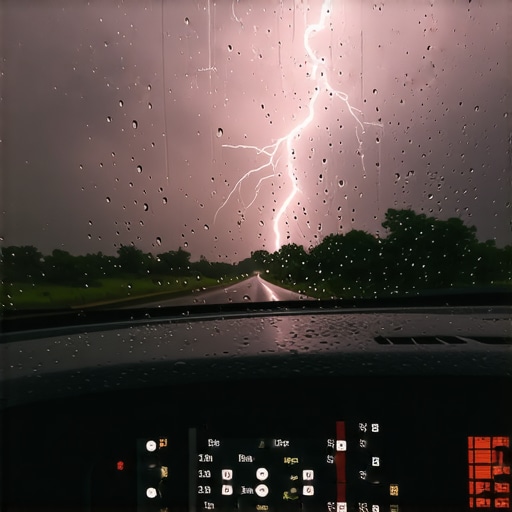
Why your windshield sensors are acting crazy after a storm
I have spent over two and a half decades as a master glazier. I have handled everything from heavy commercial curtain walls to the delicate restoration of historic wood sash frames. When I look at a piece of glass, whether it is in a luxury high-rise or the windshield of a modern SUV, I do not just see a transparent surface. I see a complex thermal barrier and an optical lens. Lately, I have been seeing a lot of frustrated drivers complaining that their lane-keep assist, rain sensors, and collision avoidance systems are failing after a major weather event. They think it is a computer glitch, but as someone who understands the physics of a rough opening and the behavior of moisture under pressure, I know the truth is usually found in the glass itself.
The Sensor Calibration Crisis: A Real-World Autopsy
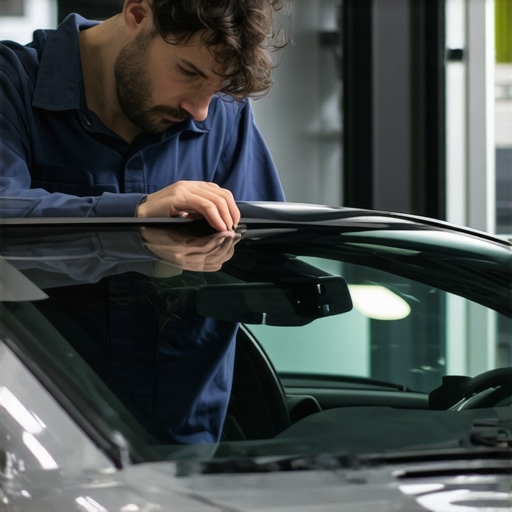
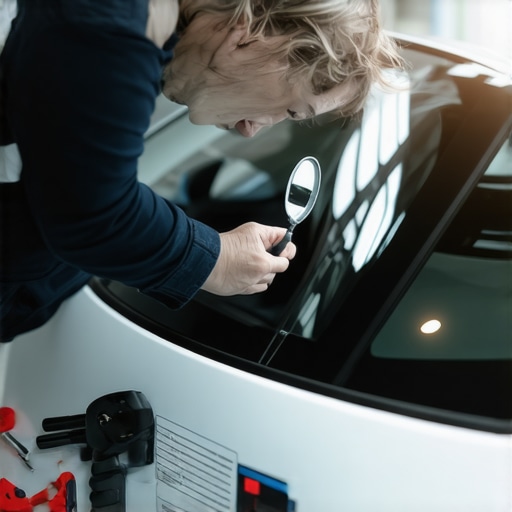
A few months ago, a homeowner called me in a panic because their new vehicle was essentially ‘hallucinating’ after a heavy thunderstorm. I walked out with my digital hygrometer and a high-intensity inspection lamp. I did not look at the dashboard; I looked at the glass-to-bracket interface. I showed them that the humidity trapped behind the rearview mirror housing was at 85 percent. The storm had pushed moisture into a microscopic void in the urethane seal. It was not a software error; it was a localized humidity event. The sensor was trying to ‘see’ through a micro-fog that the driver could not even perceive. This is the reality of modern automotive glazing: the glass is no longer just a windbreak; it is a housing for sophisticated optics.
“Installation is just as critical as the window performance itself. A high-performance window installed poorly will fail.” AAMA Installation Masters Guide
The Physics of the Storm: Pressure and Ingress
During a storm, your vehicle is subjected to significant barometric pressure shifts and high-velocity water impact. If you have ever seen a window sash rattle in a high wind, you understand that nothing is truly static. A windshield is bonded to the vehicle frame using a high-modulus urethane. This bead acts as the primary seal, much like the flashing tape and sill pan system in a residential window installation. If a mobile service technician performed a same-day glass replacement and rushed the priming process, that bond is compromised. When the storm hits, hydrostatic pressure forces water into the frit—the black ceramic dots around the edge—and into the sensor bracket. This moisture disrupts the refractive index of the glass. The camera, calibrated to look through a specific thickness of clear laminate, suddenly encounters a layer of water or high-vapor density. The result is a ‘crazy’ sensor that cannot calculate distance or detect lane markings.
Why Your Chip Repair Matters for ADAS
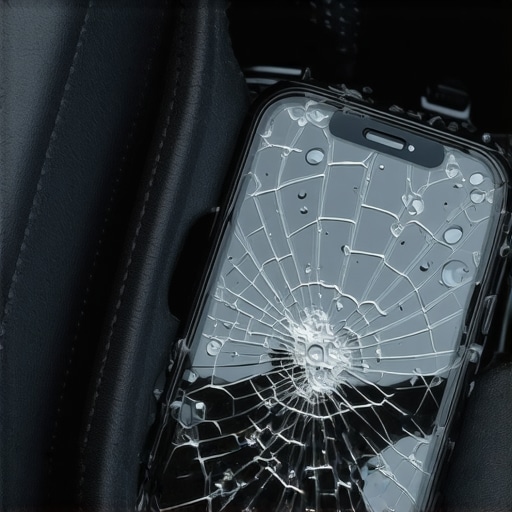
Many drivers ignore a small stone chip, thinking it is just a cosmetic flaw. From a glazier’s perspective, a chip is a breach in the structural integrity of the outer lite. Most windshields are a sandwich of two layers of glass with a Polyvinyl Butyral (PVB) interlayer. This interlayer is hygroscopic, meaning it wants to absorb moisture. During a storm, water is forced into that chip. If you haven’t sought a professional chip repair, that water will freeze or expand with temperature shifts, delaminating the glass. For vehicles with Advanced Driver Assistance Systems (ADAS), even a professionally repaired chip can be an issue if the resin used does not perfectly match the refractive index of the glass. A glass installer must be precise; if the repair is in the ‘critical vision area’ where sensors are mounted, the light from the sun or oncoming headlights will scatter, blinding the sensors and triggering error codes.
Thermal Shock and the Surface #2 Problem
In the world of residential glazing, we talk about Low-E coatings on Surface #2 (the inner face of the outer pane) to manage Solar Heat Gain Coefficient (SHGC). Modern windshields use similar technology to keep your cabin cool. However, after a storm, you often have a massive temperature differential. You have cold rainwater hitting a windshield that has been sitting in the sun. This thermal shock causes the glass and the mounting brackets to expand and contract at different rates. If the sensor is not seated perfectly within its glazing bead or bracket, this movement can knock it out of its millimetric calibration. You do not need a new sensor; you need a technician who understands how to shim and seat the hardware so it can withstand these thermal cycles without losing its ‘aim.’
“The integrity of the fenestration assembly depends entirely on the continuity of the air and water barrier at the rough opening.” ASTM E2112 Standard Practice
The Mobile Service Reality Check
I often see people opting for the cheapest mobile service they can find for a same-day replacement. While mobile service is convenient, it presents challenges for sensor-heavy vehicles. To properly seal a windshield and calibrate the sensors, you need a controlled environment. If it is humid or raining while the tech is working under a pop-up tent, the urethane may not cure correctly, and the ‘weep holes’ of the vehicle’s cowl could be obstructed by excess adhesive. This leads to water backing up into the cabin or the sensor housings during the next storm. As a master glazier, I tell my clients: the glass is a system, not a part. You need to ensure the technician is checking the ‘rough opening’ of the pinchweld for rust and using a proper sill pan logic to ensure water flows away from, not into, your electronics.
Technical Summary for the Concerned Driver
If your sensors are acting up after a storm, start by inspecting the area around the rearview mirror from the outside. Look for any signs of ‘silvering’ or delamination, which indicates air or water has entered the laminate. Check if your cowl—the plastic piece at the bottom of the windshield—is clear of debris. If the weep holes are clogged, water will pool and create a high-humidity zone that fogs the internal sensor lenses. Finally, if you recently had a glass installer replace the windshield, ask if they performed a static or dynamic calibration. Without this, the computer cannot account for the minute variations in glass thickness or the angle of the new install. In the end, managing a window is about managing the environment. Whether it is a sash in a house or a windshield in a car, the physics of water and light remain the same.