The reason your windshield makes a whistling sound at 60mph
The Anatomy of the High-Speed Whistle
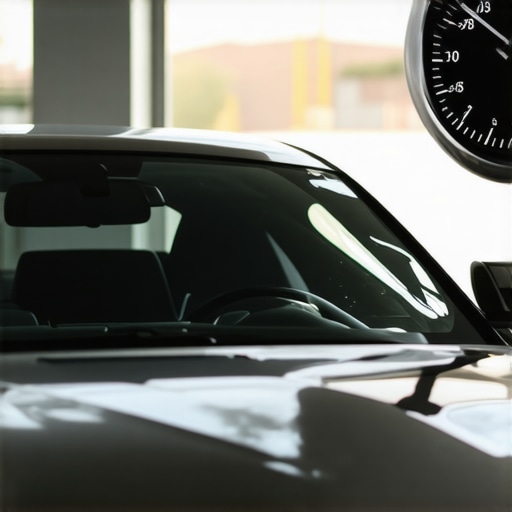
That high-pitched, reed-like sound emanating from your dashboard at highway speeds is not just a nuisance. It is the audible signature of a mechanical failure in the glazing system. In my 25 years as a master glazier, I have learned that air is a fluid. When you are traveling at 60mph, you are creating a massive pressure differential between the interior of the cabin and the exterior environment. If there is even a microscopic breach in the urethane bead, the air is forced through that orifice, creating an Aeolian harp effect. This is the same principle that allows a flute to produce sound, but when it happens in your vehicle, it signifies that your glass installer missed a critical step in the bonding process.
The whistling usually points to a ‘skip’ in the urethane or a failure in the pinch weld preparation. When a mobile service technician rushes a job, they might not allow the primer to flash off properly or they may fail to maintain a consistent bead height. When the glass is set into the Rough Opening of the vehicle frame, any thin spot in that adhesive becomes a tunnel for pressurized air. The sound you hear is the air vibrating as it struggles to equalize the pressure between the outside world and your climate-controlled interior.
The Condensation Crisis: A Lesson in Technical Diagnostics
A homeowner called me in a panic because their new windows were ‘sweating.’ I walked in with my hygrometer and showed them the humidity was 60%. It wasn’t the windows; it was their lifestyle. They had a massive aquarium in the living room and rarely used their bathroom vent fans. Much like the whistling windshield, the ‘failure’ was a symptom of a larger environmental issue that the average ‘caulk-and-walk’ installer would never bother to diagnose. In the world of glass, whether automotive or residential, you have to look at the physics of the entire envelope. If your glass installer does not understand the dew point, they have no business touching your property. The same logic applies to a chip repair. A small pit in the glass is not just an aesthetic flaw; it is a structural vulnerability that disrupts the laminar flow of air over the glass surface, contributing to turbulence and, eventually, noise or total failure.
“Installation is just as critical as the window performance itself. A high-performance window installed poorly will fail.” AAMA Installation Masters Guide
The Physics of the Seal: Why Same-Day Service Can Be Risky
When searching for a glass installer, the lure of same-day service is strong. However, we must discuss the chemistry of the bond. Most automotive urethanes require a specific ‘Drive-Away Time’ (DAT) to reach a structural Shore A hardness. If you take a vehicle out on the highway before the adhesive has properly cross-linked, the wind pressure at 60mph can actually deform the bead. This creates those tiny gaps that lead to whistling. This is why a professional mobile service must be performed under strict environmental conditions. If it is too cold, the viscosity of the urethane changes, making it difficult to achieve a Seamless (in the context of the adhesive line) bond with the glass frit.
In northern climates like Chicago or Minneapolis, the U-Factor of the glass and the thermal stability of the sealant are the primary concerns. Heat loss and condensation are the enemies. When the temperature drops, materials contract. If the glass installer used a low-grade sealant or failed to use a proper Sill Pan or flashing in a residential setting, the gap will widen in January. In the automotive world, the whistling becomes more pronounced in winter as the rubber gaskets and urethane lose their elasticity, allowing air to bypass the primary seal.
The Role of Low-E Coatings and Surface Physics
Whether we are talking about a windshield or a Sash in a double-hung window, the management of the thermal spectrum is vital. In modern glazing, we use Low-E coatings to control long-wave infrared radiation. In a car, this keeps the interior from becoming a greenhouse. However, if the glass is not seated correctly, all the energy efficiency in the world is negated by air infiltration. Air carries moisture, and moisture leads to the degradation of the pinch weld. I have seen vehicles where the entire metal frame was bubbling with rust because a technician didn’t use a Glazing Bead or primer correctly, allowing water to sit trapped against the steel.
“Standard Practice for Installation of Exterior Windows, Doors and Skylights requires a continuous air barrier and integrated flashing to prevent water penetration and air leakage.” ASTM E2112
When you hear that whistle, you are hearing the sound of air carrying away your comfort. For a residential window, you might see the curtains move or feel the draft. In a car, it is the piercing shriek of the 60mph wind. The solution for a whistle is rarely more caulk. It usually requires a full removal and re-install. You have to clean the Rough Opening down to the bare substrate, re-prime, and lay a fresh, triangular bead of high-modulus urethane. Only then can you guarantee a quiet ride.
[image_placeholder_1]
The Real Math of Glass Repair and Replacement
There is a common myth that chip repair is just a temporary fix. If done by a specialist who understands resin viscosity and refractive index matching, a repair can restore the structural integrity of the glass. The goal is to fill the void so that the air cannot catch on the edge of the crack. This prevents the ‘spreading’ that occurs when thermal shock hits the glass. If you ignore a chip, you are inviting a full replacement that could have been avoided. My advice is always to prioritize the seal over the sticker price. A cheap glass installer will save you fifty dollars today but cost you a thousand dollars in interior water damage or wind-noise frustration tomorrow. Precision in the Sill Pan and the Weep Hole management is what separates a master from a tinkerer.
In conclusion, the whistling you hear is a call to action. It is an indication that the boundary between your environment and the outside world has been compromised. Whether it is through mobile service or a shop-based installation, ensure your technician understands the Shim logic and the chemical properties of the materials they use. Do not accept a ‘caulk-and-walk’ solution. Demand the science of a perfect seal.
{“@context”:”https://schema.org”,”@type”:”HowTo”,”name”:”How to Diagnose a Whistling Windshield”,”step”:[{“@type”:”HowToStep”,”text”:”Clean the exterior glass and molding thoroughly to remove debris.”},{“@type”:”HowToStep”,”text”:”Apply a soap and water solution around the perimeter of the glass seal.”},{“@type”:”HowToStep”,”text”:”Turn on the vehicle’s blower motor to the highest setting on ‘fresh air’ mode to pressurize the cabin.”},{“@type”:”HowToStep”,”text”:”Observe the exterior seal for bubbles, which indicate where air is escaping and creating the whistle.”}]}