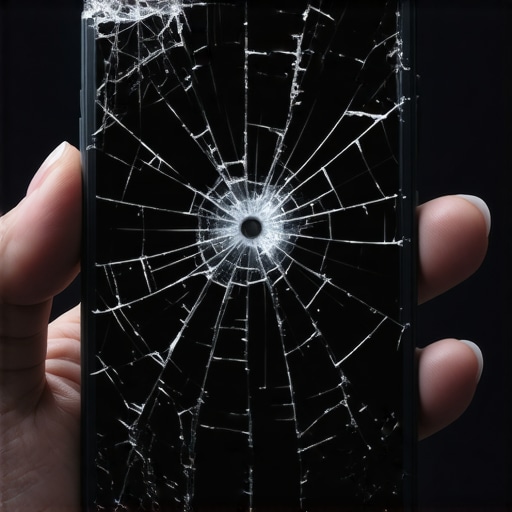
How to tell if your phone screen digitizer is actually broken
The Precision of Modern Glazing: More Than Just Glass
I have spent over twenty-five years as a glass installer, handling everything from sixteen-foot storefront panes to the delicate laminated assemblies of high-rise curtain walls. To most people, a window is just a clear piece of material that stays in place. To me, it is a managed thermal barrier. When someone brings me a smartphone with a shattered face, they often ask about a ‘chip repair’ or a simple glass swap. But a phone screen is not just glass; it is a sophisticated glazing assembly where the digitizer acts as the nervous system of the device. If the digitizer is compromised, the glass becomes a useless husk. Understanding the physics of this interaction is the difference between a functional device and a paperweight. I recently sat across from a ‘Tin Man’ style salesman at a local tech kiosk who was trying to convince a customer that a twenty-dollar UV glue kit would fix a dead touch zone on an OLED panel. I had to step in and explain the ROI of that repair was effectively zero. You cannot fix a severed Indium Tin Oxide grid with a bottle of resin and a prayer. It is no different than trying to fix a blown seal on a dual-pane IGU with a bead of silicone from a hardware store; you are treating the symptom while the system has already failed internally.
The Anatomy of the Capacitive Assembly
To understand if your digitizer is broken, we must perform what I call a Glass Class analysis. A modern mobile device utilizes an aluminosilicate glass, often chemically strengthened through an ion-exchange process. Beneath this ‘sacrificial’ outer layer lies the digitizer. This is not a physical button; it is a transparent conductive layer, typically composed of Indium Tin Oxide (ITO). This layer creates an electrostatic field. When your finger—which is also a conductor—touches the surface, it distorts the local electrostatic field. This change in capacitance is measured by the device’s controller to determine the exact coordinates of your touch.
“Installation is just as critical as the window performance itself. A high-performance window installed poorly will fail.” – AAMA Installation Masters Guide
This industry standard applies perfectly to mobile service. If the digitizer is not perfectly bonded to the glass with Optically Clear Adhesive (OCA) within the Rough Opening of the phone frame, the capacitive field becomes erratic. You might experience ‘phantom touches,’ where the screen acts as if it is being tapped by a ghost, or ‘dead zones,’ where certain areas of the Sash of your display simply do not respond. This is often caused by microscopic fractures in the ITO grid that are invisible to the naked eye but catastrophic to the electrical circuit.
The Thermal Logic of Screen Failure
In my decades of glazing, I have learned that heat is the primary enemy of structural integrity. In high-performance window installation, we look at the Solar Heat Gain Coefficient (SHGC). For a mobile device, we must consider the South/Hot climate context of the internal battery and external environment. When a phone is exposed to high ambient temperatures, the internal adhesives reach their Dew Point for failure. The different coefficients of thermal expansion between the glass, the plastic frame, and the metallic mid-frame cause the Glazing Bead (the adhesive gasket) to stress. If the glass has a chip or a hairline fracture, these thermal cycles will expand the crack. In a mobile service context, a same-day repair is critical because once the structural integrity of the outer glass is breached, humidity enters the assembly. High humidity leads to oxidation of the digitizer’s conductive traces. This is why a simple crack often evolves into a total touch failure within forty-eight hours. The moisture acts as a bridge, short-circuiting the capacitive grid and rendering the Operable parts of your interface useless.
The Three Stages of Diagnostic Failure
Before you call a mobile service for a chip repair, you must identify where the failure lies. First, check the visual output. If the colors are distorted or there are black ‘ink’ spots, the LCD or OLED (the display layer) is leaking. This is the equivalent of a shattered pane in a triple-pane window; the core is gone. Second, if the visual is perfect but the touch is non-responsive or erratic, the digitizer is the culprit. Third, if the touch works but the glass is sharp and jagged, you have a structural glass failure. I have seen installers try to Shim a new screen into a bent chassis, only to have the pressure crack the new digitizer within minutes. The Rough Opening of the phone must be perfectly square. If the frame is warped from a drop, no amount of high-quality glass will save it. You need a glass installer who understands that the frame is just as important as the pane.
“Water management is a science. If the flashing system fails, the window is irrelevant.” – ASTM E2112 Standard Practice
In the world of smartphones, your ‘flashing system’ is the precision-milled bezel and the adhesive seal that prevents contaminants from reaching the ITO layer.
Why DIY Is a Glazing Nightmare
Many homeowners think they can swap a screen just like they might swap a screen door. They buy a cheap assembly online and realize too late that the Muntins of the internal ribbon cables are incredibly fragile. A professional mobile service technician uses specialized jigs to ensure alignment. If the Sill Pan (the bottom of the phone chassis) is not cleared of every microscopic shard of the old glass, the new digitizer will sit unevenly. This creates a pressure point. Just as a window pane will crack if a Shim is driven too hard, a smartphone digitizer will fail if it is forced into a compromised frame. When you seek a same-day repair, you are paying for the expertise of someone who can manage the thermal bonding process. A professional glass installer uses a vacuum lamination chamber to remove every air bubble, ensuring that the SHGC of the screen remains consistent and that the touch sensitivity is uniform across the entire surface. Don’t be fooled by ‘caulk-and-walk’ technicians who use cheap liquid glue that will eventually yellow and delaminate. Demand a full assembly replacement that honors the original engineering of the device.