The secret to making your windshield repair nearly invisible
The Physics of the Void: Why Most Chip Repairs Fail the Eye Test
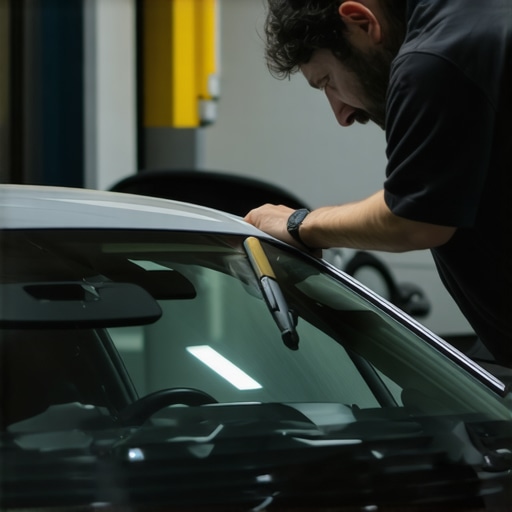
When a stone strikes a windshield, it does more than just damage the surface; it creates a complex fracture geometry within the laminated structure. As a master glass installer with over 25 years in the trade, I have seen thousands of these ‘minor’ impacts. To the untrained eye, it is just a mark. To a specialist, it is a localized failure of the glass-to-plastic bond. The secret to making a repair nearly invisible is not found in a bottle of cheap resin sold at an auto parts store; it is found in the precise manipulation of the refractive index and the total evacuation of air from the fracture’s Rough Opening. Most ‘caulk-and-walk’ installers simply drop some fluid into the pit and call it a day. That is why you can still see the scar. A true professional treats the chip as a microscopic engineering project.
“Repair of laminated auto glass is a precision operation that relies on the total displacement of air with a refractive-index-matched resin.” – National Glass Association (NGA) Technical Manual
The Condensation Crisis: A Narrative of Trapped Moisture
I remember a specific case last November when a homeowner called me about their windshield ‘sweating’ internally after a cheap repair. I walked out with my hygrometer and a thermal camera. The previous glass installer had performed a mobile service in the middle of a humid morning without properly drying the break. I showed the owner how the moisture was trapped against the PVB (Polyvinyl Butyral) interlayer. It was not a bad window; it was a bad process. That moisture becomes a permanent milky haze if not removed before the resin is injected. This is why same-day service is not just about convenience; it is about reaching the damage before environmental contaminants and moisture can settle into the fracture. If you wait, the ‘invisible’ repair becomes a mathematical impossibility.
Laminated Glass Anatomy and the Refractive Index
Your windshield is a sandwich: two layers of glass held together by a layer of plastic. When a rock hits, it usually breaks the outer layer, creating an air pocket. Air has a refractive index of 1.00. Glass has a refractive index of approximately 1.52. That massive difference is why the chip is visible—light bends sharply as it hits the air. To make the repair invisible, we must replace every molecule of air with a resin that has a refractive index matching that 1.52 value. If the resin is off by even a few hundredths, you get a ‘ghost’ or a shimmer in the glass. We use high-grade anaerobic resins that are specifically formulated for different CLIMATE CONTEXTS. In the cold North, we need a thinner resin that can penetrate tight cracks; in the hot South, we need a thicker resin that won’t cook before it fills the void.
The Mechanics of the Repair: Beyond the Surface
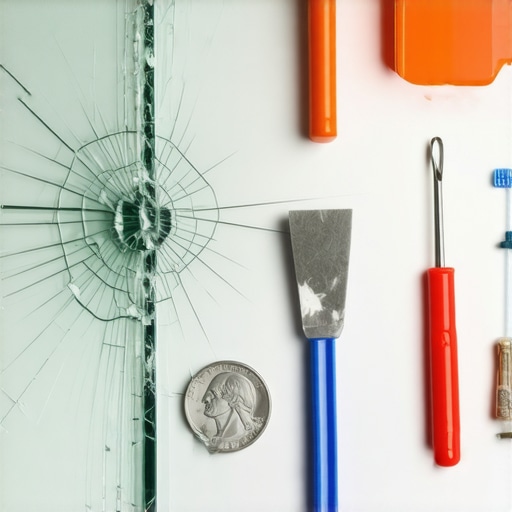
A professional chip repair involves a bridge and injector system. This tool creates a vacuum over the impact point, literally sucking the air out of the fracture. Then, it switches to a pressure cycle, forcing the resin into the furthest reaches of the ‘legs’ or ‘wings’ of the break. I treat the impact point like a Sill Pan in a window installation—it is the foundation that must be perfectly managed. We often have to use a dental drill to create a clean path into the break, ensuring there is no Glazing Bead of crushed glass blocking the resin’s path. Without this vacuum-pressure cycle, you are just painting over the problem. The resin must be cured with a specific UV wavelength (usually 365nm) to ensure the chemical bonds are stable and won’t yellow over time.
“The success of a repair is measured not only by its structural integrity but by its optical clarity under varying light conditions.” – ROLAGS (Repair of Laminated Auto Glass Standard) 2.0
Mobile Service Realities: The Installer vs. The Environment
Providing a mobile service for glass repair is a logistical challenge. You are fighting wind, dust, and the sun’s radiant heat. If the glass is too hot, the resin will cure prematurely before it reaches the end of a crack. If it’s too cold, the glass can ‘run’ or crack further under the pressure of the injector. A master technician knows how to shadow the glass or use a heat lamp to stabilize the Rough Opening. We don’t just ‘fill and go.’ We manage the thermal stress of the glass to ensure the repair is structural. The Weep Hole in a residential window allows water to escape; in a windshield, we must ensure there are no paths for air to re-enter. This is why we use a ‘pit resin’ to cap the repair—a harder, more durable substance that acts as a Flashing Tape for the glass, sealing it against wipers and road grit.
Why High-Pressure Sales Tactics Fail the Homeowner
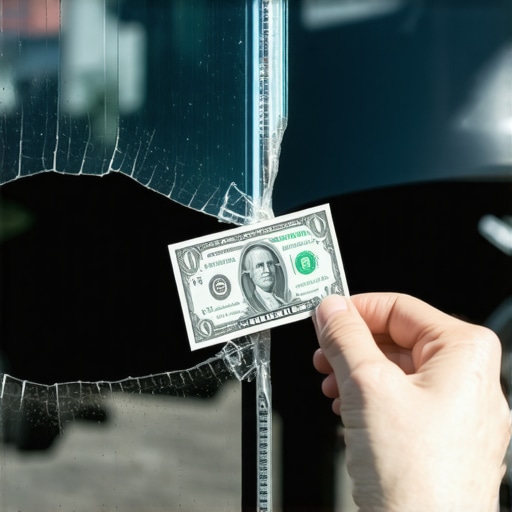
I often see ‘Tin Man’ style salesmen trying to convince people that every chip requires a total windshield replacement. This is usually unnecessary if the damage is smaller than a half-dollar. However, the opposite is also true—the ‘five-minute repair’ is a myth. A quality chip repair takes 30 to 45 minutes of careful cycling. If an installer is done in ten minutes, they haven’t achieved a vacuum. They’ve just filled the crater and left the air in the cracks. You might not notice it immediately, but as the vehicle flexes and the Sash of the car body moves, those air pockets will expand, and the repair will fail, usually on the first cold morning of the year. Professionalism is about understanding the long-term ROI of a repair that actually holds.
The Technical Checklist for Invisible Results
When you are looking for a glass installer, ask about their resin types. Do they have different viscosities for summer and winter? Do they use a bridge or just a handheld syringe? A handheld syringe cannot provide the 20+ inches of mercury vacuum required to truly clear a break. Check the Operable parts of their equipment; if it’s dirty or worn, your repair will be too. The secret isn’t a magic fluid; it is the discipline of the technician to follow the ASTM standards for glass restoration. We are managing light, heat, and structural integrity. Anything less is just a temporary patch on a permanent problem.
{“@context”:”https://schema.org”,”@type”:”HowTo”,”name”:”How to Achieve a Near-Invisible Windshield Chip Repair”,”step”:[{“@type”:”HowToStep”,”text”:”Assess the damage for moisture and debris; use a probe to clear the impact point.”}{“@type”:”HowToStep”,”text”:”Apply a professional bridge and injector to the glass surface directly over the chip.”}{“@type”:”HowToStep”,”text”:”Perform a vacuum cycle to extract all air from the fracture legs.”}{“@type”:”HowToStep”,”text”:”Inject high-refractive-index resin under pressure until the void is completely filled.”}{“@type”:”HowToStep”,”text”:”Apply a pit resin and UV curing light for at least 5 minutes to stabilize the bond.”}{“@type”:”HowToStep”,”text”:”Scrape excess resin flat with a razor blade to match the glass surface profile.”}]}