Why your insurance company covers stone chips but hates long cracks
The sound is unmistakable. It is a sharp, metallic crack that resonates through the cabin of your vehicle or the frame of your home. It is the sound of a small projectile meeting the rigid resistance of soda-lime glass. As a master glazier with over two decades in the field, I have seen exactly what happens next. A homeowner or driver looks at that tiny, star-shaped blemish and thinks they have time. They assume that because the structural integrity seems intact, the emergency is non-existent. However, from the perspective of an insurance adjuster and a professional glass installer, that chip is a ticking time bomb of thermal stress and molecular fatigue. Understanding why your insurance provider will practically beg you to get a same-day chip repair while putting up a fight over a long crack requires a deep dive into the physics of glass and the actuarial math of risk management.
“A homeowner called me in a panic because their new windows were ‘sweating.’ I walked in with my hygrometer and showed them the humidity was 60%. It wasn’t the windows; it was their lifestyle…”
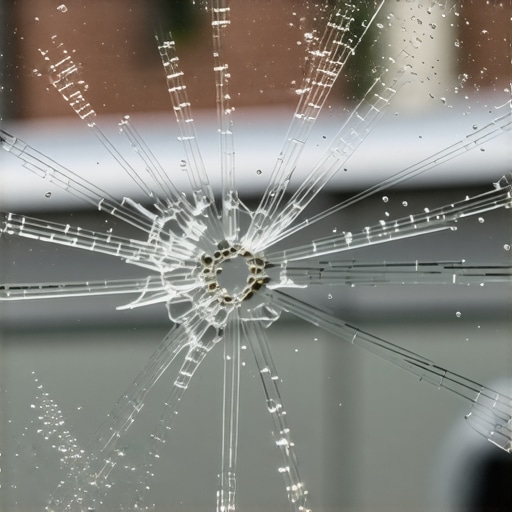
To understand the urgency of mobile service for glass repair, we have to look at the anatomy of the impact. When a stone hits a piece of glass, it creates a localized area of extreme tension. In the world of glazing, we call this a Hertzian Cone. The initial impact might only damage the outer layer of a laminated glass assembly, but it creates a microscopic void. This void is a point of concentrated stress. If you were looking at this through a polariscope, you would see a halo of intense pressure surrounding that tiny chip. The insurance company knows that as long as the damage is contained within a circle smaller than a quarter, a glass installer can inject a specialized resin with a refractive index of approximately 1.52. This resin fills the voids, bonds the fractured layers, and restores the structural integrity of the pane. This is a controlled, low-cost fix that prevents the eventual failure of the entire unit.
The Thermal Expansion Explosion
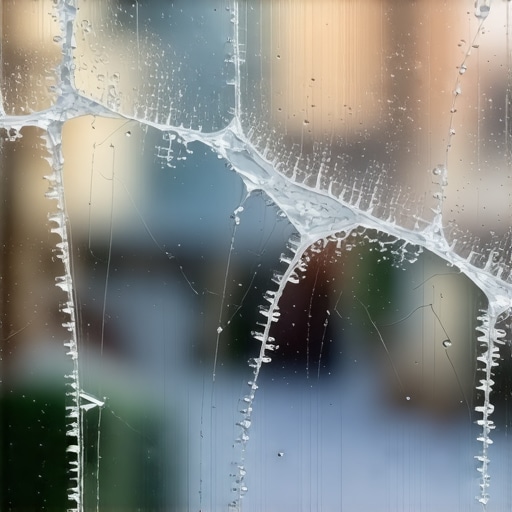
In colder climates like Minneapolis or Chicago, the enemy of glass is not just the impact but the differential in temperature. Glass is a poor conductor of heat. When you have a chip in your glass and you turn on the defroster or the indoor heating, the glass near the vent expands while the glass at the edges remains contracted. This is where the physics of the Rough Opening and the Sash come into play. In a building, the Rough Opening must allow for the natural expansion and contraction of the window frame. If a window is Shimmed too tightly, there is no room for this movement. The same principle applies to your glass. That tiny chip is a point of weakness where the glass cannot handle the internal tension. Suddenly, the stress exceeds the bonding strength of the silicon-oxygen bonds, and the chip ‘runs.’ It becomes a crack. Once a crack exceeds six to twelve inches, the structural integrity of the laminated PVB (Polyvinyl Butyral) interlayer is compromised. For an insurance company, the cost of a resin injection is a fraction of the cost of a full replacement. This is why same-day service is often covered with a zero-deductible; they are paying a small fee today to avoid a thousand-dollar claim tomorrow.
“Installation is just as critical as the window performance itself. A high-performance window installed poorly will fail.” – AAMA Installation Masters Guide
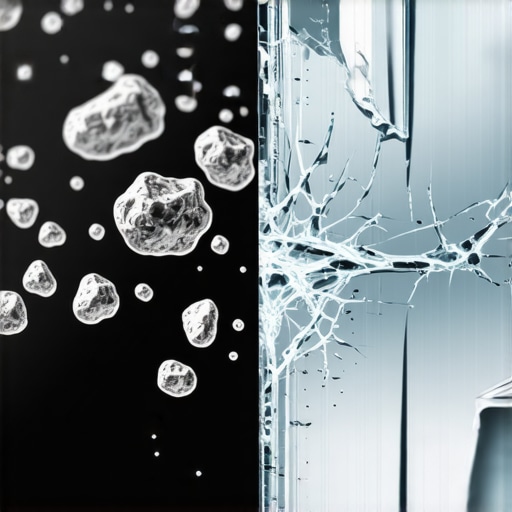
The transition from a chip to a crack is not just a cosmetic issue. In architectural glazing, we worry about the Glazing Bead and the Sill Pan. If a crack reaches the edge of the glass, it can compromise the seal. Once air and moisture penetrate the edge, you begin to see delamination. In a double-pane residential window, this leads to the failure of the desiccant and the inevitable ‘fogging’ that ruins your U-Factor. A master glazier knows that a crack is essentially an uncontrolled vent. It allows for the bypass of the Low-E coating, which is designed to reflect long-wave infrared radiation. If your glass is cracked, that coating, whether it is on Surface #2 or Surface #3, is no longer part of a sealed system. The thermal performance drops to near zero. This is why professionals insist on immediate attention. A mobile service glass installer can arrive at your location and stabilize a chip before the daily cycle of Solar Heat Gain (SHGC) causes the glass to expand and turn that minor blemish into a full-length fracture.
The Industry Standard for Repair and Replacement
When we talk about the technical side of glass, we must reference the standards that govern our trade. According to ASTM E2112, the integrity of the installation and the materials used is paramount to the longevity of the structure. While ASTM E2112 focuses on the building envelope, the principles of water management and structural load are universal. When an insurance company looks at a long crack, they see a failure of the ‘Shingle Principle.’ Water can now sit in the crack, freeze, expand, and further degrade the material. They hate long cracks because a crack cannot be ‘repaired’ to its original strength; it can only be replaced. The Muntin or the Operable parts of a window can also be stressed by the shifting of a cracked pane, leading to mechanical failure of the hardware.
“The primary objective of a flashing system is to direct water onto the weather-resistive barrier or to the exterior of the building envelope.” – ASTM E2112 Standard Practice
Ultimately, the logic of the insurance provider is based on the prevention of catastrophic failure. They recognize that the modern glass installer is a technician capable of high-precision chemical bonding. By utilizing mobile service, you are bringing a controlled environment to the site of the damage. The technician will clean the Weep Holes, check the Glazing Bead, and ensure that no moisture is trapped within the repair area. This proactive approach maintains the safety rating of the glass and keeps your premiums stable. Don’t wait for the temperature to drop or the sun to hit the glass at the wrong angle. A chip is a repairable flaw; a crack is an expensive replacement. Focus on the science of the glass and the math of the repair, and you will see why the professionals never leave a stone chip to chance.