The real cost of waiting to fix a small windshield bullseye
The Physics of the Tiny Fracture: Why You Cannot Afford to Wait
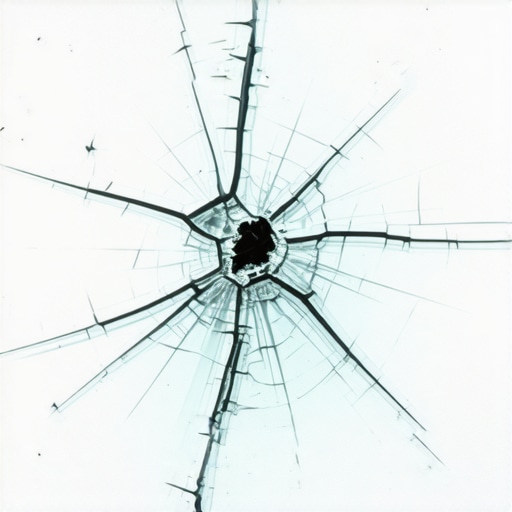
As a master glazier with over 25 years in the trade, I have seen every type of glass failure imaginable. From the massive curtain walls of downtown skyscrapers to the delicate historic sash of a 19th-century Victorian, the physics of glass remain constant. When a pebble strikes your windshield, it does not just leave a mark; it creates a structural anomaly. Many drivers treat a bullseye like a cosmetic blemish, a minor nuisance to be handled eventually. That is a dangerous and expensive mistake. In the glazing world, we understand that glass is a liquid that has been cooled into a rigid state, and it is under constant internal tension. A bullseye represents a break in that tension. If you do not call a mobile service for a same-day repair, you are essentially waiting for the physics of thermal expansion to destroy your bank account.
“Installation is just as critical as the window performance itself. A high-performance window installed poorly will fail.” – AAMA Installation Masters Guide
A few years ago, I had a client call me in a state of absolute panic. Their windshield had seemingly shattered while the vehicle was parked in the driveway. I arrived with my hygrometer and thermal sensors, and the autopsy of the glass told the real story. It was a classic case of what I call the thermal shock crisis. The homeowner had a tiny, 1/4-inch bullseye near the bottom of the glass, tucked right above the wiper blade. They ignored it for three weeks. That morning, the humidity was 65%, and the sun was beating down on the dark dashboard. The glass reached a surface temperature of 140 degrees Fahrenheit, while they then blasted the air conditioning at 60 degrees. I showed them how the moisture that had seeped into the chip reached its dew point and then expanded. The pressure had no where to go but through the structural integrity of the glass. It was not a mystery; it was basic thermodynamics. What could have been a 30-minute chip repair became a full-frame replacement involving complex recalibration of their driver-assist sensors.
Understanding the Laminated Sandwich: The PVB Layer
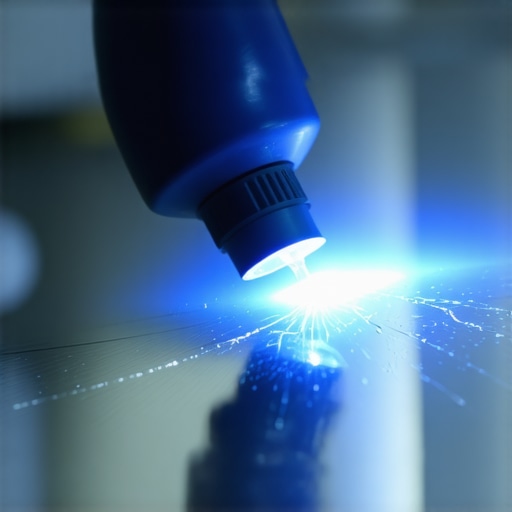
To understand why a glass installer emphasizes urgency, you have to understand what a windshield actually is. Unlike the tempered glass in your side windows, which is designed to explode into tiny cubes, a windshield is a laminated system. It consists of two layers of annealed glass bonded by a Polyvinyl Butyral (PVB) interlayer. This interlayer is the only thing keeping you inside the car during an accident. When a bullseye occurs, the impact creates a cone-shaped void in the outer layer of glass. This void allows air and moisture to reach the PVB layer. Once that interlayer is contaminated by road oils, washer fluid, or humidity, the bond begins to delaminate. A mobile service specialist can inject a high-viscosity resin into that void, but only if the area is clean. If you wait, the ‘weep hole’ of the chip becomes a gateway for contaminants that make a permanent repair impossible.
The Climate Logic: Why Heat is the Enemy of Glass Stability
In hot climates, the Solar Heat Gain (SHGC) on a windshield is staggering. We talk about Surface #2 in the architectural world as the primary location for Low-E coatings to reflect heat. In your car, the outer surface of the glass takes the brunt of the infrared radiation. As the glass heats up, it expands. Because the glass is pinned in place by the urethane adhesive at the rough opening of the vehicle frame, it cannot expand outward. It bows. This bowing puts immense pressure on the point of least resistance: the bullseye. A same-day repair professional uses specialized shims and vacuum tools to pull the air out of the fracture before the sun can expand it. If the U-factor of the glass is compromised by a break, the thermal gradient across the surface becomes uneven, leading to the rapid propagation of cracks that can span the entire width of the glass in seconds.
“The selection of glass and its subsequent maintenance must account for the environmental loads and thermal stresses encountered in its specific orientation.” – ASTM E2112 Standard
The Hidden Costs of Replacement vs. Repair
The financial math is simple, yet most people ignore it. A mobile service for chip repair is often covered 100% by insurance with no deductible because the insurance company knows it is cheaper to pay for a repair than a replacement. If you wait, you are not just paying for a new sheet of glass. You are paying for the labor of a master glazier to strip the old moldings, clean the pinch weld, and apply a new primer and urethane bead. Furthermore, modern vehicles use the windshield as a mounting point for cameras and LIDAR. If the glass is replaced, these systems must be recalibrated. This turns a simple fix into a technical overhaul. You lose the factory seal, which is the most effective barrier against wind noise and water leaks. Every time I see a ‘caulk-and-walk’ installer slap a windshield into a dirty frame without a proper sill pan or flashing tape approach, I know that owner will be dealing with rust and leaks within two years. Don’t let a small bullseye turn into a structural failure; find a qualified glass installer the moment the stone hits. The structural integrity of your vehicle’s ‘sash’ depends on it.