The best temperature for curing windshield resin
The Molecular Reality of the Mobile Glass Repair
In the world of high-performance glazing, most people assume that glass is a static, inert material. As a glazier with over a quarter-century of hands-on experience, I can tell you that glass is alive. It moves, it breathes, and it reacts violently to thermal gradients. When we discuss the best temperature for curing windshield resin, we are not just talking about a dry time on a bottle. We are talking about the cross-linking of polymer chains and the refractive index matching of a liquid monomer to a solid substrate under varying atmospheric pressures.
I remember a call-out in early October. A homeowner had a small bullseye chip in their windshield and insisted on a mobile service at 6:00 AM because they had to commute. I arrived and found the glass covered in a fine layer of morning dew. I pulled out my hygrometer and saw the humidity was at 88 percent with the glass temperature sitting right at the dew point. I explained that if I injected the resin now, I would be trapping microscopic moisture molecules inside the break. Moisture is the ultimate enemy of an anaerobic or UV-cured bond. It acts as a barrier, preventing the resin from wetting the surface of the glass at a molecular level. We waited for the sun to crest the horizon and for the glass temperature to stabilize. It is this level of technical patience that separates a master glass installer from a technician who simply wants to get to the next job. A chip repair is a structural intervention, not a cosmetic one.
The Thermal Window: Why 50 to 85 Degrees Fahrenheit is King
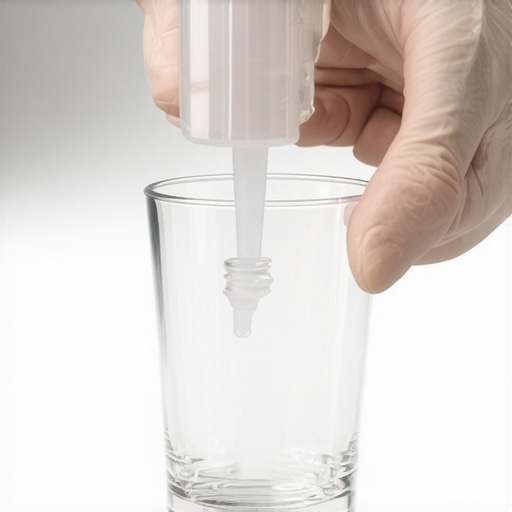
The chemical composition of modern repair resins is usually an acrylic-based acid or a methacrylate monomer. These substances are engineered to flow into the microscopic fissures of a break, which can be as narrow as a few microns. The viscosity of these resins is highly temperature-dependent. If the glass is too cold, say below 50 degrees Fahrenheit, the resin thickens. It becomes sluggish, failing to reach the very tip of a star-break or a crack. Conversely, if the glass is sitting under a scorching sun at 100 degrees or more, the resin becomes too thin. It may outgas or, worse, the glass itself expands so much that it closes the gap of the break, making it impossible for the resin to penetrate.
“Installation is just as critical as the window performance itself. A high-performance window installed poorly will fail.” – AAMA Installation Masters Guide
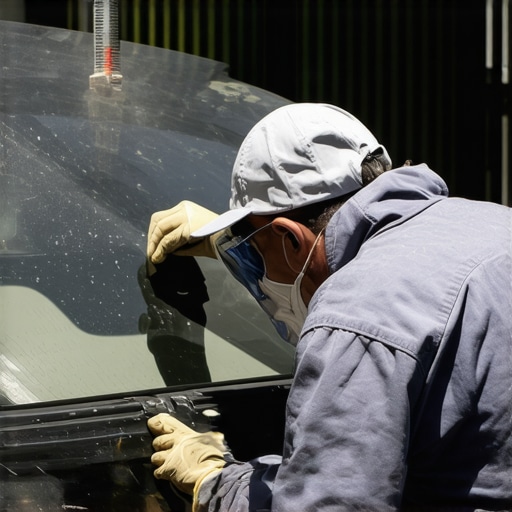
When providing a same-day mobile service, a professional must manage the environment. If the glass is too hot, we use shades or a cooling method to bring the temperature down to that 70-degree sweet spot. If it is too cold, we gently warm the glass from the interior, never with a direct flame, to avoid thermal shock. The goal is to reach a state where the glass is relaxed. When the glass is in its neutral state, the rough opening of the chip is at its most receptive. We use a vacuum tool to pull the air out of the break, creating a void that the resin then fills. This is essentially the same principle we use when managing a weep hole in a commercial curtain wall: you must control the movement of air and moisture to ensure the integrity of the seal.
The Physics of UV Radiation and Polymerization
Once the resin is injected, the curing process begins. Most modern resins are UV-curable, meaning they require a specific wavelength of light, typically around 365nm, to trigger the photo-initiators in the liquid. This is where temperature plays its second crucial role. The chemical reaction of polymerization is exothermic: it generates its own heat. If the ambient temperature is already high, this extra heat can cause the resin to shrink too rapidly, leading to a pull-away from the edges of the glass. This creates a shimmering effect or a visible outline of the original break, which is a failure of the refractive index match.
“Glass is a brittle material that does not give warning before failure. Proper maintenance and repair are essential for safety.” – ASTM E2112 Standard Practice
A true glass installer understands that the glazing bead of resin we leave on the surface must be cured under controlled conditions. We use high-intensity UV lamps to ensure a deep cure. In a mobile service environment, we often have to contend with natural sunlight, which is why we use UV shields during the injection phase. We want the cure to happen from the bottom up, ensuring that the resin at the deepest part of the crack is solid before the surface skin forms. This prevents the trapping of unreacted monomers, which can yellow or degrade over time when exposed to the elements.
Material Science: Laminated Glass vs. The Resin Bridge
To understand why temperature is so critical, one must understand what a windshield actually is. It is a sandwich of two layers of annealed glass with a layer of Polyvinyl Butyral (PVB) in the middle. When a rock hits the outer layer, it creates a void. The resin we use must not only bond to the glass but also be compatible with the PVB interlayer. If the temperature is too high during the repair, the PVB can soften, leading to a blurry or distorted repair area. We are essentially building a bridge. We shim the pressure of our injector tool to match the glass thickness, ensuring we don’t cause a crack-out. A crack-out occurs when the mechanical pressure of the repair tool exceeds the surface tension of the glass, a risk that increases significantly if the glass is already stressed by extreme heat or cold.
We treat every chip repair with the same level of precision as we would when setting a heavy glass sash into a custom mahogany frame. The tolerances are thin. We look for the way the light bends as it passes through the repair. If the temperature was correct and the resin was cured properly, the repair should be nearly invisible. This is because the cured resin has a refractive index of approximately 1.51, which is nearly identical to that of soda-lime glass. When the temperatures are wrong, the molecular alignment is off, and the light scatters, making the repair fail the visual and structural test.
The Longevity of the Professional Repair
Choosing a mobile service that understands these technical nuances is vital. A technician who rushes the job in a parking lot during a snowstorm without properly heating the glass is setting you up for a failure. As soon as you turn on your defroster, the thermal expansion will cause that poorly bonded resin to pop out, and the crack will spread across the entire span of your vision. This is why we insist on climate-controlled environments whenever possible, or at the very least, a strict adherence to the temperature window. It is about the chemistry of the bond. It is about the physics of the glass. And ultimately, it is about the safety of the occupants behind that glass. We don’t just fix chips: we restore the structural envelope of the vehicle.