Why your glass installer uses a suction tool
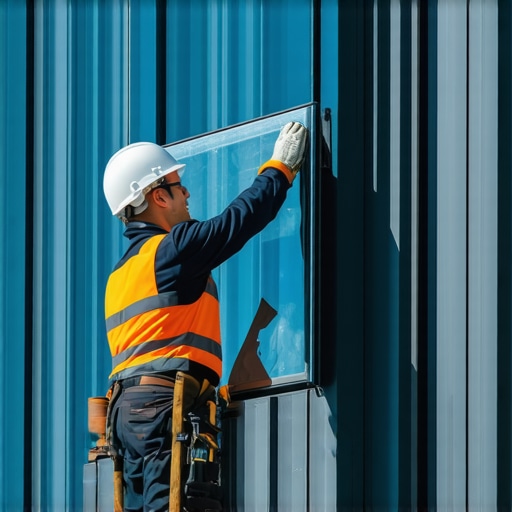
When you see a professional glass installer step out of a mobile service van, they aren’t just carrying a pane of glass; they are managing a high-stakes physics problem. The most prominent tool in their kit is often the vacuum suction cup, a device that many homeowners mistake for a simple handle. However, in the world of professional glazing, the suction tool is the difference between a high-performance installation and a catastrophic structural failure. I remember a specific call in the middle of a sub-zero January. A homeowner had called me in a panic because their new windows were ‘sweating’ so profusely that water was pooling on the hardwood floors. I walked in with my hygrometer and showed them the humidity was 60 percent. It wasn’t a defect in the windows; it was their lifestyle choices combined with a poorly sealed rough opening. The previous installer hadn’t used the proper tools to set the glass, resulting in a microscopic shift that compromised the thermal break. This is why we don’t just ‘lift’ glass; we manipulate it using atmospheric pressure.
The Mechanics of Vacuum Suction in Glazing
A professional suction tool works by creating a partial vacuum between a rubber pad and the non-porous surface of the glass. By evacuating the air, the atmospheric pressure outside the cup—roughly 14.7 pounds per square inch at sea level—clamps the tool to the pane. When a glass installer uses a double-cup or triple-cup hand tool, they are distributing the weight of the glass across a wider surface area. This is critical because glass is an amorphous solid that is incredibly strong under compression but vulnerable to tension. If you try to carry a 150-pound insulated glass unit (IGU) by the edges with your bare hands, you are applying localized pressure to the glazing bead and the edge seal. This can cause a ‘stress crack’ or, worse, a ‘seal failure.’ A seal failure occurs when the primary and secondary sealants around the spacer bar are compromised, allowing the argon gas to escape and moisture-laden air to enter. Once that happens, your high-efficiency window becomes a foggy, useless piece of trash.
“Installation is just as critical as the window performance itself. A high-performance window installed poorly will fail.” AAMA Installation Masters Guide
Climate Logic: Why the U-Factor Reigns Supreme
In our northern climate, the primary enemy of any glass installer is heat loss and the subsequent condensation. We focus heavily on the U-Factor, which measures the rate of non-solar heat flow through a window assembly. The lower the U-Factor, the better the window’s resistance to heat loss. When we perform a mobile service for glass replacement, we are looking at the entire glazing system. This includes the Low-E coating, which is typically located on Surface #3 in cold climates. This coating is a microscopically thin layer of metallic oxide that reflects long-wave infrared radiation. In the winter, it reflects the heat from your furnace back into the room rather than letting it escape through the glass. To protect this coating and the structural integrity of the IGU, the glass installer must use suction tools to ensure the unit is placed perfectly on the setting blocks. If the glass touches the metal frame directly, it creates a thermal bridge that leads to the very condensation issues I mentioned earlier. Proper use of a shim and a sill pan ensures that the window is level and that any incidental moisture is directed out through the weep hole.
Chip Repair and the Chemistry of Mobile Service
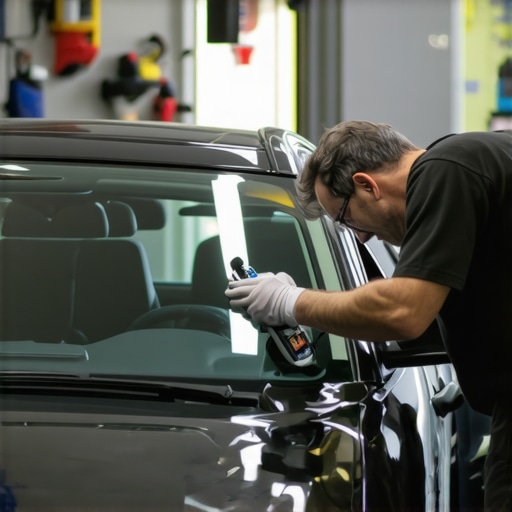
Not every job requires a full tear-out. Same-day mobile service often involves chip repair, which is a masterpiece of material science. When a stone hits your glass, it creates a ‘bullseye’ or a ‘star break.’ This is actually a pocket of air trapped between the layers of glass or within the crystalline structure of the pane. A glass installer uses a specialized bridge tool to create a seal over the impact point. They then use a vacuum pump to extract the air from the crack. Once the air is gone, they inject a clear, UV-curable resin that has the same refractive index as the glass. This is why the chip ‘disappears.’ If the installer didn’t use a vacuum tool to remove the air first, the resin would not be able to penetrate the microscopic fissures, and the repair would fail as soon as the glass expanded in the sun. It is a precise process that requires a steady hand and an understanding of the material’s molecular limits.
“The installation of fenestration products should be performed by individuals who are trained in the specific requirements of the product and the building envelope.” ASTM E2112 Standard Practice
The Anatomy of a Window: More Than Just Glass
Every window installation starts with the rough opening. We look for tolerances that allow for the expansion and contraction of the frame material. Vinyl frames are notorious for high thermal expansion, whereas fiberglass is much more stable. A master glazier uses a suction tool to hover the glass into the sash, ensuring it never strikes the frame. If the edge of the glass hits a hard surface, it can create a ‘Griffith flaw’—a microscopic nick that will eventually grow into a full-length crack when the temperature swings. We also pay close attention to the muntin bars and the glazing bead. The glazing bead is the strip of plastic or wood that holds the glass in place. If it’s not snapped in perfectly, the window won’t be airtight. In a mobile service context, we often have to replicate factory conditions in a driveway, which is why having the right suction tools and levelers is non-negotiable. We are managing the dew point—the temperature at which air becomes saturated with water vapor. By ensuring a tight seal and using warm-edge spacers between the glass panes, we keep the interior glass surface warm enough to stay above the dew point, preventing that dreaded ‘sweating’ that rots out sills and grows mold.
Final Verdict on Professional Installation
Don’t fall for the ‘caulk-and-walk’ installers who show up with nothing but a ladder and a tube of cheap silicone. A professional glass installer understands that they are installing a thermal barrier. The use of a suction tool is a sign of a glazier who respects the fragility and the engineering of the glass. Whether it is a same-day chip repair or a full-scale replacement of a failed IGU, the goal is always the same: water management and thermal efficiency. We use flashing tape to integrated the window into the home’s water-resistive barrier, and we use suction tools to ensure the glass is a static, high-performing element of that wall. When you invest in high-quality glazing, you aren’t just buying a view; you are buying a complex system of gas fills, metallic coatings, and precision-engineered seals. Treat them with the respect the physics demands.