Why your windshield resin looks yellow after a week
The Frustration of the Discolored Repair
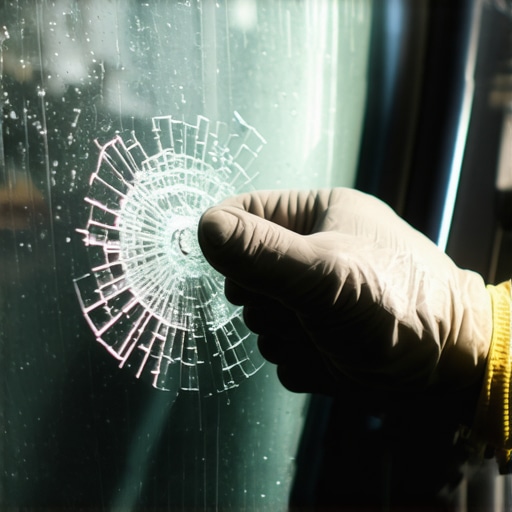
You noticed a small star-break or bullseye on your windshield and did the responsible thing. You called for a mobile service to perform a same-day chip repair. At first, the result looked crystal clear. You could barely see where the glass installer worked his magic. But seven days later, that clear spot has turned an ugly, nicotine-stain yellow. It stands out like a sore thumb against the pristine glass. As a master glazier with over 25 years in the field, I can tell you exactly why this happens, and it usually starts with the chemistry of the resin and the physics of UV radiation.
The Condensation Crisis: A Lesson in Surface Preparation
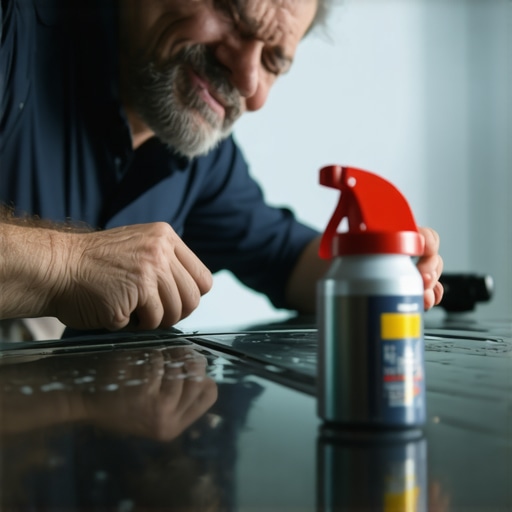
I remember a specific case where a driver called me in a panic because their week-old repair looked like a drop of amber stuck in their field of vision. I walked up to the vehicle with my hygrometer and a high-intensity UV lamp. The driver thought the glass was defective. I had to show them that the internal humidity during the mobile service was over 75 percent, and the glass temperature was swinging wildly. It wasn’t the glass; it was the environmental conditions at the time of the repair. Moisture had been trapped within the rough opening of the chip, and the resin had emulsified slightly before it could fully polymerize. When you trap moisture under a polymer, you are inviting chemical instability. This is the same principle we see in building windows where a failed seal leads to internal fogging, though in automotive glass, the results are often permanent discoloration rather than just vapor.
“Installation is just as critical as the window performance itself. A high-performance window installed poorly will fail.” AAMA Installation Masters Guide
The Chemistry of Yellowing: Aliphatic vs. Aromatic Resins
To understand why your repair turned yellow, we have to talk about the molecular structure of the resins used by your glass installer. Most chip repair resins are based on methacrylate monomers. In the industry, we distinguish between resins that are UV-stable and those that are not. Cheap, low-grade resins often contain aromatic compounds. While these compounds provide a high refractive index that matches the glass initially, they are highly susceptible to photodegradation. When UV radiation hits these molecules, it breaks the chemical bonds, creating free radicals that react with oxygen. This oxidation process creates chromophores, which are parts of the molecule that absorb light in the visible spectrum, specifically reflecting that yellowish hue. High-quality resins are aliphatic, meaning they lack those specific carbon-ring structures that fall apart under the sun. If your mobile service technician is using a bargain-bin resin to keep costs down, your repair is on a countdown timer to yellowing the moment it leaves the shade.
The Role of the Refractive Index
A window is not just a barrier; it is a lens. The goal of a chip repair is to match the refractive index of the glass, which is typically around 1.52. When the resin begins to yellow, its density often changes, shifting that refractive index. This causes light to bend at a different angle than the surrounding glass, which is why you see a shimmering, discolored ghost of the original chip. In my years of experience, I have seen installers treat the rough opening of a chip with less respect than a glazier treats a window frame. If the edges of the break are not clean, or if the glazing bead of the resin does not fully penetrate the laminates, the light will catch every imperfection. This is especially true in Southern climates where the Solar Heat Gain Coefficient (SHGC) is not just a metric for houses, but a daily reality for car dashboards. The radiant heat in places like Texas or Florida can reach 200 degrees Fahrenheit inside a parked car, accelerating the chemical breakdown of inferior resins at an exponential rate.
The Physics of the Cure
The speed of a same-day service is often the enemy of a quality cure. Most automotive resins are cured using UV light in the 365nm to 400nm range. If a technician is in a hurry, they might use a high-intensity lamp for a short duration. However, if the resin is too thick or the chip is deep, the center of the repair might remain in a semi-liquid state. This uncured resin is highly reactive. As you drive, the vibration of the road acts like a microscopic shim, shifting the glass and allowing oxygen to penetrate the partially cured mass. This lead to what we call ‘yellowing from the inside out.’ In architectural glazing, we see similar failures when a shim is misplaced and the glass is under constant stress, eventually leading to a stress crack or a seal failure. In your windshield, the stress is thermal and mechanical, and the resin is the weakest link.
“The selection of sealants and adhesives must be based on their ability to withstand environmental exposure, including UV radiation and thermal cycling.” ASTM E2112 Standard Practice
Environmental Factors: The Southern Heat Factor
In hot, sun-drenched environments, the enemy is the sun’s energy. We often talk about Surface #2 in double-pane windows as the ideal place for a Low-E coating to reflect heat. In a windshield, which is a laminated sandwich of two glass layers and a PVB (Polyvinyl Butyral) interlayer, the resin is sitting right in the line of fire. If the resin is not specifically formulated with UV inhibitors, the intense Southern sun will bake it. This is why I always tell homeowners that the same physics that fades their curtains through a single-pane window is what is turning their windshield repair yellow. You need a resin that acts like a high-performance Low-E coating, reflecting the harmful UV while remaining transparent to the visible spectrum. A mobile service that does not account for the ambient temperature of the glass is set up for failure. If the glass is too hot, the resin thins out and may not fill the weep hole or the microscopic fissures of the break, leading to air pockets that look like yellowed silver streaks over time.
Structural Integrity and the Sash of the Car
While we do not have a traditional sash in a car, the windshield is a structural component of the vehicle’s frame. It is bonded to the pinchweld using high-modulus urethane. When a chip repair is performed, we are essentially trying to restore the structural continuity of the glass. If the resin yellows, it is often a sign that the bond is weakening. A yellow repair is a brittle repair. Over time, the thermal expansion and contraction—the same forces that make a vinyl window frame expand and contract in the rough opening—will cause the brittle, yellowed resin to pull away from the glass walls. Once the bond is broken, the chip will likely spread, turning a simple repair into a full windshield replacement. This is why opting for the cheapest same-day service can be a false economy.
Why Quality Matters in Mobile Service
When a glass installer arrives at your location, they are bringing a miniature laboratory to your driveway. A professional mobile service should use vacuum-pressure cycles to ensure every bit of air is removed from the break before the resin is injected. They should also use a pit resin for the surface—a harder, more durable material that acts as a cap. If they use the same thin injection resin for the surface cap, it will wear down from windshield wipers and road grit, exposing the softer interior resin to the elements and accelerating the yellowing process. It is about water management and light management. Just as a sill pan is critical to preventing rot in a house, the surface cap of a chip repair is critical to protecting the chemistry of the repair. If you see yellow, the protection has failed.
Final Thoughts on Glass Longevity
The next time you need a chip repaired, do not just look for the fastest same-day turn-around. Ask about the resin. Ask if it is a high-index, aliphatic, UV-stable polymer. A master glazier knows that the sun is a powerful force that breaks down almost everything it touches. Your windshield is your first line of defense against the elements, and the resin used to fix it should be up to the task. Do not settle for a repair that looks good for a week but fails the test of time. Quality materials and proper curing techniques are the only ways to ensure your view remains clear and your glass remains strong, regardless of how much the sun beats down on your commute.