Why your defroster makes windshield cracks grow faster
The Sudden Pop: A Winter Morning Reality Check
You walk out to your vehicle on a frigid morning, the frost thick enough to require a chisel. You start the engine, crank the defroster to its maximum setting, and go back inside for a final cup of coffee. Ten minutes later, you return to find a massive, jagged line bisecting your field of vision where only a tiny, insignificant stone chip had been. This is not bad luck; it is a predictable result of thermodynamics and materials science. As a master glazier with over two decades in the trade, I have seen this scenario play out more times than I can count. A windshield is not just a piece of transparent material; it is a structural component of your vehicle, engineered to manage incredible pressures and temperature fluctuations. When you introduce a concentrated heat source like a defroster to a cold, compromised sheet of glass, you are essentially triggering a mechanical failure that was already in waiting.
“Installation is just as critical as the window performance itself. A high-performance window installed poorly will fail.” AAMA Installation Masters Guide
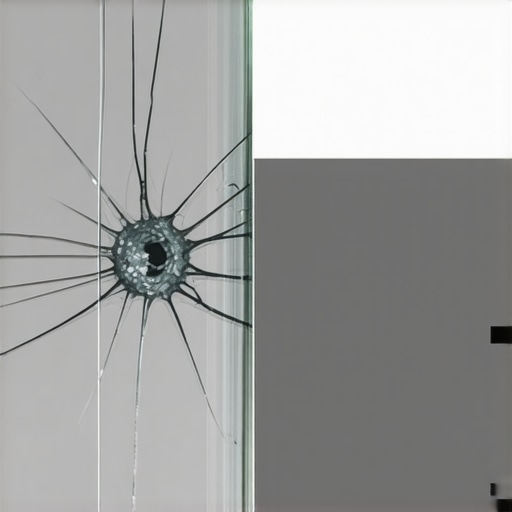
A driver once called me in a total panic because their windshield seemingly exploded while they were sitting in their driveway. I brought out my infrared thermometer and my hygrometer to assess the situation. The humidity was high, and the temperature differential between the exterior glass surface and the interior blast of the defroster exceeded ninety degrees. It was not a defect in the glass manufacturing; it was the driver’s own environment and the physics of thermal expansion. They had a small bullseye chip from a rock strike weeks earlier that they ignored. That tiny void in the glass became the epicenter of a structural collapse once the heat hit it. It was a classic case of ignoring the minor maintenance that leads to a major replacement bill.
The Physics of Thermal Expansion in Laminated Glass
To understand why a glass installer warns you about the heater, you must understand the anatomy of a windshield. Unlike the tempered glass in your side windows, which is designed to shatter into tiny cubes, a windshield is a sandwich. It consists of two layers of annealed glass bonded together by a layer of Polyvinyl Butyral (PVB). This lamination is what keeps you inside the car during a crash, but it also creates a complex relationship with heat. Glass has a specific coefficient of thermal expansion. When you apply heat to the interior layer via the defroster, that layer begins to expand. However, the exterior layer, still exposed to the freezing air, remains contracted. This creates a massive amount of shear stress on the PVB interlayer.
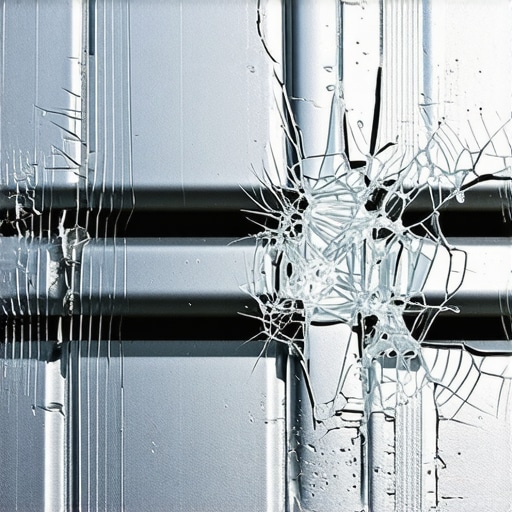
When the glass is intact, it can usually handle this stress. But when there is a chip, the structural integrity is gone. The chip acts as a stress concentrator. In the world of glazing, we call this the propagation of a fracture. The heat makes the glass molecules vibrate and push apart. Since the fracture provides a path of least resistance, the glass ‘unzips’ along that line. If you had called for a same-day chip repair, a technician could have injected a clear resin into that void, bonding the layers back together and neutralizing the stress point. Without that resin, the defroster simply acts as a wedge, driving the crack further across the sash of your vehicle’s frame.
Why U-Factor and SHGC Matter Even in Your Car
In residential glazing, we obsess over the U-Factor, which measures the rate of heat loss. In the automotive world, the principles are similar. During a cold winter in northern climates, the U-Factor of your windshield is tested to the limit. The glass is trying to keep the cold out while you are pumping heat in. If the glass has a high Solar Heat Gain Coefficient (SHGC), it might absorb more radiant energy from the sun, which can sometimes help, but in the dark hours of a winter morning, you are relying entirely on the thermal resistance of that laminated sandwich. When the rough opening of your car’s frame twists slightly as you pull out of a driveway, that mechanical torque combined with the thermal stress of the defroster is the final nail in the coffin for a chipped windshield.
“Standard Practice for Installation of Exterior Windows requires a thorough understanding of water management and thermal boundaries to prevent systemic failure.” ASTM E2112
The Critical Need for Mobile Service and Immediate Intervention
Many people wait to fix a chip because they do not want to take a day off work to visit a shop. This is why mobile service has changed the industry. A professional can meet you at your office or home to perform a chip repair before the next freeze-thaw cycle ruins the glass. During the repair, we ensure the glazing bead and the surrounding seals are not compromised. We look at the weep holes in the cowl area to ensure moisture isn’t backing up and freezing near the base of the glass, which can also cause pressure cracks. If the water gets into the sill pan area of the windshield mount and freezes, it expands with enough force to crack even a pristine windshield. This is why maintaining the perimeter of the glass is just as important as the glass itself.
If you ignore a chip in a cold climate, you are essentially gambling with the structural integrity of your vehicle. The defroster is a necessary tool for visibility, but it is also a powerful force of nature. By opting for a same-day repair, you are reinforcing the glass with a polymer that has a similar expansion coefficient to the glass itself, allowing it to move with the temperature changes rather than breaking under the pressure. Do not wait for the crack to reach the edge of the frame. Once it hits the edge, the tension is too high to repair, and you will be looking at a full, expensive replacement. In the glazing trade, we say that an ounce of resin is worth a pound of glass. Stay ahead of the thermal curve and protect your investment before the next cold snap turns a minor nuisance into a major safety hazard.