Why your windshield needs to sit for an hour after installation
The Critical Waiting Period: More Than Just Sticky Glue
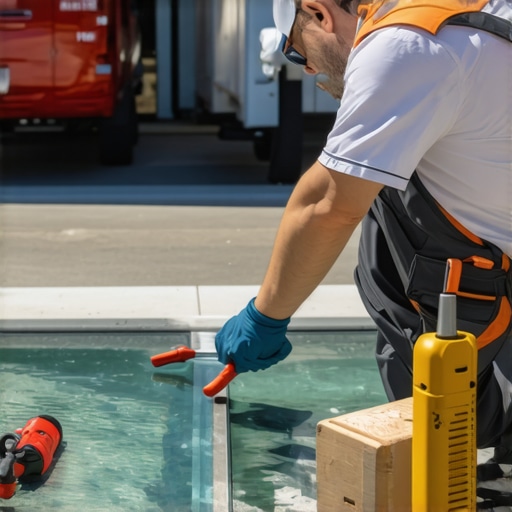
In my 25 years as a master glass installer, I have seen every shortcut in the book. I have watched ‘caulk and walk’ technicians slap a piece of glass into a frame and tell the owner they are good to go before the primer is even dry. This is not just laziness; it is a fundamental misunderstanding of the structural role a windshield plays in a modern vehicle. When you hire a glass installer for a same-day mobile service, the temptation to jump in the driver’s seat the moment the suction cups are removed is high. However, that sixty-minute window is not a suggestion. It is a calculated safety requirement based on the molecular cross-linking of high-viscosity polyurethanes.
I once walked onto a job site where a competitor had just finished a replacement on a heavy-duty truck. I noticed the urethane bead was already sagging because they had failed to use a proper dam. The homeowner was ready to drive to a job site, but I had to intervene. I pulled the glass back out and showed them the pinchweld. The previous installer had relied on the old bed of sealant instead of proper mechanical preparation. It was the automotive equivalent of a house window where the installer relied on the nailing fin instead of proper flashing tape. If that driver had hit a significant bump, the glass could have shifted, breaking the airtight seal and compromising the vehicle’s structural integrity. This is why we insist on a Minimum Drive-Away Time (MDAT).
“Installation is just as critical as the window performance itself. A high-performance window installed poorly will fail.” – AAMA Installation Masters Guide
The Chemistry of the Bond: Humidity and Heat
To understand why your windshield needs to sit, you have to understand the physics of the adhesive. Unlike the glues you use at home, automotive urethane is a moisture-cure product. It requires H2O molecules from the atmosphere to trigger the hardening process. If you are in a dry climate like Phoenix, the cure time actually slows down because there is less moisture to act as a catalyst. In a humid environment like the Gulf Coast, the exterior ‘skin’ forms quickly, but the core of the bead remains soft for hours. A mobile service must account for these variables. If we allow you to drive too soon, the positive and negative pressures of wind speed can cause the glass to vibrate within the setting block, creating micro-gaps that lead to wind whistles or, worse, water leaks.
This process is very different from a simple chip repair. In a chip repair, we use an anaerobic resin that is cured instantly with ultraviolet light. But a full replacement involves a thick bead of material that must support the weight of the glass and the pressure of the passenger-side airbag. During a collision, the airbag deploys upward and bounces off the interior surface of the windshield to protect the passenger. If the urethane bond is not sufficiently cured, the force of the airbag deployment will simply blow the windshield out of the frame, rendering the safety system useless. This is why we treat the rough opening of your car with the same precision as the rough opening of a high-performance building.
The Structural Reality of Modern Glass
Modern vehicles use the glass as a stressed member of the chassis. It provides up to 60 percent of the structural strength in a rollover accident. When a glass installer performs a same-day service, they are essentially performing a structural weld using chemicals instead of heat. We use a primer to prepare the frit (the black ceramic band around the edge of the glass) so that the urethane can create a covalent bond. If we skip the sitting period, we risk ‘cold flow’ where the glass shifts down due to gravity, even if it is only by a few millimeters. This shift can cause the glazing bead to misalign or block the weep hole areas designed to channel water away from the pinchweld.
“Standard Practice for Installation of Exterior Windows requires a level of precision that ensures the building envelope remains uncompromised by environmental stressors.” – ASTM E2112
Comparing Residential and Automotive Glazing
People often ask me if a car windshield is like a wood sash window in a house. The answer is both yes and no. In a residential setting, we use a shim to level the unit and ensure the operable parts move freely. In a car, the ‘operable’ part is the entire vehicle moving at 70 miles per hour. While we do not use a physical shim in the same way, we use setting blocks to maintain the correct height. If the car is driven too early, the vibrations of the road act like a hammer on those setting blocks, potentially fracturing the bond. This is why the ‘mobile service’ aspect is so convenient but also requires the most discipline from the consumer. We bring the shop to you, but we cannot bring a faster version of physics. You must respect the chemical dwell time to ensure your safety.
When you look at the NFRC labels on a house window, you see the U-factor and Solar Heat Gain Coefficient. In automotive glass, we are less concerned with U-factor and more concerned with tensile strength and shear resistance. If you are in a cold climate, the urethane becomes thick and difficult to extrude, requiring specialized heating equipment to ensure a uniform bead. In hot climates, we have to watch for ‘flash curing’ where the outer layer hardens so fast it traps gas inside, creating bubbles. These bubbles are weak points in the seal. A professional glass installer knows how to read the weather and adjust their technique to ensure that when they say ‘one hour,’ they mean it is the absolute minimum for the specific conditions of that day.
Common Mistakes in Mobile Service
One of the biggest issues I see with mobile service is the ‘slam the door’ test. Many people think that if they can slam their car door and the glass doesn’t move, it is cured. In reality, slamming the door creates a massive spike in internal cabin pressure. If the urethane is still wet, that pressure can actually blow a small hole through the bead, creating a permanent air leak. This is why we often advise leaving a window cracked open by an inch for the first 24 hours. It allows the pressure to equalize without stressing the fresh seal. We also look at the pinchweld for any signs of corrosion. If there is rust, the urethane will bond to the rust, not the metal. When the rust flakes off, the bond fails. This is the same reason we use a sill pan and flashing tape in home construction; you have to protect the substrate or the entire system will eventually rot and fail.
The Verdict on Same-Day Service
Is same-day service safe? Absolutely, provided the glass installer uses high-quality, fast-cure urethanes and the consumer follows the post-installation instructions. But do not let a salesman convince you that the tech is a ‘game-changer’ who can defy the laws of chemistry. The bond needs time to reach its initial handling strength. Whether it is a chip repair or a full-frame replacement, the integrity of the work depends on the patience of the owner as much as the skill of the glazier. Don’t rush the process. Your windshield is the only thing between you and the elements, and in an accident, it is one of the most important safety features you have. Treat it with the respect that 25 years of experience tells me it deserves.