Why your phone’s water resistance fails immediately after a screen swap
The Illusion of the Same-Day Fix
In the world of professional glazing, we have a saying: the glass is only as good as the gap it fills. Whether I am installing a 500 pound insulated glass unit in a high-rise or witnessing a technician perform a chip repair on a mobile device, the physics of the barrier remains unchanged. People flock to mobile service providers for same-day convenience, expecting their IP68-rated device to emerge from the repair van with its factory integrity intact. It is a fundamental misunderstanding of structural adhesives and atmospheric tolerances. A window is a hole in a wall, and a phone screen is a hole in a chassis. Both require a precise management of heat, light, and water. When you swap the glass, you are not just replacing a substrate: you are breaching a vacuum-sealed environment that was never intended to be serviced in a parking lot.
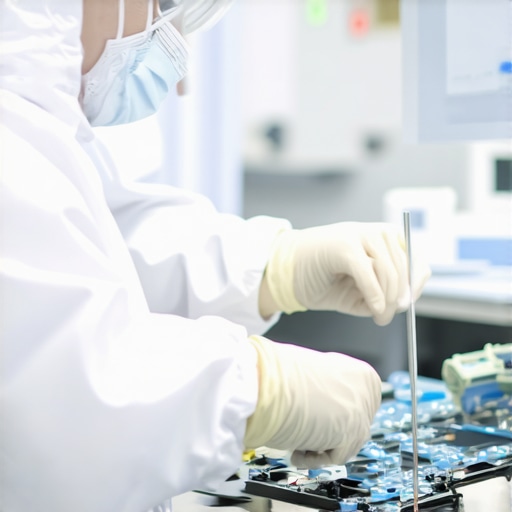
A homeowner called me in a panic because their new windows were sweating. I walked in with my hygrometer and showed them the humidity was 60 percent. It was not the windows; it was their lifestyle. I explain this because moisture management is not just about keeping rain out: it is about controlling the environment within the rough opening. When a glass installer opens your phone in a mobile service van, they are exposing the internal logic boards to the ambient humidity of the street. If that technician does not use a clean-room environment or at least a static-controlled bench, the microscopic moisture particles are trapped inside the moment the new screen is pressed down. Just like that homeowner with the sweating windows, you now have a localized humidity crisis inside your device that will eventually lead to corrosion, regardless of how much adhesive is applied to the glazing bead.
“Installation is just as critical as the window performance itself. A high-performance window installed poorly will fail.” – AAMA Installation Masters Guide
The Anatomy of a Failed Seal
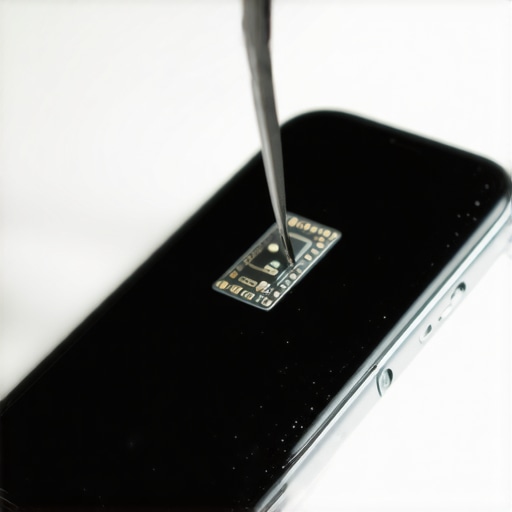
To understand why the water resistance fails, we must look at the rough opening of the phone chassis. In factory conditions, the glass is bonded to the frame using a heat-activated, pressure-sensitive adhesive gasket. This is not a simple double-sided tape. It is a specialized polymer designed to expand and contract at the same rate as the glass and the aluminum frame. When a mobile service technician performs a same-day swap, they often rely on aftermarket adhesive strips or, worse, liquid glue. These materials lack the structural memory of the original seal. In glazing terms, this is the equivalent of using cheap painter’s caulk instead of a high-grade structural silicone. The moment the phone is placed in a pocket and subjected to the radiant heat of the body, the frame expands. Because the aftermarket adhesive lacks the elasticity to maintain the bond, a micro-gap forms. This is the same reason why a vinyl window frame that is not properly shimmed will bow and leak air: the material science cannot handle the thermal stress.
The shingle principle is a cornerstone of water management. It dictates that every layer of a building envelope should shed water to the layer below it, eventually directing it outside. In a phone, the water resistance relies on a continuous, unbroken perimeter seal. When a chip repair or screen replacement occurs, the continuity is broken. A professional glass installer knows that if you do not clean the rough opening down to the bare substrate, the new flashing tape will not adhere. Most mobile service repairs fail because they leave trace amounts of the old gasket on the frame. This creates a bridge for water. Under hydrostatic pressure: such as when a phone is submerged: water will find the path of least resistance. It does not need a hole: it only needs a pore.
The Thermal Stress Factor
In hotter climates, the Solar Heat Gain Coefficient (SHGC) is the primary metric we use to determine how much heat enters a building through the glass. In a mobile device, the battery and processor generate internal heat that must be dissipated through the glass and frame. A factory-sealed phone handles this transition smoothly. However, after a same-day screen swap, the new adhesive often acts as a thermal insulator rather than a conductor. This causes the internal temperature to spike, which increases the internal air pressure. This pressure pushes against the glass from the inside. Without a weep hole to equalize pressure, the weakest point of the assembly: the new, non-factory seal: will eventually blow out. Once that seal is compromised, the phone’s water resistance is effectively zero. You may not see the gap with the naked eye, but to a water molecule, it is a wide-open door.
“The thermal and structural integrity of a fenestration system is dependent upon the continuous seal between the glazing and the frame.” – NFRC Performance Manual
Why Professional Standards Matter
The glazing bead on a modern smartphone is measured in fractions of a millimeter. When we install a sash in a window frame, we have tolerances of an eighth of an inch. The precision required for a phone is several orders of magnitude higher. When you opt for a same-day mobile service, you are often sacrificing the curing time required for the adhesive to reach its full Shore hardness. A true structural bond requires time and controlled pressure. Most technicians will hand-press the screen and hand it back to you. Without the use of a specialized frame press, the adhesive does not wet out properly across the entire surface of the rough opening. This results in an incomplete bond that will fail the first time the device is subjected to mechanical stress, such as being sat on or dropped.
Ultimately, a phone screen replacement should be viewed through the lens of a full-frame window replacement. You cannot simply slap a new piece of glass into an old, dirty frame and expect it to perform like a factory-sealed unit. If the technician does not address the sill pan: the internal tray where moisture can collect: or ensure the flashing tape is perfectly aligned, the repair is merely cosmetic. The next time you seek a glass installer for a mobile device, ask about their curing process and their method for cleaning the rough opening. If they talk about same-day convenience without mentioning environmental controls or pressure-testing the seal, you are paying for a window that is destined to leak.