Why your phone’s screen looks purple around the edges after a drop
The Anatomy of a Shattered Seal: A Glazier’s Perspective on Mobile Glass
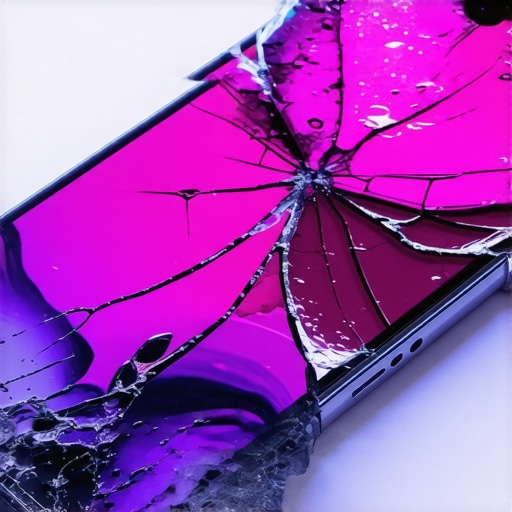
In the world of high-performance glass, whether we are talking about a forty-story curtain wall or the six-inch slab of aluminosilicate in your pocket, the principles of structural integrity and atmospheric pressure remain identical. When you drop your device and notice a creeping purple stain or a localized discoloration around the perimeter, you are not just looking at a broken screen. You are witnessing a catastrophic seal failure in a pressurized environment. As a master glazier with twenty-five years in the trade, I have seen this exact phenomenon in failed insulated glass units (IGUs) where the desiccant is saturated and the primary seal has breached. In a phone, the stakes are simply smaller and the tolerances are tighter.
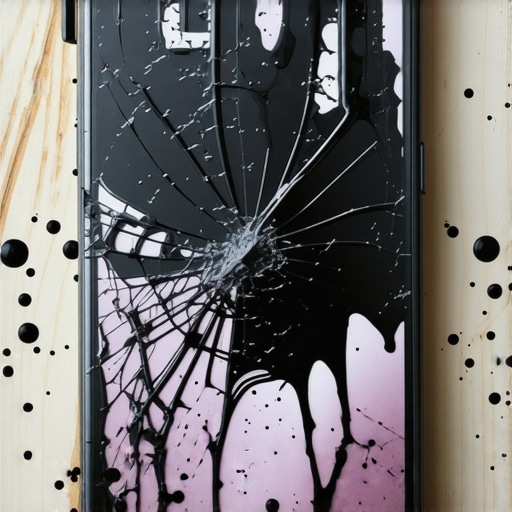
The purple hue you see is the visual manifestation of oxidation within the Organic Light Emitting Diode (OLED) layer. Unlike traditional Liquid Crystal Displays (LCDs) that use a backlight, OLEDs are self-emissive. Each pixel is an individual organic compound that reacts to electricity. However, these organic compounds are violently allergic to oxygen and moisture. The glass installer who manufactured your device used a sophisticated laminating process to create a vacuum-sealed or inert gas-filled environment. When the ‘Rough Opening’ of your device—the aluminum or steel frame—flexes during a drop, it exerts a momentary but massive pressure on the glazing bead of adhesive. If that bond breaks, the atmosphere rushes in, and the organic material begins to rot, turning purple, then blue, and eventually black.
“Installation is just as critical as the window performance itself. A high-performance window installed poorly will fail.” AAMA Installation Masters Guide
The Narrative of the Atmospheric Breach
A homeowner called me in a panic because their new windows were ‘sweating.’ I walked in with my hygrometer and showed them the humidity was 60 percent. It wasn’t the windows; it was their lifestyle choices affecting the micro-climate. I see the same thing with mobile glass. A user drops their phone, sees a tiny ‘chip’ near the edge, and ignores it because the glass hasn’t spiderwebbed. Then, three days later, the purple bleed starts. They think the phone is ‘glitching,’ but the reality is that the initial impact compromised the structural sealant. Just like a window in a high-humidity environment, once that barrier is gone, the internal components are at the mercy of the ambient air. The ‘mobile service’ technician who performs a ‘same-day’ repair isn’t just swapping glass; they are attempting to restore a hermetic seal in a non-cleanroom environment.
The Thermal Dynamics of Mobile Glass
We must consider the Solar Heat Gain Coefficient (SHGC) even in our pockets. In hot climates like Texas or Florida, the internal temperature of a mobile device can easily exceed 120 degrees Fahrenheit. This heat causes the internal gases and materials to expand. In a professional glass installation, we use ‘Shims’ and specific expansion joints to allow the glass to move within the ‘Rough Opening.’ Your phone has no such luxury. The glass is bonded directly to the frame. When the device heats up, the pressure against the adhesive increases. If you have a small chip from a drop, that thermal expansion will pump the crack, drawing in more oxygen through a ‘bellows effect.’ This is why the purple stain seems to grow over time. It is a slow-motion chemical fire fueled by heat and atmospheric infiltration.
“The integrity of the perimeter seal is the primary determinant of the service life of any multi-layered glazing system.” ASTM E2112 Standard Practice
The Structural Autopsy: Why Chip Repair Isn’t Enough
When I perform an autopsy on a failed window, I look at the ‘Sill Pan’ and the ‘Flashing Tape’ to see where the water got in. In a mobile device, we look at the ‘Glazing Bead’—that microscopic line of epoxy or cold-pressed glue holding the display to the chassis. A ‘chip repair’ on the surface of the glass might stop you from cutting your thumb, but it does nothing for the structural integrity of the OLED envelope. If the impact was hard enough to cause a purple bleed, the ‘Rough Opening’ of the phone’s frame is likely slightly out of square. Installing a new glass assembly into a warped frame is a recipe for a second failure. A professional ‘glass installer’ knows that if the frame is bent even half a millimeter, the new seal will be under constant shear stress.
The Physics of the Purple Bleed
The specific purple color is a result of the light-emitting polymers degrading. When oxygen molecules collide with the organic layers, they break the chemical bonds that allow for electroluminescence. This starts at the point of the breach—usually the edge where the glass meets the frame—and follows the path of least resistance. This is identical to how ‘Creeping Edge’ corrosion happens in laminated safety glass used in coastal regions. The salt air attacks the PVB interlayer, causing a cloudy, discolored perimeter. In your phone, the ‘salt air’ is simply the air you breathe, and the ‘PVB’ is your expensive display panel. This is why ‘same-day’ mobile service is essential; every hour the internal components are exposed to the atmosphere, the more pixels are ‘burned’ by oxidation.
Why the Installer Matters More Than the Glass
You can buy the most expensive triple-pane, krypton-filled window in the world, but if the guy installing it doesn’t understand ‘Weep Hole’ placement or how to properly ‘Shim’ the ‘Sash,’ you have wasted your money. Mobile glass is no different. The ‘glass installer’ must ensure that the ‘Rough Opening’ is clean of all old adhesive, that the new ‘Glazing Bead’ is applied with uniform pressure, and that no dust or skin oils are trapped in the ‘Sash.’ A ‘same-day’ repair in a dusty mall kiosk is a gamble. You want a technician who understands the ‘Shingle Principle’—that everything must be layered so that moisture and air are shed away from the sensitive internals, not trapped against them.