The reason your car’s front camera looks blurry
The Anatomy of Optical Failure: Why Your ADAS Camera is Losing Focus
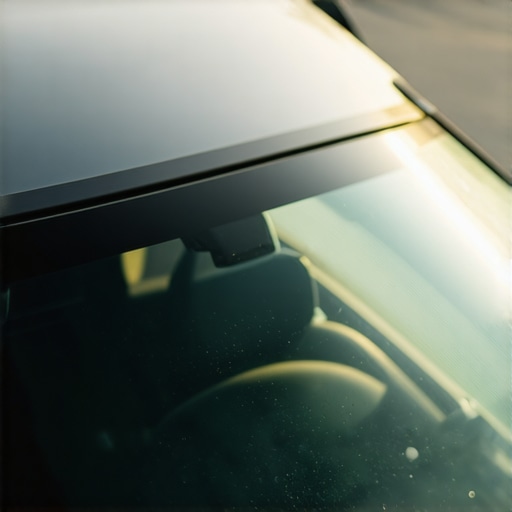
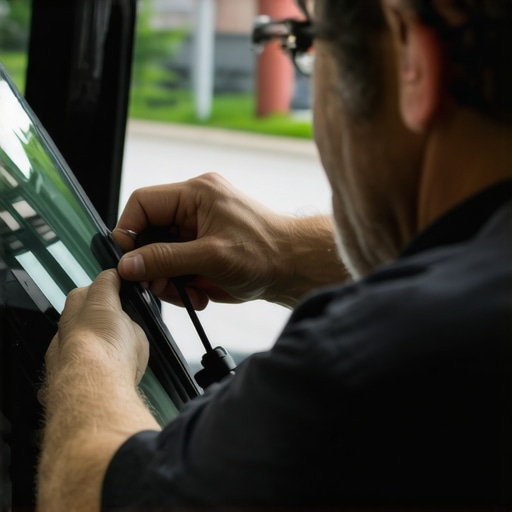
When you are behind the wheel of a modern vehicle, you aren’t just looking through a piece of glass; you are looking through a sophisticated optical component. As a master glazier with over 25 years in the field, I have seen the evolution from simple plate glass to the complex laminated safety glass used in today’s automotive windshields. When a client tells me their front-facing camera or Advanced Driver Assistance System (ADAS) is acting up, they usually blame the software. However, in my experience, the culprit is almost always the glass substrate or the environment immediately surrounding the camera aperture. A blurry camera is not just a nuisance; it is a failure of the safety envelope of the vehicle. Whether you are dealing with a microscopic chip or a botched installation, the physics of light transmission are unforgiving.
“Installation is just as critical as the window performance itself. A high-performance window installed poorly will fail.” – AAMA Installation Masters Guide
The Condensation Crisis: A Master Glazier’s Diagnostic
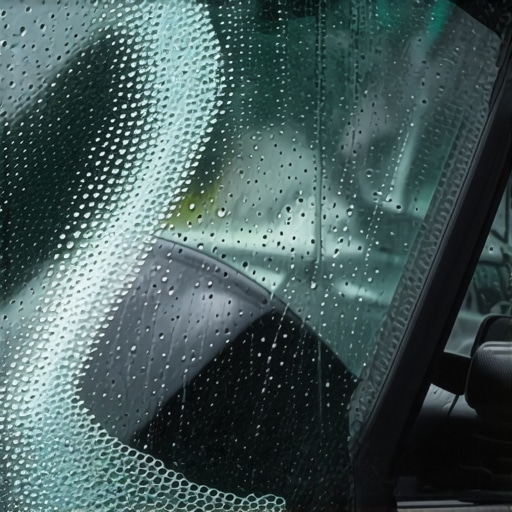
I recall a specific case where a homeowner—who was also a high-end car collector—called me in a panic because their new SUV’s lane-keep assist was failing intermittently. I walked out to their driveway with my hygrometer and a thermal imaging camera. The client thought the camera sensor was defective. I showed them that the humidity levels inside the vehicle, combined with a microscopic breach in the urethane bead around the camera bracket, were creating a localized dew point issue. This wasn’t a software bug; it was the ‘sweating’ phenomenon. The previous glass installer had failed to ensure a hermetic seal when mounting the camera bracket to the frit. In the high-heat environment of a southern climate, moisture was being trapped in the small void between the lens and the glass. When the air conditioner kicked on, that moisture reached its saturation point and condensed directly onto the interior surface of the glass aperture. This is a classic example of why ‘same-day’ speed often compromises the technical integrity of the installation.
The Physics of the Glass Substrate and Thermal Stress
In hot climates like Texas or Arizona, the Solar Heat Gain Coefficient (SHGC) isn’t just a number for residential windows; it’s a critical factor for automotive glass performance. The glass in front of your camera is a laminated sandwich of two layers of glass with a Polyvinyl Butyral (PVB) interlayer. In extreme heat, if the glass installer uses sub-par materials, you encounter ‘outgassing.’ This happens when the volatile organic compounds in low-grade adhesives or cheap PVB layers begin to vaporize due to solar radiation. These gases have nowhere to go but the small, enclosed space of the camera housing, where they deposit a fine, oily film on the lens. This film scatters light—a phenomenon known as the Fresnel Effect—resulting in the blurry image your car’s computer cannot interpret. We often see this when mobile service providers prioritize speed over the chemical compatibility of their primers and urethanes. The camera’s field of vision requires absolute clarity; even a minor refractive index change caused by a chip repair resin can cause the system to miscalculate distances by several feet.
Why Chip Repair Isn’t Always the Answer
Many drivers opt for a quick chip repair to save money, but in the ‘critical vision area’—the zone where the ADAS camera looks through the glass—a repair is often a liability. When we inject resin into a stone chip, we are trying to match the refractive index of the glass. However, no resin is a perfect match for the factory glass. Under a microscope, that repair looks like a lens. To the human eye, it’s a small dot. To a camera sensor trying to calculate the distance to a lead vehicle, it’s an optical distortion that can cause ghosting or total system shutdown. This is why ASTM E2112 principles, though written for buildings, emphasize that the integrity of the opening is paramount. In the automotive world, the ‘rough opening’ is the camera bracket, and the ‘glazing’ is the windshield. If the glass installer does not perfectly align the bracket or if they leave a minute shim of old urethane behind, the camera sits at an off-angle, and the resulting blur is actually a focal length error.
“The integrity of the building envelope depends on the precise management of the interfaces between components.” – ASTM E2112 Standard Practice
The Role of the Frit and the Sill Pan Principle
In residential glazing, we use a sill pan to ensure water is directed away from the interior. In automotive glass, we have the ‘frit’—the black ceramic dots around the edge of the glass. The frit isn’t just for aesthetics; it provides a keyed surface for the adhesive to bond to and protects the urethane from UV degradation. If a glass installer fails to properly prepare this surface, or if the glass is a cheap aftermarket knock-off with a poorly fired frit, the bond will eventually fail. When the bond fails, air and moisture enter the camera housing. This is where the ‘shingle principle’ comes into play. Just as shingles overlap to shed water, the molding and the glass bead must work together. If a mobile service tech ‘caulks and walks’ without ensuring the drip cap of the windshield molding is properly seated, water will eventually find its way into the camera’s line of sight, leading to that permanent haze that no amount of defrosting can clear.