The hidden danger of a cracked rear camera lens
The Illusion of Cosmetic Damage
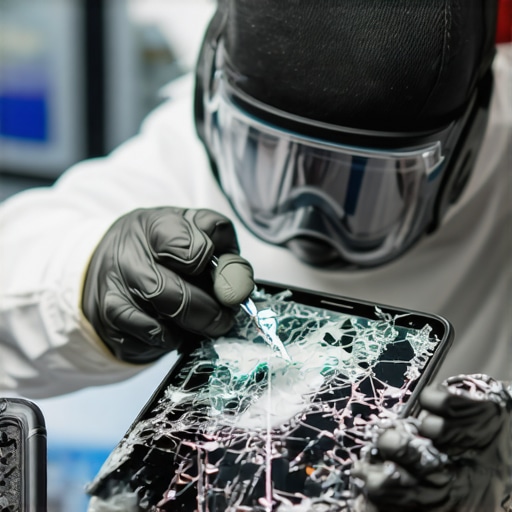
Most people look at a hairline fracture on their smartphone or vehicle camera and see a minor nuisance. As a master glazier with over 25 years in the trade, I see a catastrophic failure of the building envelope. Whether it is a forty-story curtain wall or a five-millimeter camera lens, the physics of glass do not change. When that surface is breached, you no longer have a protective barrier; you have a ticking clock. A glass installer knows that once the structural integrity of a pane is compromised, the environmental variables begin their relentless assault on the internal components. In my years of experience, I have seen small chips turn into complete system failures because the owner thought it was just a cosmetic issue. The reality is that the glass serves as a hermetic seal, and once that seal is broken, your technology is at the mercy of the atmosphere.
“Installation is just as critical as the window performance itself. A high-performance window installed poorly will fail.” – AAMA Installation Masters Guide
The Condensation Crisis: A Narrative Warning
I remember a homeowner who called me in a panic because their high-end windows were ‘sweating’ and their rear-facing security cameras were foggy. I walked in with my hygrometer and showed them the humidity was 60 percent. It wasn’t the windows; it was their lifestyle. They were running industrial humidifiers in a tight house. But the camera lens? That was a different story. I took one look at it through a jeweler’s loupe and found a microscopic chip. That chip had allowed the internal air of the camera housing to reach its dew point. While they were worried about the aesthetic of the glass, the moisture was already corroding the delicate sensor electronics. This is the same principle I see when a mobile service technician performs a subpar chip repair. If you don’t address the moisture trapped inside the fracture before sealing it, you are simply burying a ticking bomb of oxidation. This is why professional same-day service is not just about convenience; it is about stopping the ingress of water before the damage becomes irreversible.
The Physics of Capillary Action and Moisture Ingress
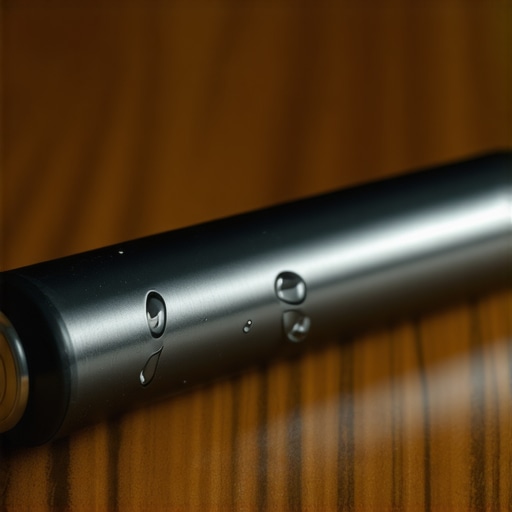
To understand why a cracked lens is dangerous, we have to talk about capillary action. Water has a unique surface tension that allows it to pull itself into incredibly tight spaces. In the glazing world, we deal with this by using a sill pan and proper flashing tape to ensure that water always has a path to the exterior. In a camera lens, there is no weep hole. There is no drainage system. When water enters a crack in the glass, it is trapped. As the device heats up during use, that water vaporizes. When it cools down, it condenses on the coldest surface, which is usually the internal side of the lens or the sensor itself. This cycle of evaporation and condensation is what we call the ‘pump effect’ in insulated glass units (IGUs). A glass installer sees this as a failure of the spacer system, but in a camera, it is a failure of the primary glazing seal. Once the interior of that lens housing hits the dew point, your image quality is gone, replaced by a milky haze that no software can fix.
The Optics of Failure: Refraction and Diffraction
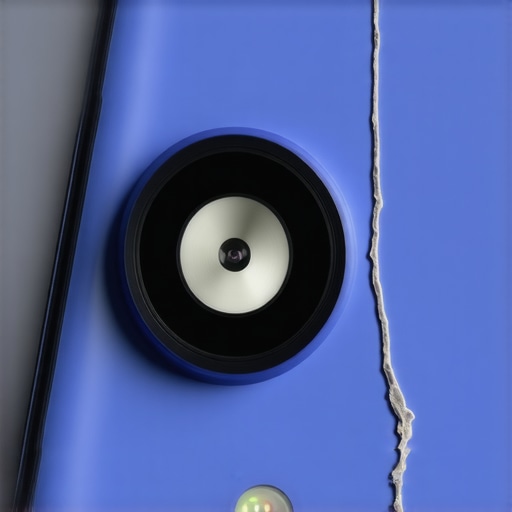
When we talk about glazing zooming, we have to look at how light interacts with the substrate. A pristine camera lens is designed with a specific refractive index. Light passes through the air-to-glass interface at a precise angle. When a crack is introduced, you create a new set of interfaces. Every edge of that crack becomes a prism. Instead of light hitting the sensor in a clean, straight path, it undergoes diffraction. You get ‘stray light’ and internal reflections that wash out your photos. This is similar to why we use Low-E coatings on Surface #2 in hot climates; we are trying to control how energy passes through the glass. In a cracked lens, the Low-E properties (if any) are compromised, and the light is scattered. A mobile service professional performing a chip repair uses a resin with a refractive index that matches the glass to ‘hide’ the crack, but if the repair isn’t done to laboratory standards, the optical distortion remains. This is why a full replacement by a qualified glass installer is often the only way to restore the original performance specs.
“Water penetration is the primary cause of glazing system failure. A single breach in the secondary seal can lead to total unit degradation within weeks.” – ASTM E2112 Standard Practice
Structural Integrity and the Shingle Principle
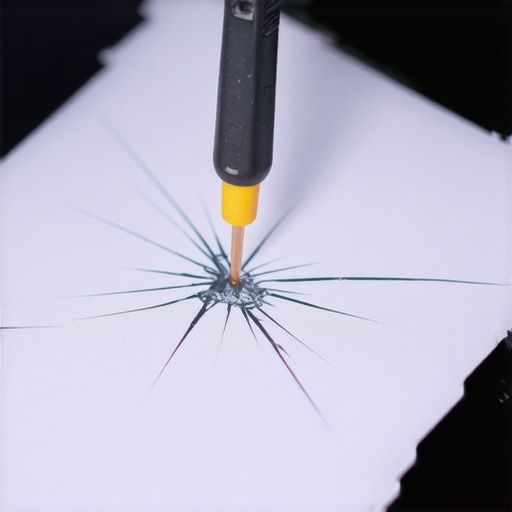
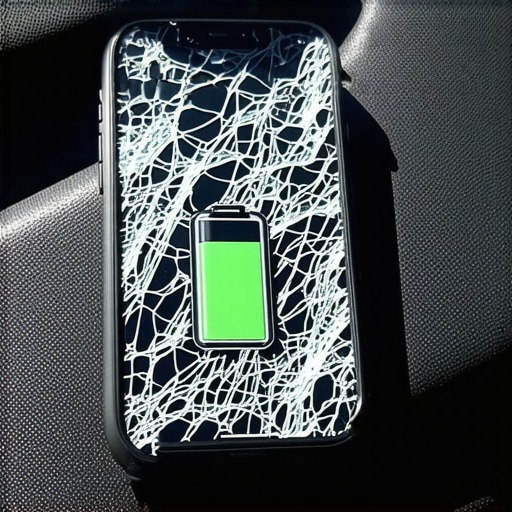
In residential construction, we follow the ‘Shingle Principle’: everything must overlap so that water flows down and away from the rough opening. In the micro-glazing of a camera lens, the glass is often held in place by a specialized glazing bead or a high-strength adhesive. When the glass cracks, the tension across the surface is no longer uniform. This creates stress concentrations. As the device undergoes thermal expansion and contraction, these stresses cause the crack to migrate. I have seen tiny chips on the edge of a sash grow into a crack that spans the entire window because the shim was placed incorrectly. The same thing happens with your mobile devices. One drop, one thermal shock, and that tiny chip becomes a spiderweb. A same-day mobile service can stop this migration by stabilizing the glass with UV-cured resins, but this is a temporary fix. For a permanent solution, the structural integrity of the entire aperture must be restored.
The Thermal Reality of High-Tech Glass
Since we are often operating in cold environments, we have to consider the U-Factor of our glass. In a northern climate, the goal is to keep the heat inside. However, in a small electronic housing, the heat is generated by the processor and the camera sensor. If the glass is cracked, the thermal gradient changes. You lose the insulating layer of air (or gas fill) that was originally inside the housing. This can lead to the sensor overheating or, conversely, being subjected to extreme cold that can crack the silicon. A professional glass installer understands that the glass is a thermal regulator. When you ignore a cracked lens, you are essentially leaving a window open in a blizzard. You are inviting the environment into a space that was designed to be isolated. Whether it is a triple-pane window or a sapphire camera cover, the rules of thermodynamics are non-negotiable. Don’t wait for the sensor to fail; address the glazing issue the moment it appears with a reliable mobile service.
The Mobile Service and Same-Day Solution
Why is same-day service so emphasized in the glass industry? Because time is the enemy of a clean repair. The longer a crack stays open, the more debris, oils, and moisture fill the void. Once a crack is contaminated, even the best glass installer cannot achieve a perfect bond with the repair resin. If you are looking for a chip repair, you need a mobile service that can come to you immediately. They will use a vacuum-injection system to pull the air out of the fracture and replace it with a high-refractive-index polymer. This not only restores the look of the glass but prevents the ‘pump effect’ from pulling in more moisture. In my 25 years of experience, the difference between a successful repair and a total replacement is usually about 48 hours. If you wait, the environmental damage becomes the primary problem, not the glass itself. Treat your camera lens with the same respect you would treat a custom-built bay window: keep it sealed, keep it dry, and keep it structural. “