The diagnostic tool that finds hidden battery shorts
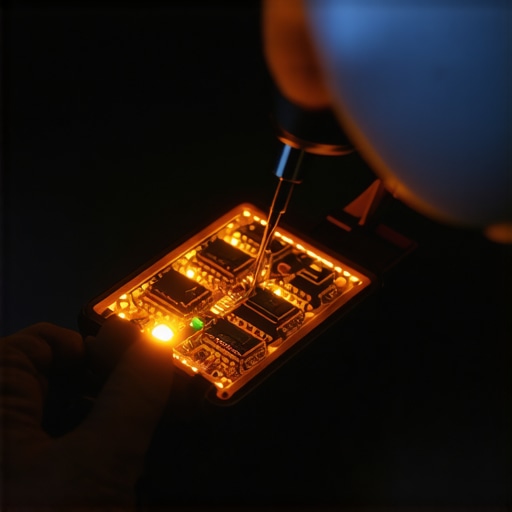
In the world of professional glazing, we often talk about the building envelope as a giant circuit. When a window fails, it is effectively a thermal short. This is where high-precision diagnostic tools come into play. A homeowner called me in a panic because their new windows were sweating. I walked in with my hygrometer and a thermal imaging camera and showed them the humidity was 60 percent. It was not the windows; it was their lifestyle and a lack of proper air exchange. The windows were simply the coldest surface, revealing a deeper issue with the home energy circuit. When we look at a window, we are looking at a complex assembly of glass, spacers, and gas that must perform perfectly to prevent heat from leaking out.
Installation is just as critical as the window performance itself. A high-performance window installed poorly will fail. – AAMA Installation Masters Guide
The U-Factor is the most critical metric for those of us in colder climates. It measures the rate of heat loss. Unlike the R-value used for insulation, where higher is better, with the U-Factor, we want the lowest number possible. This number represents the ability of the entire window assembly, including the sash and the glazing bead, to resist the flow of non-solar heat. If you have a high U-Factor, you have a thermal short that is draining your heating budget every single hour. To combat this, we utilize Low-E coatings on surface number three of the glass. This microscopic layer of silver or tin oxide reflects long-wave infrared radiation back into the room. It acts as a mirror for heat while allowing visible light to pass through. If your glass installer is not talking about the difference between hard-coat and soft-coat Low-E, they are not providing a professional consultation. We also have to consider the role of the spacer. Traditional aluminum spacers are a disaster for energy efficiency because metal conducts heat. Modern warm-edge spacers use structural foam or composites to break that conductivity, preventing the edge of the glass from becoming a cold spot where condensation can form.
NFRC ratings provide a fair, accurate, and reliable way to compare the energy performance of windows, doors, and skylights. – NFRC Performance Standards
When a chip occurs in a window, it is not just a cosmetic issue. For double-pane units, a chip can eventually lead to a seal failure. Once the seal is breached, the inert Argon gas between the panes escapes and is replaced by moisture-laden air. This is why same-day chip repair is a vital mobile service for maintaining the integrity of the glazing unit. A mobile service glass installer can often bridge the gap between a minor repair and an expensive full-frame replacement. The anatomy of a proper installation involves more than just a tube of caulk. We start with the rough opening, ensuring it is plumb, level, and square. We install a sill pan at the bottom of the opening. This is a crucial line of defense that directs any water that bypasses the primary seals back to the exterior. Without a sill pan, water sits on the wooden header or subfloor, leading to the rot that destroys homes. We then use flashing tape to seal the window flanges to the weather-resistive barrier. Every layer must follow the shingle principle, where the upper layer overlaps the lower layer to ensure gravity works with us, not against us. In an operable window, the weatherstripping must create a continuous seal when the sash is closed. If there is even a tiny gap, the pressure differential between the inside and outside of the house will pull cold air in like a vacuum. This air infiltration is often what homeowners perceive as a draft. We use shims to perfectly position the window within the frame, ensuring that the sash operates smoothly without binding. If the window is not shimmed correctly, the frame can twist, leading to gaps in the weatherstripping and mechanical failure of the hardware over time. We also pay close attention to the weep hole system. These are small openings in the bottom of the frame designed to allow water to exit the track. If a caulk-and-walk installer plugs these holes, the water will back up and eventually overflow into the interior of the wall. Professional glazing is a science of managing the invisible forces of thermal transfer and hydrostatic pressure. By using diagnostic tools like thermal cameras, we can find the hidden shorts in your home and provide solutions that go beyond the surface. Don’t buy the hype of a salesman; look at the NFRC label and demand a technical installation that respects the physics of your climate.