Stop using tape on your cracked phone screen
The Dangerous Habit of Patching Structural Failures
As a Master Glazier with a quarter-century in the trade, I have seen it all. I have seen skyscrapers with glass that cost more than a suburban home and historic restorations where we had to match 100-year-old wavy glass. But lately, I see a trend that makes my blood boil: homeowners and vehicle owners treating glass like it is a disposable plastic wrapper. If you are the person who thinks a strip of packing tape is a valid solution for a cracked phone screen or a chipped window, you are inviting a catastrophic failure into your life. Glass is not a static material; it is a dynamic, brittle solid that reacts to every pound of pressure and every degree of temperature change.
The Condensation Crisis: A Master Glazier Narrative
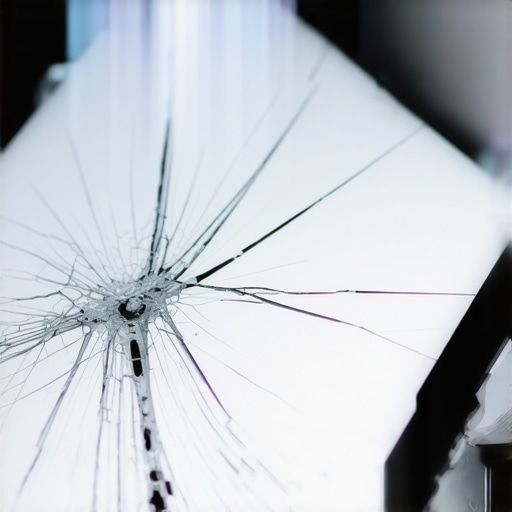
A homeowner called me in a panic because their new windows were ‘sweating’ and a small chip in the corner had suddenly spidered across the entire six-foot span. I walked in with my hygrometer and showed them the humidity was 60%. It was not the windows; it was their lifestyle choices, but the tape they used to ‘seal’ the chip made it ten times worse. By trapping moisture against the raw edge of the glass, they created a micro-environment where the water expanded and contracted, effectively acting as a wedge. I had to explain that they had turned a fifty-dollar chip repair into a two-thousand-dollar sash replacement because they did not understand the physics of the dew point.
“Installation is just as critical as the window performance itself. A high-performance window installed poorly will fail.” – AAMA Installation Masters Guide
The Science of the Chip: Why Same-Day Repair is Non-Negotiable
When an object strikes your glass, it creates a Hertzian cone of stress. This is not just a cosmetic blemish. In the world of glazing, we look at the stress concentration at the tip of that crack. Even a micro-fissure disrupts the structural integrity of the pane. If you are in a cold climate like Chicago or Minneapolis, the U-Factor of your window becomes your primary defense. A chip allows the argon or krypton gas fill to escape from your Insulated Glass Unit (IGU). Once that gas is gone, the thermal performance of that window drops by nearly thirty percent. You are essentially paying to heat the neighborhood.
A professional glass installer knows that a chip repair is about more than just aesthetics. We use high-viscosity resins that have a refractive index nearly identical to the glass itself. This resin is injected into the rough opening of the crack under vacuum pressure. This is why a mobile service is so critical. You cannot wait for the glass to undergo another thermal cycle. If the sun hits that chip, the differential expansion between the shaded part of the glass and the sun-lit part will cause the crack to run. This is basic thermodynamics.
Thermal Stress and Climate Logic
In northern climates, the enemy is heat loss. We focus on the U-Factor. When you have a crack, even a small one, you are creating a thermal bridge. The warm-edge spacers that were designed to keep the perimeter of your glass warm are now compromised. The same-day arrival of a technician can save the entire unit by sealing that breach before the internal desiccant becomes saturated with household humidity. Once that desiccant is spent, you will have permanent fogging inside the panes, and no amount of cleaning will fix it.
“Standard Practice for Installation of Exterior Windows, Doors and Skylights requires that any compromise to the glazing surface be addressed to maintain the water-resistive barrier.” – ASTM E2112
The Installation Autopsy: Why Tape Fails
Let us talk about the ‘Shingle Principle.’ In a proper window installation, everything overlaps so that water flows down and away from the rough opening. When you put tape on a crack, you are creating a dam. Water gets behind the tape via capillary action, sits in the crack, and eventually reaches the glazing bead or the sash frame. If you have wood windows, this leads to the ‘Rot Repair’ nightmare I have seen a thousand times. I have pulled out sashes where the wood was like wet cake because a homeowner ignored a chip and let water seep into the muntins.
A mobile service glass installer will assess the damage to see if the impact reached the laminate layer (in the case of safety glass) or if it is a clean break in annealed glass. They will check the weep holes to ensure that any moisture that did get in can get out. They will check the shims to ensure the frame has not shifted, putting uneven pressure on the glass, which is often what causes those ‘mystery’ cracks in the first place.
Don’t Buy the Hype, Buy the Numbers
Many high-pressure salesmen will tell you that a cracked pane means you need to replace every window in your house. That is nonsense. If the frame is solid and the sill pan is still doing its job, a targeted chip repair or a single-pane replacement is often all you need. However, you must act fast. The longer a crack exists, the more debris and oils get inside it, making a clean resin bond impossible. This is why same-day service is the gold standard in the industry. We want to get to that glass before it becomes contaminated.
Stop treating your glass like a temporary barrier. It is a sophisticated piece of engineering designed to manage solar heat gain, visible transmittance, and structural loads. When you see a chip, put down the tape and call a professional. Your rough opening, your sash, and your energy bill will thank you. [image_placeholder_1]