How to verify your tech is using a quality primer
The Science of Adhesion: Why Your Glass Installer’s Primer Choice Dictates Safety
In my twenty-five years as a master glazier, I have seen every shortcut in the book. The most dangerous one is not the visible glass or the frame choice: it is the invisible chemical bond between the glass and the substrate. When you hire a mobile service for a same-day chip repair or a full glass replacement, you are often paying for speed. But in the glazing world, speed without the correct chemistry is a recipe for catastrophic failure. A window or windshield is a structural component of your environment. If the technician treats it like a simple piece of decor, you are at risk. The difference between a lifetime seal and a leak lies in the bottle of primer the technician pulls out of their kit.
The Pinchweld Horror Story: A Narrative of Failure
I once pulled a replacement pane out of a structural frame in a coastal high-rise and the entire perimeter was weeping rust and failed urethane. Why? The previous glass installer thought a mobile service meant skipping the etch-primer and relying on a universal solvent that did not bite into the coating. I touched the sealant, and it peeled away from the metal like a dry scab. The installer had relied on the weight of the glass and a few shims to hold it in place, but the chemical bond was non-existent. This is the reality of the caulk-and-walk technician. They rely on the fact that you cannot see the bond once the glazing bead is snapped back into place. That mistake nearly led to a five-hundred-pound lite of glass falling twenty stories during a high-wind event. Proper surface preparation is the only thing standing between a secure installation and a lawsuit.
“Installation is just as critical as the window performance itself. A high-performance window installed poorly will fail.” – AAMA Installation Masters Guide
The Chemistry of the Bond: Why Quality Primers Matter
To understand why you must verify your tech’s primer, you have to understand the molecular landscape of glass. Glass is an inorganic material with a high surface energy, but it is also incredibly smooth. Most structural sealants, like high-modulus urethanes or silicones, are organic polymers. These two materials do not naturally want to stay together under stress. A quality primer acts as a molecular bridge. It contains silane coupling agents where one end of the molecule bonds to the silica in the glass and the other end bonds to the polymer in the sealant. If your tech is using a cheap, all-in-one product, they are compromising that bridge. In my shop, we look for primers that contain specific isocyanates that react with atmospheric moisture to create a cross-linked shield. This shield also serves a second, vital purpose: UV protection. Standard urethane is sensitive to ultraviolet light. Without a black-out primer to block the sun’s rays, the bond will degrade into a chalky powder within two years. In southern climates where the solar heat gain is intense, this degradation happens even faster.
Climate Context: The Southern Heat Factor
In hotter regions like Texas, Arizona, or Florida, the enemy of a quality glass install is not just the rain; it is the radiant heat and the UV index. When a glass installer arrives for a same-day mobile service in 95-degree weather, the clock is ticking. Quality primers have a specific flash time. This is the window of time after application where the solvent evaporates and the active ingredients are ready to bond. In high heat, a low-grade primer will flash too quickly, becoming brittle before the sealant even touches it. Conversely, if the tech applies the sealant while the primer is still wet, they trap the solvents, leading to a soft, spongy bond that will never cure. You want a technician who understands Surface #2 and Surface #3 logic. In the south, the Solar Heat Gain Coefficient is king. If the tech is not using a primer that can withstand the thermal expansion and contraction of a thermally broken aluminum frame, the seal will shear. This is why we use shims to maintain the proper bite and allow the sealant to act as a gasket, absorbing the movement caused by the sun’s heat.
“The window manufacturer’s instructions and ASTM E2112 should be followed to ensure the flashing and sealing systems are integrated to prevent water penetration.” – ASTM E2112 Standard Practice
Blueprint for Verification: How to Spot a Pro
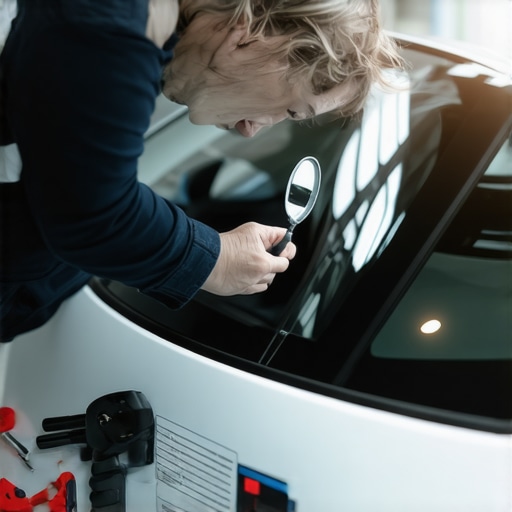
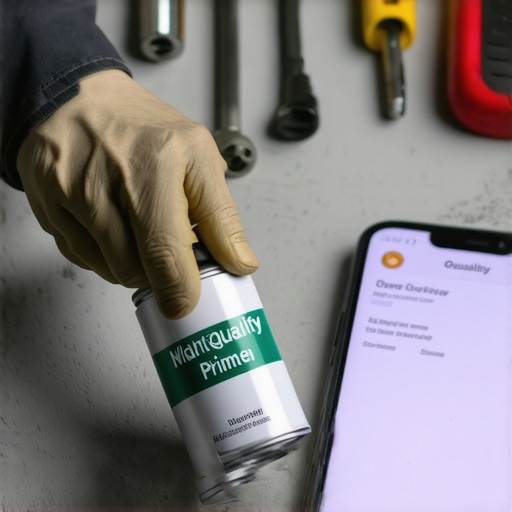
When the mobile service van pulls up, do not just look at the glass. Look at the chemistry. Here is how you verify your technician is a professional glazier and not a tinkerer. First, check the bottle. Professional-grade primers from reputable manufacturers like Sika or Dow will have a clear expiration date. Primers are highly reactive; if a bottle has been sitting in a hot van for six months, the chemicals have likely begun to polymerize inside the container. Second, watch the application. A pro uses a clean, single-use wool dauber. If you see them using a dirty rag or a spray bottle, stop the job. The primer must be applied in a continuous, even stroke to ensure the glazing bead or pinchweld is fully covered. Third, ask about the flash time. If they say it does not matter, they are lying. A real tech knows that a quality primer needs anywhere from two to ten minutes to set, depending on the humidity and temperature. Finally, look for the use of a sill pan and proper flashing tape in residential settings, or a clean, primed pinchweld in automotive or structural glass. If they are just slapping goop over the old residue, they are setting you up for a leak.
The Myth of the One-Step Solution
The industry has been flooded with one-step primers that claim to clean, prime, and protect all at once. In my experience, these are for the lazy. A true master glazier knows that cleaning the rough opening and the glass requires a dedicated solvent, often an isopropyl alcohol mix, followed by a separate, dedicated primer. This ensures that contaminants like silicone oils or suction cup marks are completely removed. If those contaminants remain, the primer will float on top of them instead of bonding to the glass. This is especially critical in chip repair. When we perform a mobile service for a stone chip, we have to clear the crushed glass and moisture from the break. If the resin used does not have the same refractive index as the glass and a high-quality bonding agent, the repair will be visible and will eventually spread. Precision is not a suggestion; it is a requirement of the trade. You should see your tech carefully cleaning the area with a scribe and ensuring the site is bone dry before any chemicals touch the surface. This is the difference between a same-day fix that lasts and one that fails when the first frost hits or the summer sun beats down on the sash.
Conclusion: Demand Quality Chemistry
Do not be afraid to be the homeowner who asks questions. A technician who is proud of their work will be happy to show you their materials and explain their process. They will talk about the rough opening tolerances, the importance of the weep hole being clear of sealant, and why they are using a specific shim to center the glass. They understand that the window is an operable part of your home’s envelope that must manage water and air pressure. If they dismiss your concerns or cannot tell you the name of the primer they are using, they are a caulk-and-walk installer. Your home and your safety deserve the science of a proper bond. Always ensure the tech is using a primer that meets or exceeds AAMA standards, and never settle for a same-day service that compromises the structural integrity of your glass for the sake of a quick exit. Quality is found in the details that you cannot see once the job is done, so make sure you see them while the work is in progress. Check the bottle, watch the clock for flash times, and insist on a multi-step cleaning and priming process every single time.