How to tell if your windshield is actually structural glass
Most drivers view their windshield as a transparent bug shield or a simple barrier against the wind. As a glazier with over two decades in the trade, I look at that glass and see a sophisticated structural component that accounts for up to 60 percent of a vehicle’s cabin strength in a rollover accident. If you are asking whether your glass is structural, you are already ahead of 90 percent of the population. The reality is that in modern automotive design, the glass is not just ‘in’ the frame; it is part of the frame.
The Pinchweld Reality: A Cautionary Tale
I remember a specific case involving a mobile service repair on a high-end sedan in Chicago. I pulled the cowl and trim off a windshield that a previous installer had replaced just six months prior. The owner complained of a slight whistling sound. When I applied a suction cup and gave a firm tug, the entire glass unit shifted three inches. The previous installer had skipped the essential step of using a proper primer on the pinchweld (the metal ‘Rough Opening’ of the car). They had relied on the old urethane’s adhesion rather than creating a fresh chemical bond. The header was beginning to show signs of oxidation, which would have eventually led to a total structural failure. This ‘caulk-and-walk’ mentality is why I insist on educating clients about what actually holds their glass in place. If that car had been involved in a collision, the glass would have popped out, the roof would have collapsed, and the passenger-side airbag would have had nothing to deploy against, rendering it useless.
“Installation is just as critical as the window performance itself. A high-performance window installed poorly will fail.” – AAMA Installation Masters Guide
The Physics of Laminated Structural Glass
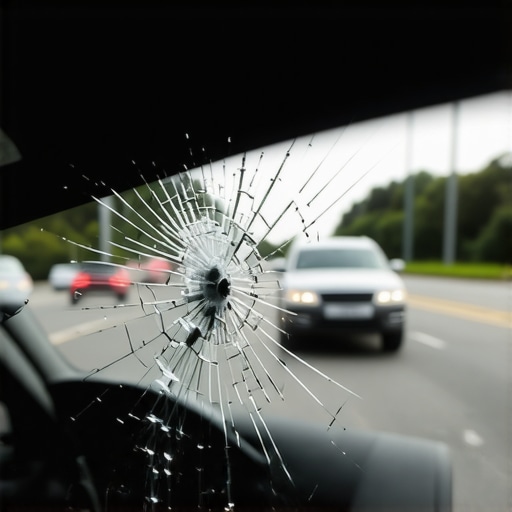
To understand if your glass is structural, we must zoom into the glazing bead and the chemical composition of the unit. Unlike the tempered glass in your side windows, which is designed to shatter into tiny pebbles, your windshield is a sandwich of two layers of annealed glass with a Polyvinyl Butyral (PVB) interlayer. This is essentially a sacrificial system. When an object hits the glass, the outer layer may crack, but the PVB interlayer absorbs the energy, preventing the object from penetrating the cabin. In terms of thermal performance, this interlayer also acts as a barrier. In cold climates like Minneapolis or Chicago, the U-Factor of this glass becomes critical. When you blast your defroster at 80 degrees against a glass surface that is negative 10 degrees, you are creating a massive thermal gradient. If there is a chip in that glass, it acts as a ‘stress riser.’ The molecules at the tip of the crack are under immense tension, and the rapid expansion of the inner layer of glass against the cold outer layer will cause that chip to spider-web instantly. This is why a same-day chip repair is not just about aesthetics; it is about maintaining the tension-compression balance of the structural unit.
NFRC Ratings and Thermal Stress
We often talk about NFRC ratings in residential windows, but the same logic applies to your structural automotive glass. The Solar Heat Gain Coefficient (SHGC) determines how much radiant heat is entering your vehicle. In a structural windshield, Low-E coatings are often embedded on Surface #2 (the inner face of the outer pane). This reflects long-wave infrared radiation. If the glass is not properly rated, the heat buildup can actually degrade the high-modulus urethane used to bond the glass to the frame. When we perform a mobile service, we have to account for the ambient temperature because that urethane has a specific ‘drive-away time’ based on humidity and heat. If you use a standard-grade adhesive in a high-performance structural application, you are compromising the integrity of the entire safety cage.
“Standard practice for installation requires that the substrate be prepared to ensure a continuous and durable seal against environmental loads.” – ASTM E2112 Standard Practice
How to Identify Structural Integrity Issues
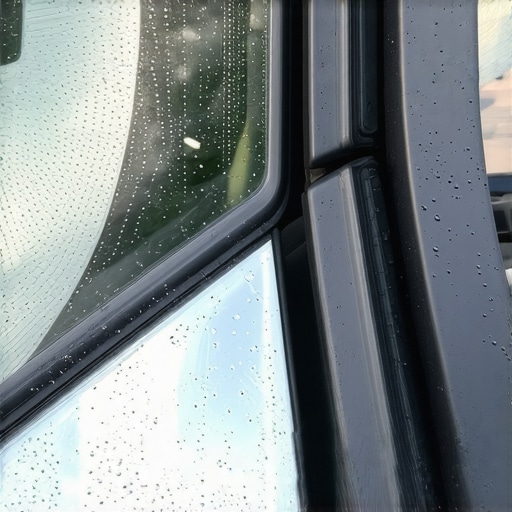
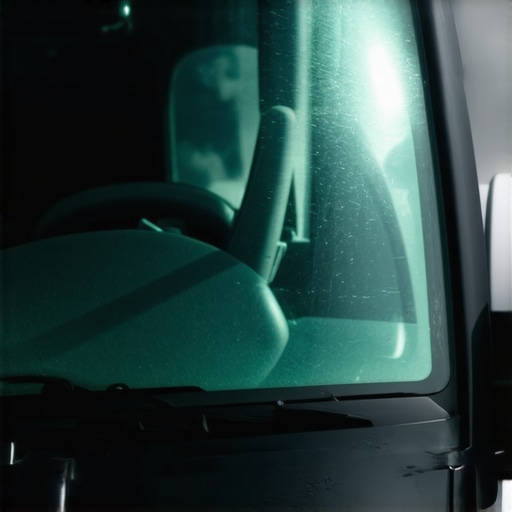
How do you tell if your glass is doing its job? First, look at the frit. That is the black ceramic band around the edge of the glass. It is not there for decoration; it provides a UV-protected surface for the urethane to bond to. If you see any gaps in the frit or if the ‘Glazing Bead’ of the molding is warped, the structural bond may be compromised. Second, check for ‘delamination.’ This looks like a milky white fogging around the edges of the glass. It means the PVB interlayer is separating from the glass plies, which means the glass is no longer a single structural unit. Third, analyze any chips. A chip that is larger than a quarter or located within the ‘acute area’ (the driver’s line of sight) or within three inches of the edge is a structural emergency. Edge cracks are particularly dangerous because they compromise the ‘Sill Pan’ equivalent of the automotive frame, where the glass meets the cowl. If the glass cannot transfer the load to the frame, it is no longer structural.
The Mobile Service vs. Shop Environment
There is a lot of debate about mobile service for structural glass. As a master glazier, I believe mobile service is perfectly safe as long as the technician controls the environment. This means no installation in the rain or in direct sunlight that exceeds the urethane’s skinning temperature. The ‘Rough Opening’ must be cleaned of all oils and old adhesive, leaving only a thin 1-2mm base of original urethane if it is still well-bonded. We use shims or setting blocks to ensure the glass is centered. If the glass is shifted even 2mm to the left, the ‘Muntin’ or pillar covers won’t fit correctly, and more importantly, the stress distribution across the glass will be uneven, leading to a spontaneous crack the next time you hit a pothole. Structural glass requires a level of precision that many high-volume shops simply ignore. They want to get the car in and out in 45 minutes, but a true structural bond takes time to cure. You cannot rush the chemistry of a high-modulus adhesive.
Conclusion: Don’t Compromise the Cage
Your windshield is a sophisticated piece of engineering. It manages heat through SHGC-optimized coatings, provides visibility through high-quality float glass processes, and most importantly, it keeps the roof off your head. When you need a glass installer, do not look for the cheapest price; look for the one who talks about primer, drive-away times, and structural integrity. A same-day chip repair is the best insurance policy you can buy for your car’s safety cage. If you ignore a chip, you are letting a small flaw destroy a vital structural component. Treat your glass with the same respect you would the load-bearing walls of your home, and it will protect you when the physics of the road turn against you. Ensure your installer follows the strict protocols required for structural glazing, and never accept a ‘quick fix’ for a component that is essential to your survival.