How to tell if your phone screen was glued or taped
The Master Glazier’s Perspective on Micro-Fenestration
I have spent twenty-five years looking through glass. Whether it is a twenty-foot curtain wall in a downtown high-rise or a delicate historic wood sash, the principles of glazing remain identical: you are managing a substrate, a sealant, and a pane. When a homeowner asks me about their smartphone, they think they are talking about a gadget. I see a micro-aperture. A phone screen is effectively a high-performance architectural glazing unit shrunk down to fit in your palm. The difference between a screen that was professionally glued and one that was simply taped is the difference between a window that lasts forty years and a ‘caulk-and-walk’ special that leaks before the first frost.
The Narrative Matrix: The Condensation Crisis in Your Pocket
A client recently brought me their flagship device after a local ‘same-day’ mobile service repair. They were in a panic because the front-facing camera was ‘sweating’—internal condensation was blurring every photo. I did not need a hygrometer to tell them what happened. I looked at the perimeter of the glass and saw a slight lift in the bottom right corner. I told them: ‘This was a tape job in a glue-spec world.’ The previous glass installer had bypassed the primary seal, leaving an air gap that allowed ambient humidity to infiltrate the device. When they stepped from their air-conditioned office into the July heat, the dew point shifted inside the phone, and the vapor turned to liquid on the coldest surface: the camera lens. It was not a hardware failure; it was a failure of the installation methodology.
“Installation is just as critical as the window performance itself. A high-performance window installed poorly will fail.” – AAMA Installation Masters Guide
Glazing Zooming: The Physics of OCA vs. PSA
In the world of mobile service, there are two primary ways to secure a screen to the frame: Optically Clear Adhesive (LOCA/OCA) or Pressure Sensitive Adhesive (PSA) tape. To understand the difference, we have to look at the Visible Transmittance (VT) and the refractive index. When you use liquid glue (LOCA), you are filling the entire ‘rough opening’ between the LCD and the top glass. This eliminates the air gap. In professional glazing, we call this a full-bed bond. It ensures that light passes through the glass and the adhesive at the same speed, preventing the ‘faded’ look often seen in cheap repairs.
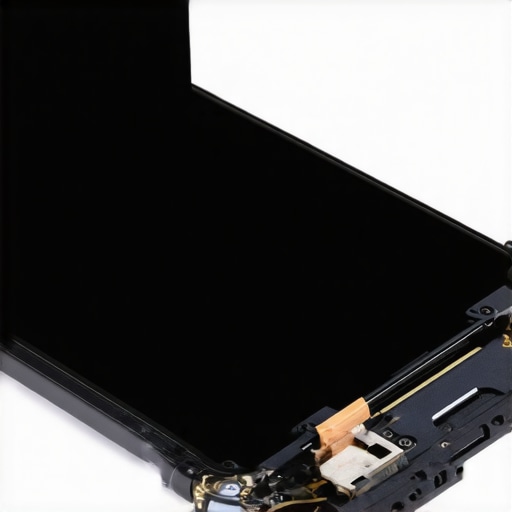
Tape, on the other hand, is a perimeter seal. It is the ‘flashing tape’ of the phone world. It only secures the edges. While it allows for a faster same-day turnaround, it leaves a microscopic void between the layers. This void is where the trouble starts. If you are in a cold climate like Chicago or Minneapolis, that air gap is a liability. Thermal contraction can cause the tape to lose its ‘tack,’ leading to screen lifting—much like how a poorly shimmed window sash will eventually bind in its frame during a deep freeze.
The Autopsy: How to Spot the Shortcuts
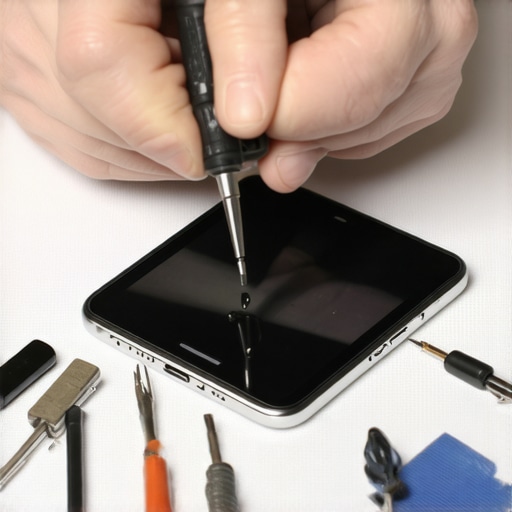
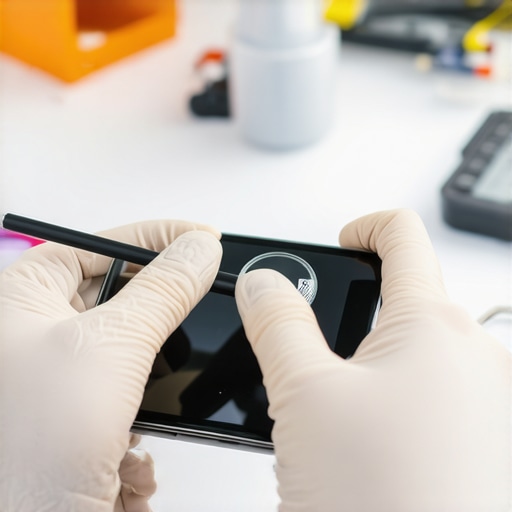
If you want to know if your technician did a proper chip repair or a full-frame replacement, look at the ‘glazing bead’—the very edge where the glass meets the metal or plastic frame. Here is how to perform an autopsy on your repair:
- The Light Leak Test: Turn your brightness to maximum and go into a dark room. Look at the edges of the screen. If you see light ‘bleeding’ from the sides, you have a tape job. The tape has failed to create an opaque, airtight seal.
- The Deflection Test: Press firmly (but carefully) in the center of the screen. Does the glass flex? Is there a ‘rainbow’ effect? If there is movement, you are looking at a taped perimeter without a central structural bond. A glued screen is a monolithic unit; it does not move.
- The Oleophobic Beading: A high-quality glass installer uses glass with factory-grade coatings. Drop a single bead of water on the screen. If it smears rather than beads, you have been sold a ‘tin man’ piece of glass without the proper Low-E equivalent (oleophobic) coating.
“Proper substrate preparation is the foundation of any successful glazing application. Failure to remove old residues will result in premature bond failure.” – ASTM E2112 Standard Practice
Thermal Logic: Why Your Climate Matters
Just as I would never install a single-pane window in a North Dakota winter, you cannot ignore the thermal environment of your phone. In the South, where radiant heat is the primary enemy, a taped screen is prone to ‘viscous shear.’ The heat of a Texas afternoon can soften the PSA tape’s acrylic core, causing the screen to slowly slide out of the frame. For these environments, a full-bed adhesive is superior because it handles Solar Heat Gain (SHGC) more effectively by conducting heat away from the processor and into the glass surface for dissipation.
Conversely, in Coastal regions, the enemy is salt-air and moisture. A taped screen lacks a true ‘sill pan’ effect. Without a continuous bead of adhesive, moisture can wick around the edges through capillary action, eventually reaching the delicate logic board. When I perform a micro-glazing repair, I treat the frame lip like a flashing system. Every ‘weep hole’ must be understood, and every seal must be redundant.
The Installer Matters More Than the Sticker
At the end of the day, you can buy the most expensive Gorilla Glass on the market, but if the glass installer doesn’t understand ‘rough opening’ tolerances, it won’t matter. You want a technician who treats the repair like a structural glazing project. They should be cleaning the frame with 99% isopropyl alcohol (the equivalent of a professional-grade primer) and ensuring the ‘sash’ of the phone is perfectly square before the final set. Don’t be seduced by the lowest price. A ‘caulk-and-walk’ mobile service will have your screen lifting in six months. Demand a full-bond installation that respects the physics of the glass. Your phone is not just a tool; it is the most important window in your house. Make sure it is glazed correctly.