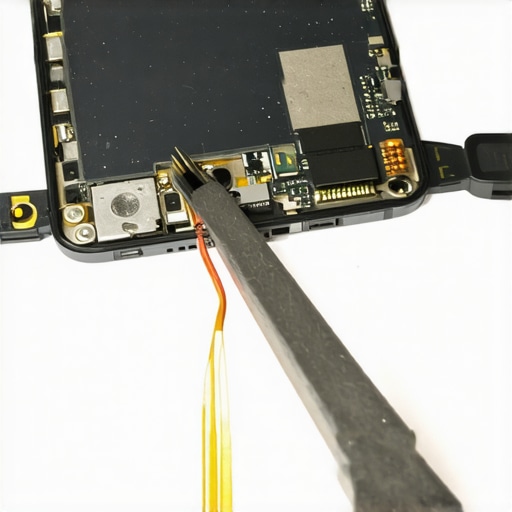
The truth about refurbished phone screens from big retailers
As a glazier who has spent nearly three decades dangling from scaffolds and setting five-hundred-pound lites of glass into aluminum mullions, I look at a smartphone screen and see the same structural challenges we face in a skyscraper. When big retailers talk about refurbished screens, my blood pressure spikes. In the glass world, there is no such thing as refurbished material that retains its original structural integrity once the primary bond is broken. You are either looking at a factory-sealed unit or a liability waiting to delaminate. Whether it is a storefront in a high-traffic urban center or the device in your pocket, glass is a material governed by the laws of physics, specifically thermal expansion and structural stress. When you opt for a same-day mobile service, you are often sacrificing the precision that only a controlled shop environment can provide. I have seen the results of these quick-fix glass installer jobs, and they almost always lead to a premature failure that costs the owner double in the long run.
The Condensation Crisis: A Lesson in Seal Integrity
A homeowner called me in a panic because their new windows were sweating. I walked in with my hygrometer and showed them the humidity was 60%. It was not the windows; it was their lifestyle choices combined with a failure to understand how glass manages dew point. This same logic applies to the refurbished glass industry. When a retailer refurbishes a screen, they are often breaking the original atmospheric seal. In my world, if an Insulated Glass Unit (IGU) loses its seal, the desiccant becomes saturated and you get internal fogging. With mobile devices or chip repair on architectural glass, if the technician does not manage the ambient moisture during the resin injection or the lamination process, you are essentially trapping a failure inside the material. You might not see it the day the glass installer leaves, but the first time the temperature drops and the dew point is reached, that glass is going to show its flaws. Moisture is the eternal enemy of the glazier, and ignoring it is the hallmark of a caulk-and-walk technician.
“Installation is just as critical as the window performance itself. A high-performance window installed poorly will fail.” – AAMA Installation Masters Guide
The Physics of Glass: Why Refurbished is a Misnomer
To understand why big retailer glass often fails, you have to understand the float glass process. Glass is created by floating molten silica over a bed of molten tin. This creates a tin side and an air side. In high-end glazing, we specify which side receives the Low-E coating. On a refurbished unit, these layers are often scraped, buffed, or chemically altered. For those in a North or Cold climate like Chicago or Minneapolis, the U-Factor is king. You want a low U-Factor to keep the heat inside. This is achieved through silver-based coatings on Surface #3 of a double-pane unit, which reflects long-wave infrared radiation back into the room. When a glass installer provides a cheap replacement, they often ignore these coatings entirely, leading to a window that technically fits the rough opening but fails the thermal test. The same happens with mobile service chip repair; if the resin does not match the refractive index of the original glass, or if its thermal expansion coefficient differs from the surrounding silica, the repair will pop the moment the sun hits it. This is why I always tell my apprentices that we are not just installers; we are thermal barrier technicians.
The Shingle Principle and Water Management
In every installation I perform, from a simple sash replacement to a complex curtain wall, I follow the shingle principle. This means every layer of the building envelope must overlap the one below it so that water is always directed out and down. This requires a dedicated sill pan and proper flashing tape. Many mobile service providers skip the flashing because it is hidden behind the trim. They rely on a bead of silicone, which they call a seal. I call it a ticking time bomb. Silicone is a secondary seal, not a primary water barrier. If you do not have a weep hole system to allow the glazing pocket to breathe, the glass will sit in a pool of water. This leads to edge deletion of the Low-E coating and eventual seal failure. I have performed many an installation autopsy where I pulled back the casing only to find the rough opening was rotting because the previous glass installer thought a bigger bead of caulk could replace a proper drip cap. We must respect the path of the water, or the water will destroy our work.
“The window must be integrated into the water-resistive barrier using a flashing system that ensures water is shed to the exterior.” – ASTM E2112 Standard Practice
Material Science: Vinyl vs. Fiberglass vs. Aluminum
When discussing glass installation, we cannot ignore the frame. In cold climates, the frame is often the weak link. Vinyl is popular because it is inexpensive, but it has a high rate of thermal expansion. It grows and shrinks significantly more than the glass it holds, which puts immense stress on the glazing bead. Fiberglass is much more stable because it is primarily glass fibers and resin, meaning it expands at a rate very similar to the glass lite itself. This leads to fewer seal failures over a twenty-year span. For my commercial projects, we use thermally broken aluminum. Aluminum is a fantastic conductor of cold, which is exactly what you don’t want in a Minnesota winter. A thermal break is a plastic or polyurethane barrier that separates the interior and exterior halves of the frame, preventing the cold from bridging into the building. When a big retailer sells you a refurbished or budget window, they are often using non-thermally broken frames or low-density vinyl that will warp before the first five years are up. A quality glass installer knows that the frame and the glass must work in harmony, or the entire system is compromised.
The Truth About Chip Repair and Structural Integrity
Chip repair is another area where the mobile service industry often overpromises. While a resin injection can stop a crack from spreading, it does not restore the glass to its original strength. If the chip is in the tempered zone or near the edge of the sash, the structural integrity of the lite is gone. Tempered glass is under constant internal tension. When you break that tension, the glass wants to fail into thousands of tiny pebbles. Applying a mobile chip repair to a high-stress area is like putting a bandage on a structural crack in a dam. A master glazier will always recommend a full replacement if the damage is within the critical edge zone of the glazing pocket. We use shims to perfectly center the glass in the opening, ensuring there is no glass-to-metal contact. If a mobile service technician just squirts resin into a chip and moves on to the next job, they are ignoring the underlying stress concentrations that will eventually cause a total failure. You have to understand the rough opening tolerances; even a sixteenth of an inch can be the difference between a window that lasts forty years and one that cracks during the first hard freeze.
Conclusion: Precision Over Convenience
The allure of same-day mobile service and the low price of refurbished glass from big retailers is understandable, but it is often a false economy. Glass is a sophisticated building component that requires an understanding of thermodynamics, structural engineering, and moisture management. Whether you are dealing with an operable casement window or a fixed picture window, the installation requires more than just a tube of caulk. It requires a sill pan, proper flashing tape, and a glazier who understands that a window is a hole in the wall that must be managed. Do not be swayed by high-pressure sales tactics or the promise of a quick fix. Look for the NFRC label, check the U-Factor, and ensure your installer understands the shingle principle. In the world of glazing, if you do it right the first time, you only have to do it once. If you do it cheap, you will be calling me in three years to perform an installation autopsy on your rotting headers. Always prioritize the numbers and the technical standards over the convenience of a mobile service. Your home and your wallet will thank you when January arrives and your windows are bone dry and the draft is nowhere to be found.