How to stop a windshield crack from spreading in the cold
The Physics of Brittle Fracture in the North American Winter
In my twenty-five years as a master glazier, I have seen glass behave in ways that would defy a layman’s logic. Most people view a windshield as a static piece of transparent armor, but in reality, it is a dynamic, stressed membrane of laminated safety glass. When the thermometer dips below freezing in cities like Chicago or Minneapolis, that glass becomes a volatile landscape of thermal gradients. Understanding how to stop a windshield crack from spreading in the cold requires more than just a bit of luck; it requires an understanding of the Coefficient of Thermal Expansion and the structural integrity of the Polyvinyl Butyral (PVB) interlayer.
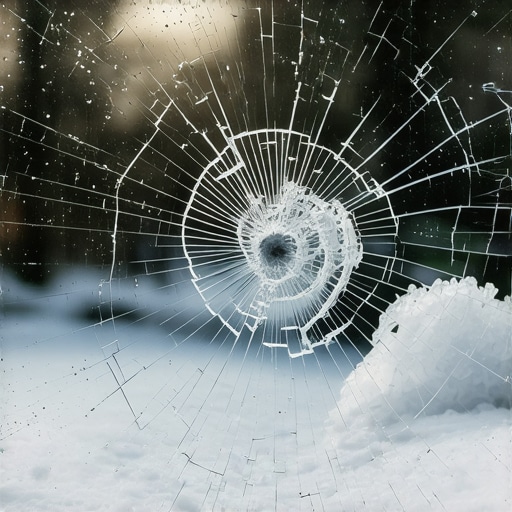
The moment a rock strikes your glass, it creates a point of localized stress. In the summer, you might get away with ignoring it for a week. In the winter, you are on a collision course with a total glass failure. A mobile service professional is often your only hope before the tension becomes unsustainable. I have walked into many situations where a simple chip turned into a massive spiderweb because the driver made the mistake of turning their defroster on full blast before the glass could acclimatize.
“Installation is just as critical as the window performance itself. A high-performance window installed poorly will fail.” – AAMA Installation Masters Guide
The Condensation Crisis: A Narrative of Thermal Shock
A driver called me in a panic because their windshield was literally ‘screaming.’ I arrived with my hygrometer and thermal imaging camera. They had a tiny bullseye chip, barely the size of a nickel, located near the bottom glazing bead. When I walked up, I showed them the reading: the exterior glass was 12 degrees Fahrenheit, while the interior cabin, thanks to their heater, was approaching 75 degrees. The humidity inside the car was 60% due to their wet floor mats and breath. It wasn’t just a chip; the moisture had infiltrated the crack and was beginning to crystallize. As that water froze and expanded, it acted as a hydraulic wedge, forcing the glass apart from the inside. They thought the glass was defective, but it was their lack of thermal management that was the culprit. I had to explain that once moisture enters the laminate, you aren’t just fighting a crack; you are fighting the physics of phase-changing water.
Why Cold Weather is the Enemy of Laminated Glass
To understand the danger, we have to look at the U-Factor of the glass. In the world of fenestration, the U-Factor measures how well a window prevents heat from escaping. Auto glass is notoriously poor at this compared to an insulated triple-pane residential window. A windshield is essentially two layers of glass held together by a plastic interlayer. In extreme cold, the outer layer contracts significantly. Meanwhile, your interior heater causes the inner layer to expand. This creates a massive shear force at the pinch weld (the rough opening of the automotive world). If there is a chip, that stress has nowhere to go but out through the glass.
This is where chip repair becomes a race against time. The resins used by a professional glass installer are designed to flow into the microscopic fissures of the crack. However, in the cold, the viscosity of these resins increases, making it harder for them to penetrate. This is why a same-day repair is vital. If you wait, road salt, washer fluid, and ice will contaminate the site, making a clean bond nearly impossible.
The Glazing Zoom: Anatomy of the Repair
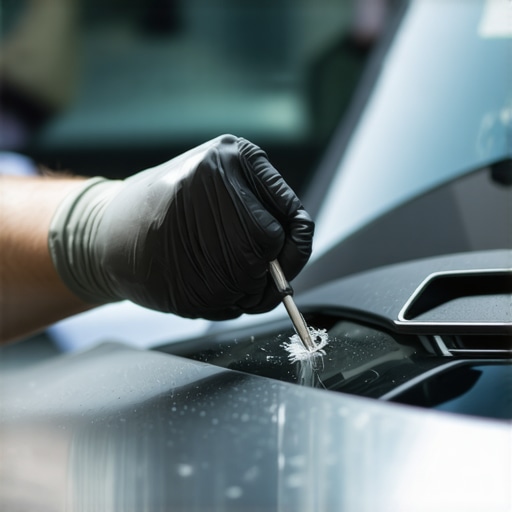
When a specialist performs a repair, they aren’t just filling a hole. They are restoring the structural sash-like integrity of the laminate. The process involves a vacuum-pressure cycle. First, we remove the air and moisture from the crack. If we leave even a microscopic bubble, the dew point inside that bubble will reach saturation, and you will see fogging inside your windshield. Next, we inject a UV-curable resin that has a refractive index nearly identical to the glass itself. This resin must be flexible enough to handle the shimming and vibration of the vehicle while being hard enough to resist the wiper blades.
“Thermal stress is the primary cause of fracture propagation in annealed and tempered glass surfaces when edge conditions are compromised.” – ASTM E2112 Standard Practice
Step-by-Step Mitigation for the Driver
If you find yourself with a fresh chip in the dead of winter, follow these steps to prevent a total loss before you can get to a mobile service technician: 1. Seal the site immediately. Use a small piece of clear packing tape to cover the chip. This prevents moisture from entering the weep hole of the crack. Do not use duct tape, as the residue is a nightmare for the installer to clean. 2. Moderate your climate control. Do not blast the defroster. Use your floor vents to warm the cabin gradually. You want to avoid a sudden thermal shock that will cause the glass to expand rapidly. 3. Avoid the car wash. The sudden change from freezing air to warm water is the number one cause of ‘running’ cracks. 4. Park in the shade if possible. While it seems counterintuitive, the sun can heat the dark dashboard, which in turn heats the bottom of the glass, creating an uneven temperature profile across the surface.
The Myth of DIY Repair Kits in Winter
I have seen countless homeowners try to save fifty bucks with a store-bought kit, only to end up needing a $500 replacement. These kits usually come with a cheap bridge and a one-size-fits-all resin. In cold weather, the glass needs to be pre-heated to a very specific temperature—usually between 60 and 70 degrees—using a specialized heat lamp or a controlled environment. If you apply resin to cold glass, the crack will actually shrink and ‘close’ around the resin, trapping air inside. When the glass warms up, the resin will pop out, or worse, the air will expand and shatter the repair. A professional glass installer knows how to balance the sill pan temperature of the vehicle with the ambient air to ensure a permanent bond.
Conclusion: Precision Matters
A window is a hole in the wall, and a windshield is a hole in your vehicle’s structural integrity. Don’t rely on ‘caulk-and-walk’ mentality. When the frost is on the ground, the molecular tension in your glass is at its peak. Seek out same-day professional help to ensure that your safety remains uncompromised. Managing the thermal profile of your glass is a science, not a hobby. “