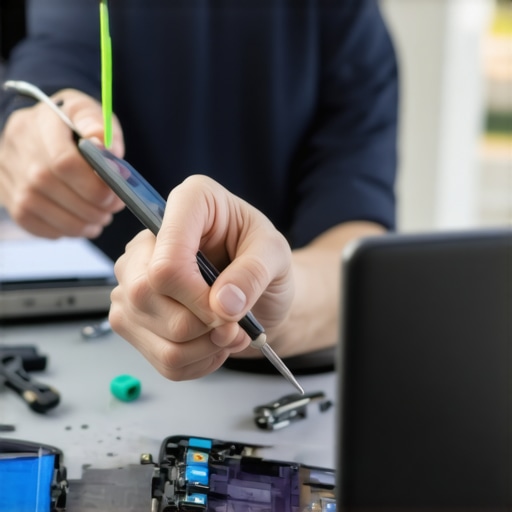
How a mobile technician fixes your glass while you work
The Anatomy of a Modern Glass Crisis
You are sitting in your office, the hum of the HVAC system providing a steady rhythm to your afternoon, when you remember the sharp ‘crack’ that echoed through your cabin on the commute in. A stone, propelled with the force of a ballistic missile from the tire of a semi-truck, has left a jagged bullseye in your field of vision. This is not merely a cosmetic blemish; it is a structural failure in a sophisticated piece of safety equipment. As a master glazier with a quarter-century in the trade, I look at that chip and see a complex tension map. A windshield is a laminated sandwich: two layers of annealed glass bonded by a Polyvinyl Butyral (PVB) interlayer. When that outer ply is breached, the structural integrity of the entire pane is compromised. The goal of a mobile service glass installer is not just to ‘fill the hole,’ but to restore the optical clarity and the mechanical strength of the unit while you continue your workday.
The Narrative of the Hidden Moisture
A homeowner called me in a panic because their glass was ‘sweating’ and a recent chip repair was turning milky white. I walked in with my hygrometer and showed them the humidity levels. It wasn’t the glass failing; it was their environment. They had run the defroster on high while moisture was trapped inside the break before the technician arrived. I had to explain that if you don’t evacuate the air and moisture from the break using a proper vacuum cycle, the resin will never bond. This is the difference between a technician who understands the physics of dew point and one who is just looking to collect a check and move to the next job. When water is trapped in the break, it prevents the resin from reaching the microscopic reaches of the ‘legs’ or cracks extending from the impact point.
“Installation is just as critical as the window performance itself. A high-performance window installed poorly will fail.” – AAMA Installation Masters Guide
The Physics of the Vacuum Cycle
In the world of mobile service, the ‘same-day’ promise is often used as a marketing hook, but the technical execution requires a deep understanding of surface tension and atmospheric pressure. When a glass installer sets up their bridge and injector over the break, they are performing a delicate surgical procedure. The injector must first create a vacuum. This is not optional. We are pulling the air out of the break to create a void. If air remains, the resin will merely bridge over the top, leaving an air pocket that will expand and contract with temperature changes, eventually causing the chip to ‘bloom’ into a full-size crack. Once the vacuum is held, we switch to a pressure cycle, forcing the specialized acrylic resin into the break. The resin must have a refractive index nearly identical to the glass itself—typically around 1.517—to ensure that light passes through the repair without bending, which is what makes the repair appear invisible to the naked eye.
The Climate Logic: Heat, Cold, and Resin Viscosity
Climate context is everything in glazing. If we are working in a northern climate like Minneapolis or Chicago, the enemy is heat loss and the extreme contraction of the glass. In these cold environments, the glass is brittle. If a technician applies too much pressure with the injector while the glass is frigid, they risk a ‘stress crack’ that can run across the entire span of the glass instantly. We use lower-viscosity resins in the cold to ensure the liquid can flow into the tightest fractures. Conversely, in a southern climate like Phoenix or Texas, the glass surface temperature can exceed 150 degrees Fahrenheit. Here, the resin can become too thin, and the glass expands, tightening the break. A professional must cool the glass gradually to a workable range—usually between 50 and 85 degrees—to ensure the resin can be contained and cured properly under the UV lamp. We look at the Low-E coatings on architectural glass or the solar tints on automotive glass to understand how the surface will react to the radiant heat during the curing process.
“The primary goal of any glass repair or replacement should be the restoration of the structural integrity of the vehicle or building envelope.” – NFRC Performance Standards
The Mobile Service Reality Check
Many people opt for a mobile service because they believe it is purely about convenience. While fixing your glass while you work is a massive benefit, the real advantage is the ability to address the damage before contaminants like road salt, car wash wax, or rain-borne minerals enter the break. Once a chip is contaminated, the chemical bond of the resin is weakened. I often see ‘caulk-and-walk’ installers who don’t even clean the break with a scribe before starting. They ignore the pit—the actual hole where the glass is missing. A master installer will use a pit filler resin, which is much thicker and has higher shear strength, to cap the repair and ensure it can withstand the physical abrasion of windshield wipers and ice scrapers. We don’t just shim a window into place; we manage the rough opening of the break itself.
The Technical Nuance of Laminated Glass
Let’s talk about the ‘Glazing Bead’ of information regarding the PVB layer. This plastic interlayer is what keeps the glass from shattering into dangerous shards during an impact. However, it is also highly sensitive to chemicals. If a technician uses an inferior resin with high acid content, it can delaminate the PVB from the glass over time, creating a hazy, yellowed halo around the repair. This is why we insist on laboratory-tested resins that are chemically compatible with the interlayer. When we perform a chip repair, we are essentially performing a microscopic lamination. If the bond between the resin and the glass isn’t molecularly sound, the repair is nothing more than a temporary plug. In a rollover accident, the windshield provides up to 60 percent of the roof’s structural support. A poorly repaired chip is a weak point that can cause the glass to fail under the load, leading to a catastrophic collapse of the vehicle’s pillars. This is why we don’t take shortcuts.
The Math of Replacement vs. Repair
The ROI on a chip repair is immediate. For a fraction of the cost of a full replacement, you preserve the factory seal. Once the original seal is broken and a new pane is installed, you are at the mercy of the installer’s ability to manage the urethane bead. If the bead has a single skip, you will have a water leak or, worse, a wind whistle that will drive you mad. A mobile technician who can perform a high-quality chip repair is saving you from the risks associated with a full-frame tear-out. We look at the ‘sash’ of the repair—the boundaries of where the resin can safely hold. If a crack is longer than a credit card or if it touches the edge of the glass, the tension is too high for resin to reliably hold. At that point, the ‘glazing zoom’ tells us that replacement is the only ethical path forward. We manage the expectations of the customer by explaining the science, not the sales pitch.
Final Inspections and Curing Science
The final step in any professional repair is the curing process. We use a specific wavelength of ultraviolet light to trigger the polymerization of the resin. This isn’t just ‘drying’ the glue. It is a chemical reaction that turns a liquid monomer into a solid polymer. If the tech relies on the sun to cure the resin, they are at the mercy of the UV index and cloud cover, which can lead to an incomplete cure and a soft, gummy repair. By using a controlled UV lamp, we ensure the resin reaches its full shore hardness in minutes. This allows you to drive away, or in the case of architectural glazing, to close the operable window immediately without fear of the repair failing. We finish by scraping the excess resin flush with a razor blade, ensuring the surface is as smooth as the surrounding glass. When you walk out of your office at 5:00 PM, you shouldn’t even be able to find where the damage was. That is the mark of a master glazier.