How to avoid the most common mobile repair scams
I sat across from a sidewalk hustler at a busy intersection who was trying to convince a driver that their minor bullseye chip required an immediate, high-cost resin injection or a full windshield replacement. I had to step in and explain to the vehicle owner why the high-pressure sales pitch was a classic predatory tactic. The salesman was pushing a product with a refractive index that did not match the glass, which would have left a permanent visual distortion. In my 25 years as a master glazier, I have seen every trick in the book, from ‘free’ repairs that are actually insurance fraud to ‘same-day’ services that ignore the critical curing times required for structural safety.
The Physics of a Glass Chip: Why Mobile Service is a Science
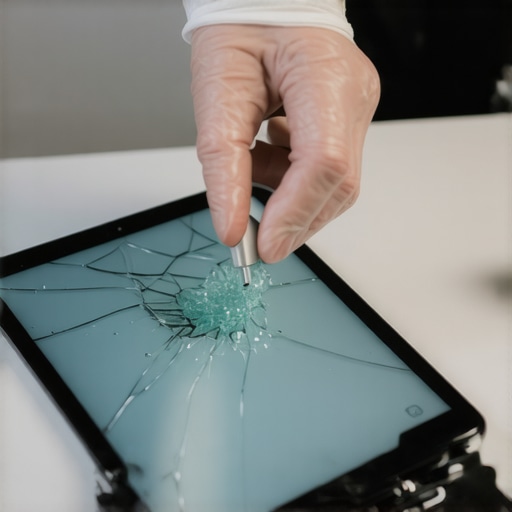
A chip in your glass is not just a cosmetic blemish; it is a disruption in the structural integrity of the annealed or laminated lite. When an object strikes the glass, it creates a cone-shaped fracture. In cold climates like Chicago or Minneapolis, the physics of this fracture become dangerous. Water enters the chip and, through the freeze-thaw cycle, expands with a force that can exceed 10,000 PSI. This is why a simple chip repair must be more than a ‘caulk-and-walk’ procedure. A legitimate mobile service technician must use a vacuum-pressure pump to evacuate all air and moisture from the rough opening of the break before injecting a high-grade acrylic resin. If they skip the vacuum stage, you are left with trapped air that will expand as soon as the sun hits the glass, causing the repair to fail and the crack to spread across the entire sash or windshield.
“Installation is just as critical as the window performance itself. A high-performance window installed poorly will fail.” AAMA Installation Masters Guide
Identifying the Same-Day Mobile Service Scam
The allure of same-day glass installer services is strong, but speed often comes at the expense of safety. In the glazing world, we talk about ‘Safe Drive-Away Time’ (SDAT). For mobile replacements, the adhesive used—typically a high-viscosity polyurethane—requires a specific temperature and humidity range to achieve its chemical cross-linking. Scammers will often use low-grade adhesives that ‘skin over’ quickly, giving the illusion of a solid bond, but the interior remains liquid. If you are involved in a collision before the bond has fully cured, the glass could pop out entirely because the adhesive failed to reach its design strength. A true professional will check the dew point and ambient temperature before even opening their tool kit. They will use a primer to ensure the bond between the glass and the frame is chemical, not just mechanical.
The Component Science: Resins and Spacers
When dealing with mobile repair, the quality of the resin is paramount. Professional-grade resins are engineered to mimic the light-bending properties of glass. Cheap mobile services use low-viscosity resins that yellow over time when exposed to ultraviolet radiation. This is because they lack the necessary stabilizers to resist long-wave infrared radiation. Furthermore, in residential mobile repairs, I often see technicians ignore the importance of the glazing bead or the weep hole. If a mobile service replaces a pane in your home and blocks the weep holes with excess sealant, they have just turned your window frame into a bathtub. Eventually, that water will rot the sill or cause the insulated glass unit (IGU) to fail due to ‘wet-setting’ the spacers.
“Properly identifying the thermal performance of the glass, including U-Factor and SHGC, is essential for maintaining the building envelope’s integrity.” NFRC Performance Standards
How to Spot a Professional Glass Installer
A reputable mobile technician will start by inspecting the rough opening and ensuring the substrate is clean and dry. They won’t just slap a shim in and call it a day. They will discuss the SHGC (Solar Heat Gain Coefficient) if they are replacing a residential pane, ensuring the new glass has the Low-E coating on the correct surface—Surface #2 for hot climates to reflect heat outward, or Surface #3 for cold climates to keep heat inside. If your installer doesn’t know what ‘Surface #2’ means, they aren’t a glazier; they are a handyman with a glass suction cup. Always look for certifications and ask about the specific resin or adhesive being used. If they cannot provide a technical data sheet, walk away.
The Economics of the ‘Free’ Repair Scam
The most common mobile repair scam involves the promise of a ‘free’ repair covered by insurance. These operators often overcharge the insurance company or file multiple claims for a single chip. While it may seem like a win for the homeowner or driver, it contributes to rising premiums and often results in a sub-par repair that will eventually require a full replacement. A master glazier knows that a quality chip repair costs money because the tools and resins are expensive. Beware of anyone who approaches you in a parking lot; professional services are sought out, they do not hunt for victims in the wild.